The Library
Every book on the shelf — 212 read, 85 queued up. Top Books are the ones worth your next free weekend. Open “Notes” on any book for the short version.
2026
66 readTop Books of 2026
The Stoic Capitalist
Robert Rosenkranz
Notes
Robert Rosenkranz blends memoir, business philosophy, and Stoic practice into a guide for ambitious people who want achievement without being owned by volatility, ego, or fear. The book argues that Stoicism is not passivity, but disciplined agency: focus on what you control, make rational decisions under pressure, accept uncertainty, and define success by purpose as much as outcomes. Its center of gravity is practical resilience for builders, investors, and leaders.
Great book. I’d never heard of Rosenkranz before and can’t quite remember where I found it, but I liked it. Naturally I suppose I would: Stoicism, staying cool under pressure, and doing deals.
Alchemy
Rory Sutherland
Notes
Rory Sutherland argues that human behavior is not governed by tidy rational models, so persuasion, design, and business strategy often require psychological magic as much as logic. The book celebrates counterintuitive experiments, framing effects, signaling, status, and the strange ways people assign value. Its core claim is useful for marketers and operators alike: if you only optimize what can be measured rationally, you miss the hidden emotional machinery that drives decisions.
Saw this on X and immediately bought it. Great book. There’s so much to advertising, marketing, and persuasion that really is the alchemy of psychology, and it applies well beyond the ad world.
Small Giants
Bo Burlingham
Notes
Bo Burlingham profiles companies that chose greatness over maximum size, showing leaders who deliberately resisted growth-at-all-costs in order to preserve culture, craft, customer intimacy, and community impact. The book challenges the assumption that bigger is always better. Its most durable idea is that business owners can design for meaning, independence, and excellence, not just scale, and that constraint can be a strategic choice.
You don’t have to be big to be a great company. In fact, as Burlingham describes, sometimes you purposefully keep your company small to stay great.
Cable Cowboy
Mark Robichaux
Notes
Mark Robichaux’s biography of John Malone tells how a soft-spoken engineer turned Tele-Communications Inc. (TCI) into the largest cable company in America. Malone pioneered the use of leverage, tax-efficient deal structures, and minimizing reported earnings to compound cash flow—tactics that made early TCI investors rich and earned him the nickname “Darth Vader” among critics and regulators. The book also covers his web of investments in programming networks, his clashes with Washington, and the $48 billion sale of TCI to AT&T, offering a masterclass in capital allocation and deal-making.
Fun, quick book on John Malone. Good outside perspective, especially paired with Malone’s memoir for a more 360-degree view.
The Compounders: From Small Acquisitions to Giant Shareholder Returns
Oddbjorn Dybvad, Kjetil Nyland, and Adnan Hadziefendic
Notes
The Compounders studies companies that create exceptional shareholder value by repeatedly acquiring small businesses and reinvesting cash flows with discipline. The book focuses on decentralized operating models, capital allocation, culture, incentives, and the difference between smart serial acquisition and empire-building. Its practical appeal is that it treats compounding as an operating craft, not just an investing slogan.
Maybe it’s everyone’s love of Buffett and Munger, but I’ve long liked the idea of buying a company and using its cash flow to buy more companies. The approach has become hugely popular as people have seen what it can do over a long period. This book sums it up well through some of the best long-term compounders.
House of Fidelity
Justin Baer
Notes
Wall Street Journal reporter Justin Baer chronicles the Johnson family and the investment empire they built. Edward C. Johnson II took over a small Boston fund in the 1940s, his son Ned turned Fidelity into a mutual-fund giant with star managers like Peter Lynch, and granddaughter Abigail Johnson now runs one of the largest asset managers in the world—still privately controlled by the family. Baer explores how Fidelity shaped retirement investing for millions of Americans, the culture and rivalries inside the firm, and how it kept its independence through decades of change in the industry.
My wife and I lived in Boston from 2006 to 2008, and it seemed like the whole world revolved around Fidelity. Great book. It must have been a ton of work for Baer, given how quiet the family, their friends, and even former colleagues tend to be.
Theo of Golden
Allen Levi
Notes
Allen Levi’s novel follows Theo, an elderly stranger who arrives in the small Georgia town of Golden and becomes fascinated by a collection of portraits of local residents hanging in a coffee shop. Theo quietly buys the portraits one by one and gives each to its subject, sparking a series of encounters that reveal the hidden hurts and hopes of the people of Golden. Gentle and reflective, the book is a story about kindness, friendship, grief, and seeing the value in every person.
I read a lot more nonfiction than fiction—maybe 10 to 1. I don’t know, I have a grudge about not getting enough data into my brain. Theo was phenomenal. I’d heard about it from a few places, but my daughter’s head of school finally pushed me over the edge. I read it quickly, cried like a baby, and hugged my family. Must read if you haven’t.
King Dollar
Paul Blustein
Notes
Paul Blustein explains why the U.S. dollar remains the central currency of global finance despite recurring predictions of decline. The book traces the dollar's institutional advantages, network effects, reserve status, and geopolitical role, while also showing where American policy mistakes could weaken that position. It is less a victory lap for U.S. power than a clear-eyed account of how monetary dominance works, why alternatives struggle to displace it, and what dollar primacy gives and costs the United States.
Thank goodness we have the dollar. Feels like its hegemony is slipping away, but it’s probably not.
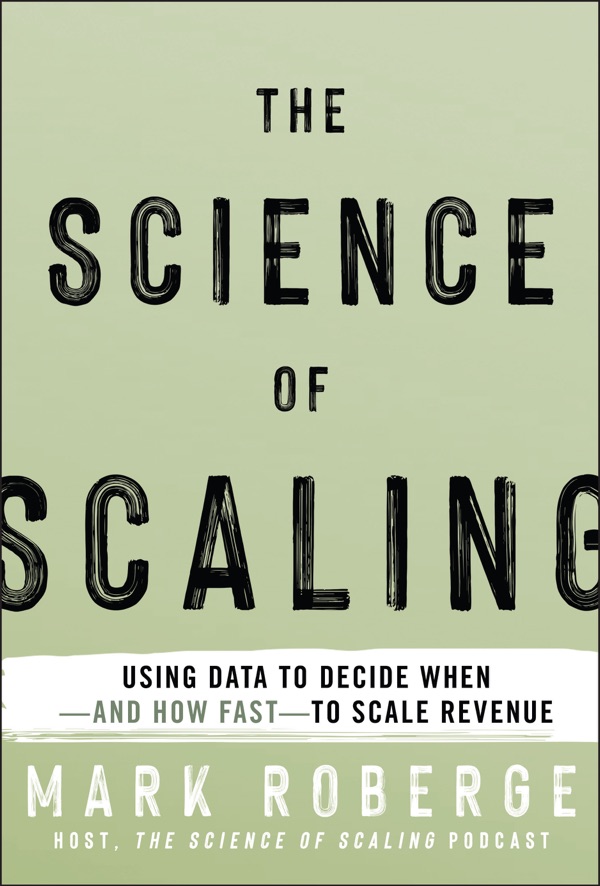
The Science of Scaling
Mark Roberge
Notes
Mark Roberge turns scaling from a vague growth ambition into a data-driven operating question: are you ready to scale, and if so, how fast? Drawing on startup and revenue experience, the book emphasizes repeatable sales motion, unit economics, customer fit, hiring pace, and the warning signs that growth is masking fragility. The core lesson is that premature scaling can kill a company just as surely as timidity can, so acceleration needs evidence, not vibes.
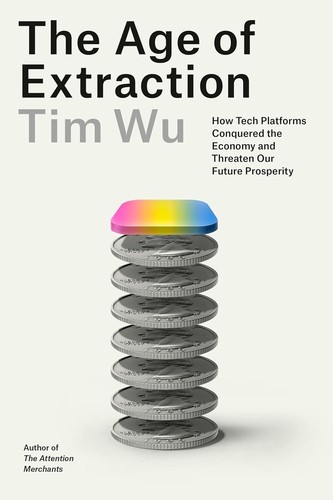
The Age of Extraction
Tim Wu
Notes
Tim Wu argues that the modern internet economy has shifted from open possibility toward extraction, with dominant platforms capturing attention, data, market power, and economic surplus at massive scale. The book connects platform capitalism to inequality, degraded public life, and weakened competition, while still treating the problem as a set of policy and institutional choices rather than technological fate. It is a concise diagnosis of how digital middlemen became private toll roads.
The premise is that the internet economy has shifted from creation to extraction. Platforms compete for our attention, data, and dollars. A little depressing, and at least partly true.
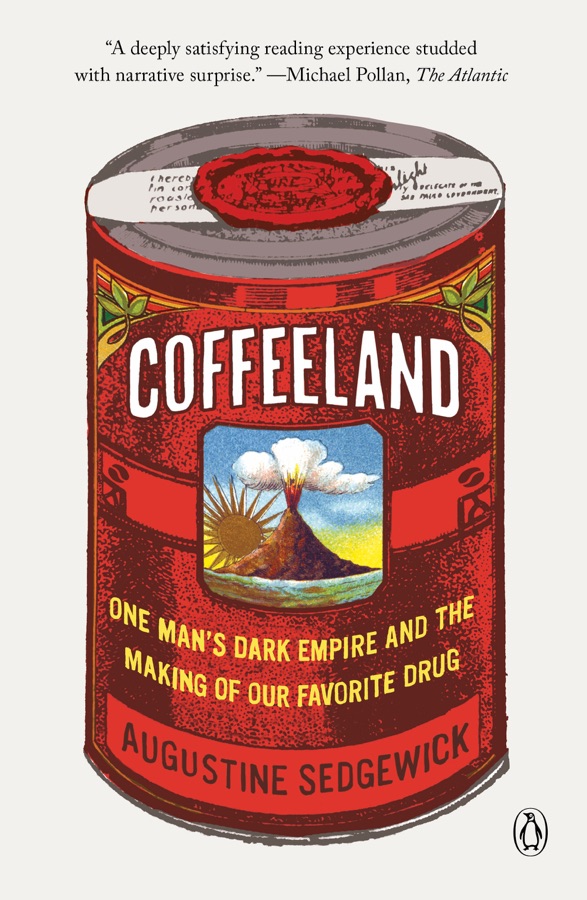
Coffee Land
Augustine Sedgewick
Notes
Augustine Sedgewick uses the history of coffee in El Salvador to show how a global consumer habit was built on labor discipline, land concentration, empire, and inequality. Centered on the Hill family and the rise of mass coffee consumption, the book links plantation economics to industrial capitalism and everyday American breakfast culture. It makes a familiar commodity feel strange again by exposing the human systems hidden behind it.
Some of the history here is ugly, including the impact on local people, but it was fascinating all the same. Good to know where the coffee that keeps us all running comes from. I also laughed at the discussion of coffee breaks as a way to give workers a caffeine boost and improve productivity.
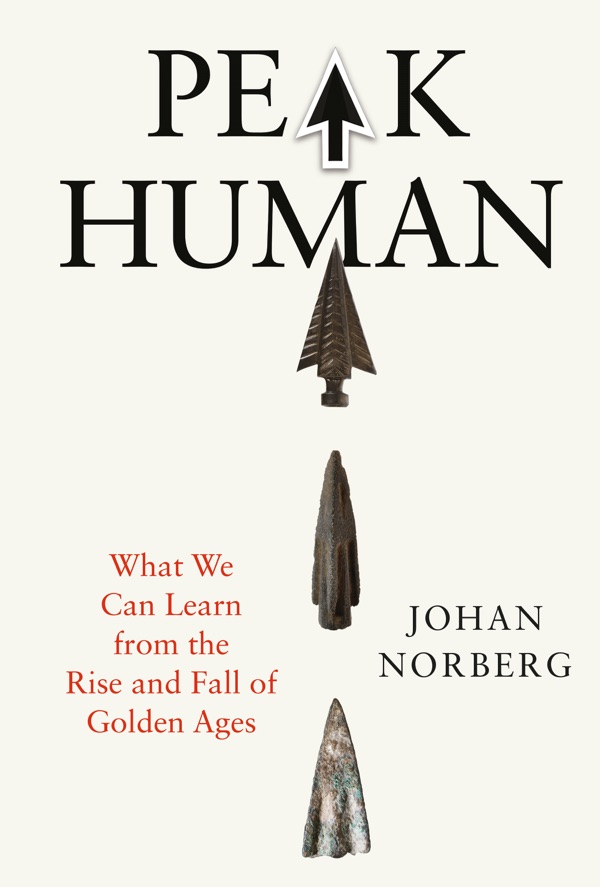
Peak Human
Johan Norberg
Notes
Johan Norberg examines great civilizations and high-achieving eras to ask why human societies sometimes produce bursts of creativity, openness, prosperity, and discovery. The book emphasizes institutions, pluralism, exchange, freedom, and cultural confidence as conditions that help talent compound. Its larger warning is that golden ages are fragile: the habits that create human flourishing can be lost when societies turn inward, rigid, or fearful.
A history lesson on seven civilizations, how they reached their peaks, and what brought their golden ages to an end.
Consider Phlebas
Iain M. Banks
Notes
Iain M. Banks opens the Culture series with a sprawling space opera about war, ideology, and moral ambiguity. The novel follows Bora Horza Gobuchul, who fights against the post-scarcity Culture on behalf of the Idirans because he distrusts a civilization run by machine Minds. Beneath the adventure structure is a question that runs through the whole series: if a society is materially utopian and guided by superintelligence, does that make its power benevolent, imperial, or something stranger?
This is a fun series. Excession is still my favorite, followed by The Player of Games and then this one. Huge space opera, with humans sometimes looking like entertainment for the AI and sometimes still needed to achieve its objectives.
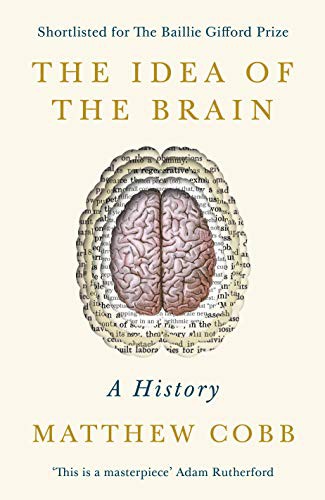
The Idea of the Brain
Matthew Cobb
Notes
Matthew Cobb traces the history of how humans have imagined the brain, from hydraulic and mechanical metaphors to electrical, computational, and network models. The book shows that every era explains the brain using its dominant technologies, which can illuminate real mechanisms but also trap science inside misleading analogies. It is both a history of neuroscience and a caution about confusing metaphors with understanding.
Interesting in light of AI. This is about how we humans have thought about the brain over time as we’ve learned more about it. The real thing is far more complicated than the neural nets we’ve built to imitate parts of it.
The Monk Who Sold His Ferrari
Robin Sharma
Notes
Robin Sharma presents a self-improvement fable about a burned-out lawyer who abandons conventional success and returns with lessons about discipline, purpose, simplicity, and inner mastery. The book is built around practical principles: guard your mind, define your mission, cultivate habits, respect time, and pursue contribution over status. Its style is deliberately parable-like, making ancient personal-development ideas easy to remember and apply.
Not sure where I picked this up. A quick fable about burnout.
Economics in One Lesson
Henry Hazlitt
Notes
Henry Hazlitt offers a compact defense of classical liberal economics built around one central habit: look beyond immediate effects and visible beneficiaries to long-term consequences and unseen costs. Through examples like tariffs, price controls, public works, and inflation, he argues that policy must be judged by its system-wide effects rather than its intentions. The book is polemical, simple, and influential because it turns economics into a discipline of second-order thinking.
Always good to have a little reminder of the pros and cons of “economics.”

The Fish That Ate the Whale
Rich Cohen
Notes
Rich Cohen tells the wild story of Samuel Zemurray, the banana entrepreneur who rose from poverty to dominate the fruit trade and reshape Central American politics. The book is biography, business history, and imperial case study at once, showing how logistics, risk appetite, political manipulation, and sheer nerve created the United Fruit empire. Zemurray comes across as both brilliant operator and symbol of capitalism's willingness to bend countries around supply chains.
Great book about Sam Zemurray, kind of a crazy guy who helped bring down a government in Honduras to protect his banana business. There are plenty of other stories, too.
The Organized Mind
Daniel J. Levitin
Notes
Daniel J. Levitin explains how the brain manages attention, memory, categorization, and decision-making in an environment overloaded with information. Drawing on neuroscience and cognitive psychology, the book recommends external systems, structured environments, and better sorting habits to reduce mental friction. Its practical insight is that organization is not a personality quirk; it is a way of protecting scarce cognitive bandwidth.
The Player of Games
Iain M. Banks
Notes
Iain M. Banks uses a grand strategy game as the central metaphor for politics, hierarchy, and civilization. The novel follows Jernau Morat Gurgeh, a master game player from the Culture, as he enters the brutal Empire of Azad, where the ruling game determines status and power. The book is one of Banks's sharpest explorations of how societies encode values into institutions, and how a game can reveal the moral architecture of an empire.
Great book. No. 2 in the series for me so far.

The Wim Hof Method
Wim Hof
Notes
Wim Hof lays out his approach to breathwork, cold exposure, and mindset as a practical system for resilience, energy, and self-control. The book mixes personal story with exercises and claims about stress, immunity, and human potential. Its most useful frame is that discomfort can be trained: by entering controlled stress deliberately, people can build confidence in their capacity to regulate body and mind.
I read this because I’d heard a lot about Hof. Not sure I’m ready for cold showers; cold plunges, maybe. His backstory is interesting, and I was struck by what he claims about training the body’s response to cold.
Read Your Mind
Oz Pearlman
Notes
Oz Pearlman translates the habits of a professional mentalist into a broader playbook for focus, observation, persuasion, and performance. Rather than treating mind reading as supernatural, the book emphasizes attention to detail, pattern recognition, preparation, confidence, and the ability to read social cues in real time. The practical promise is that better awareness of yourself and others can improve relationships, selling, negotiation, and follow-through.
Oz crushed it on TV and social media around the book launch, so I read it. Well, actually listened to it. Interesting how much of the act is reading people and prompting them toward his solutions. The guy puts in a TON of work, drawing on what he learned from ultramarathons as well as psychology and showmanship.
12 Rules for Life
Jordan B. Peterson
Notes
Jordan B. Peterson combines psychology, myth, religion, clinical experience, and cultural criticism into a rule-based argument for personal responsibility. The book's recurring message is that order begins locally: stand up straight, tell the truth, choose friends carefully, compare yourself to who you were yesterday, and shoulder meaningful burdens. Whether one agrees with all of Peterson's claims or not, the book is fundamentally about discipline as an antidote to chaos.
I didn’t love this book as much as others seem to. Felt a little obvious.
The Titanium Economy
Asutosh Padhi, Gaurav Batra, and Nick Santhanam
Notes
The Titanium Economy spotlights America's often-overlooked industrial technology companies: manufacturers and B2B businesses that are innovative, profitable, and strategically important despite lacking Silicon Valley glamour. The authors argue that these firms create high-quality jobs, build durable capabilities, and anchor regional economies. The book reframes manufacturing as a modern, technology-rich engine of competitiveness rather than a nostalgic relic.
Made me want to run out and buy a small manufacturing business. I guess it worked. Great stories. It wasn’t the point of the book, but it also helped me understand why building anything for the U.S. military takes so long: there are so many components and steps between bare metal and a missile, it’s nuts.
The New New Thing
Michael Lewis
Notes
Michael Lewis profiles Jim Clark, the restless entrepreneur behind Silicon Graphics, Netscape, and Healtheon, as a way to capture the psychology of Silicon Valley during the internet boom. The book is less a conventional business biography than a portrait of motion: money chasing novelty, founders chasing the next frontier, and technology creating new markets before anyone fully understands them. It shows innovation as thrilling, irrational, and deeply personality-driven.
Great listen. Jim Clark is a GOAT. He saw where things were headed, pivoted, did the work, and helped change the course of VC and startups.
Notes on Being a Man
Scott Galloway
Notes
Scott Galloway addresses the crisis facing many young men through a mix of memoir, social diagnosis, and blunt advice. The book argues for purpose, work, physical health, emotional maturity, service, and responsibility without drifting into grievance politics. Its central message is that masculinity should be measured by contribution and protection rather than dominance, and that men need stronger models for becoming useful, connected adults.
Good book. Plenty of opinions about Galloway out there, but as the father of a son, it hit a nerve. He captures a lot of things my dad did for me that I hadn’t fully appreciated and that I hope to do for my son.
Unreasonable Hospitality
Will Guidara
Notes
Will Guidara tells how Eleven Madison Park became one of the world's great restaurants by treating hospitality as a creative operating system rather than a service script. The book argues that extraordinary experiences come from intentional details, empowered teams, emotional intelligence, and a willingness to make guests feel genuinely seen. Its lessons travel well beyond restaurants: memorable service is built by cultures that notice more and care harder.
Treat people better than they expect. Not just as well—better. That’s the key.
Weed Empire
Adam Bierman
Notes
Adam Bierman tells the inside story of MedMen and the attempt to turn cannabis from an outlaw market into a mainstream, venture-backed retail industry. The book follows legalization battles, brand-building, political maneuvering, Wall Street money, operational chaos, and the personal cost of trying to scale a company inside a newly legal category. It reads as both founder memoir and cautionary tale about ambition, regulation, hype, and the brutal transition from movement to market.
Hilarious. I know this industry a little too well. Maybe I should write a memoir and try to make a few bucks.
A Brief History of Intelligence
Max Bennett
Notes
Max Bennett tells the story of intelligence by tracing the evolutionary layers that produced modern minds, from simple control systems to memory, planning, social cognition, and abstract reasoning. The book connects neuroscience, evolution, and artificial intelligence, showing intelligence as an accumulated stack of biological solutions rather than a single mysterious faculty. It is useful because it makes AI questions feel older and deeper: machines are forcing us to ask what minds are made of.
A better book on the brain—or at least on the stuff that happens inside it.
Complexity: The Emerging Science at the Edge of Order and Chaos
M. Mitchell Waldrop
Notes
M. Mitchell Waldrop introduces the scientists and ideas behind complexity theory, especially the Santa Fe Institute and its attempt to understand systems that are neither fully ordered nor random. The book explores emergence, adaptation, feedback, self-organization, and the shared patterns linking economies, ecosystems, brains, and computation. Its enduring value is as a map of systems thinking before the term became business shorthand.
Kind of a history of complexity science and the people around the Santa Fe Institute who helped develop it.

Talking Classics
Mary Beard
Notes
Mary Beard reflects on the classical world, the study of antiquity, and why Greece and Rome still provoke, delight, and trouble modern readers. The book blends personal reflection, scholarly anecdote, and accessible classical history, making the field feel conversational rather than sealed behind academic gates. Beard's larger argument is that classics remain alive not because they offer simple lessons, but because they keep generating arguments about power, culture, identity, and memory.
Why study the classics? This is probably one of Beard’s shortest books. History rhymes, if it doesn’t repeat, and people and cultures make familiar mistakes. The best way to avoid them is to learn where others went wrong.
Use of Weapons
Iain M. Banks
Notes
Iain M. Banks turns the Culture's interventions into a dark meditation on guilt, manipulation, and the moral cost of using violence for supposedly enlightened ends. The novel follows Cheradenine Zakalwe, a brilliant soldier employed by the Culture's Special Circumstances, while its fractured structure slowly reveals the trauma underneath his usefulness. It is one of Banks's bleakest books because it asks whether good systems can remain clean when they depend on damaged instruments.
Another fun Iain M. Banks book.
The First Tycoon: The Epic Life of Cornelius Vanderbilt
T.J. Stiles
Notes
T.J. Stiles presents Cornelius Vanderbilt as a central architect of modern American capitalism, tracing his rise from ferry operator to steamship and railroad titan. The biography shows Vanderbilt's genius for competition, cost control, consolidation, and financial warfare, while placing him inside the transformation of the United States from local markets to national corporations. It is a portrait of both a man and the emergence of the modern business system.
The Bell Curve
Richard J. Herrnstein and Charles Murray
Notes
Richard J. Herrnstein and Charles Murray argue that cognitive ability is strongly correlated with social and economic outcomes, then use that claim to analyze education, poverty, crime, class formation, and public policy. The book became intensely controversial for its treatment of intelligence, heredity, race, and inequality, and it remains a flashpoint in debates over measurement, social science, and policy. It is best read critically, with attention to both its statistical claims and its assumptions.
I was surprised to see six copies of this at a local book sale, so I picked one up. I didn’t realize quite how controversial it was.

Kingmaker: Pamela Harriman's Astonishing Life of Power, Seduction, and Intrigue
Sonia Purnell
Notes
Sonia Purnell recasts Pamela Harriman as a major political operator rather than a decorative social figure. The biography follows Harriman from Churchill's wartime circle through high society, money, marriages, Democratic fundraising, and diplomacy, showing how charm, access, intelligence, and relationship-building became instruments of power. The book's argument is that influence often works through unofficial channels, and Harriman mastered those channels better than almost anyone.
Phenomenal book. It was on my list for a long time before I picked up a physical copy. I love Churchill and have a lot of his books, plus books about him, but there was plenty here I hadn’t heard before. Then there’s her relationship with Harriman. Just incredible.
The Alchemy of Finance
George Soros
Notes
George Soros lays out his theory of reflexivity: markets do not merely reflect reality, they help shape it because participants' beliefs influence fundamentals and fundamentals influence beliefs. Mixing philosophy, trading diary, and macro investing, the book explains why markets can move far from equilibrium and why feedback loops matter. Its importance lies in treating finance as a social system driven by perception, positioning, and self-reinforcing error.
Reflexivity: investors’ beliefs move markets, and the moves can then change those beliefs and even the businesses underneath them. Add another 30 years of hedge funds and groupthink, and you have a pretty good way to think about why a stock can suddenly soar or collapse.
Prophecy
Carissa Véliz
Notes
Philosopher Carissa Véliz examines our long fascination with predicting the future—from ancient oracles to today’s algorithms and AI systems. She argues that predictions are rarely neutral descriptions of what will happen; they are often tools of power that shape behavior, limit choices, and can become self-fulfilling. Véliz questions how much authority we should grant to data-driven forecasts about our health, careers, credit, and safety, and makes the case for protecting human agency and an open future against those who profit from telling us what comes next.
I’ve read a lot of books on AI. This one really focused on forecasting—“prophecy”—and how good AI is at guessing what comes next. If we can tame that and use it appropriately, it could be incredibly powerful.
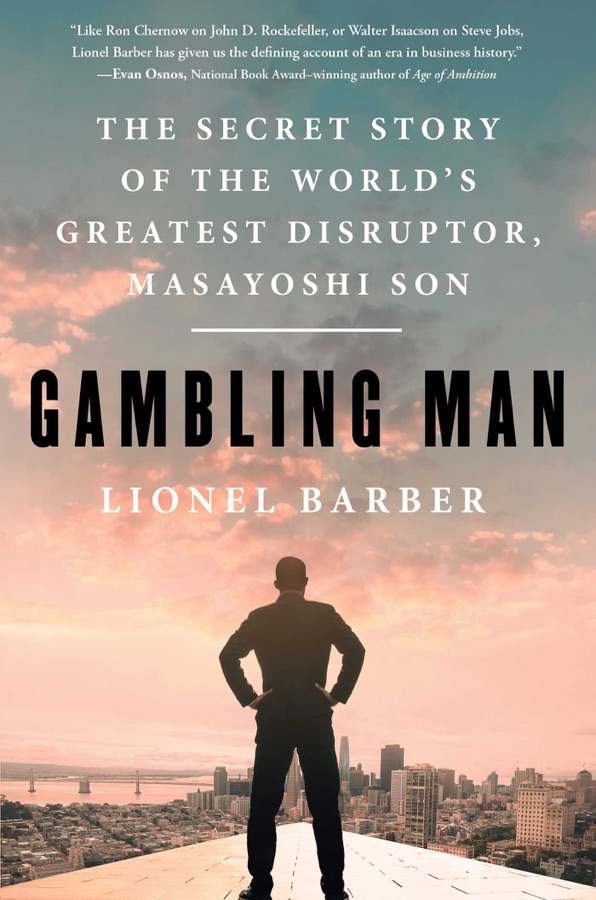
Gambling Man: The Secret Story of the World's Greatest Disruptor, Masayoshi Son
Lionel Barber
Notes
Lionel Barber profiles Masayoshi Son, the founder of SoftBank, as one of modern capitalism's most audacious risk-takers. The book follows Son's giant bets on telecom, Alibaba, the Vision Fund, WeWork, and the broader dream of financing the future before the future knows what it is. It is a biography of conviction at extreme scale, where genius, leverage, timing, and hubris become difficult to separate.
I was talking to a portfolio company of Son’s when I read it. Insane story. He has incredible confidence in everything he does; sometimes it works, sometimes not so much. A good read on how he thinks and how his massive deployment of capital changed VC.
Talk Like TED
Carmine Gallo
Notes
Carmine Gallo analyzes hundreds of the most popular TED talks and interviews top presenters to distill nine techniques behind great public speaking. His advice centers on three pillars: talks should be emotional, novel, and memorable. That means unleashing genuine passion, telling stories, sounding conversational, teaching audiences something new, creating jaw-dropping moments, using humor, keeping talks to about 18 minutes, engaging multiple senses, and staying authentic. Practical and full of examples, the book is a playbook for anyone who needs to present ideas persuasively.
I quit partway through, mostly because I think I’d read it before. Not bad; it just felt a little dated.
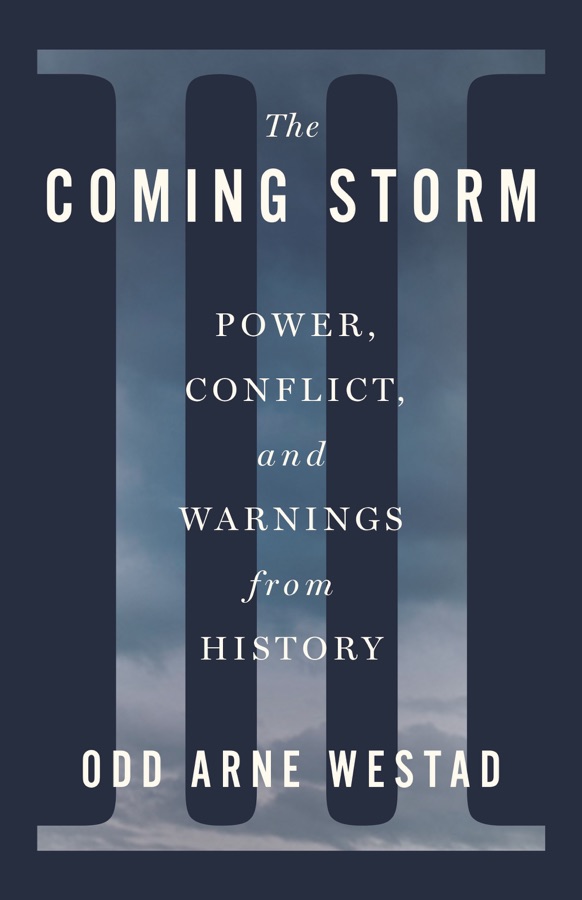
The Coming Storm: Power, Conflict, and Warnings from History
Odd Arne Westad
Notes
Odd Arne Westad warns that the world is sliding into a dangerous era of great-power rivalry with unsettling parallels to the decades before World War I. The book uses history not as prophecy, but as a warning system: nationalism, arms races, brittle alliances, tariffs, technological competition, and mutual suspicion can combine faster than leaders expect. Its practical point is that avoiding catastrophe requires compromise, restraint, and historical imagination.
Great-power rivalry is definitely back, even if the sides are playing different games than before.
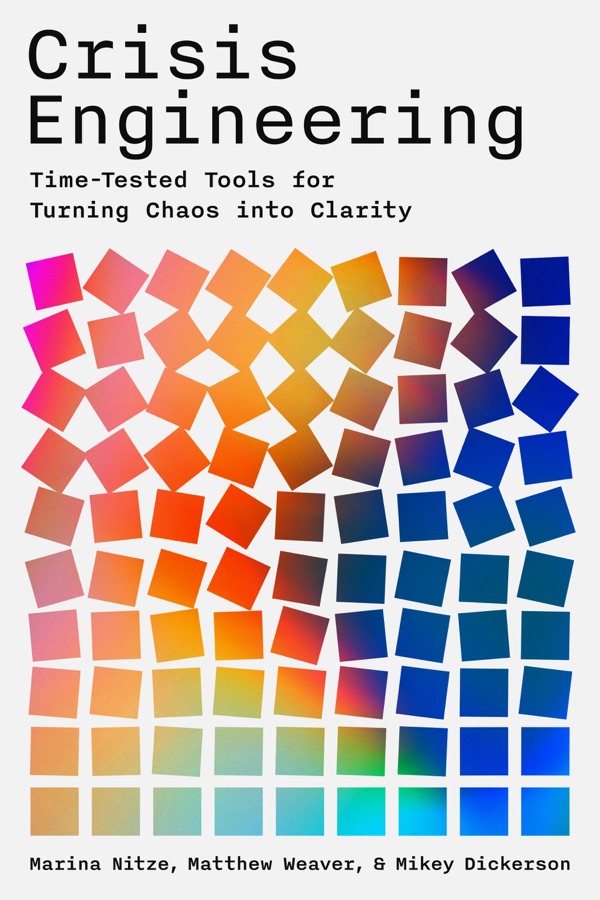
Crisis Engineering: Time-Tested Tools for Turning Chaos into Clarity
Marina Nitze, Matthew Weaver, and Mikey Dickerson
Notes
Crisis Engineering is a field manual for leading when complex systems are already breaking. Drawing on government, technology, and operational turnarounds, the authors emphasize fast diagnosis, clear ownership, triage, communication, and practical interventions that restore confidence before perfect plans exist. The book treats crisis not as a leadership personality test, but as an engineering discipline for turning ambiguity into action.
I think this was on the JPMorgan reading list. Meh.
1929: Inside the Greatest Crash in Wall Street History—and How It Shattered a Nation
Andrew Ross Sorkin
Notes
Andrew Ross Sorkin offers a gripping narrative of the 1929 stock market crash and the events that led up to it. Drawing on archival research, he brings to life the bankers, speculators, politicians, and ordinary investors swept up in the speculative boom of the Roaring Twenties—from the margin-fueled mania to the panic of Black Thursday and Black Tuesday and the failed efforts of Wall Street’s titans to halt the collapse. Sorkin explores how leverage, overconfidence, and policy mistakes turned a market crash into a national catastrophe, with lessons that remain strikingly relevant.
A bit depressing, of course, reliving the 1929 crash and the Great Depression that followed. But history rhymes.
We Are as Gods
Peter H. Diamandis and Steven Kotler
Notes
Peter Diamandis and Steven Kotler argue that humanity is entering an age of abundance driven by exponential technologies—artificial intelligence, robotics, biotechnology, energy, and more. Building on their earlier books, they contend that these tools give individuals and small teams god-like powers that were once reserved for governments and giant corporations. The book serves as a guide for navigating that transition: understanding the converging technologies, adopting the right mindset, and using these new capabilities to solve big problems rather than be overwhelmed by the pace of change.
If you want a little pick-me-up, give it a read. A very positive outlook on AI and technology.
Man’s Search for Meaning
Viktor E. Frankl
Notes
Viktor Frankl, a psychiatrist who survived Auschwitz and other Nazi concentration camps, describes his experiences in the camps and the insights he drew from them. He observed that prisoners who held on to a sense of purpose—a loved one, unfinished work, or simply the freedom to choose their attitude—were more likely to endure. From this he developed logotherapy, which holds that the primary human drive is not pleasure but the search for meaning. Brief and profound, the book argues that while we cannot always control our circumstances, we can always choose how we respond to them.
Depressing but valuable. More than anything, we need meaning in life. That’s what gives us the energy to get through almost anything.
Super Mario
Jeff Ryan
Notes
Jeff Ryan tells the story of how Nintendo, a century-old Japanese playing-card company, conquered the American video game market on the back of a mustachioed plumber. The book follows the creation of Mario by Shigeru Miyamoto, the near-collapse of the U.S. video game industry in 1983, the triumphant launch of the Nintendo Entertainment System, and the battles with Sega, Sony, and others over the following decades. It is a lively business history of product design, licensing, and brand-building, showing how one character became the anchor of a global entertainment franchise.
Fun book about Nintendo, and particularly Mario. What’s not to like?
Make It Stick
Peter C. Brown, Henry L. Roediger III, and Mark A. McDaniel
Notes
Written by a storyteller and two cognitive scientists, Make It Stick explains what research reveals about how people actually learn and remember. Many popular study habits—rereading, highlighting, and massed practice or cramming—create an illusion of mastery but produce poor retention. The authors show that more effective strategies feel harder: retrieval practice (testing yourself), spacing out practice over time, interleaving different topics, and connecting new material to what you already know. The book offers practical guidance for students, teachers, and professionals who want learning to last.
Project Maven
Katrina Manson
Notes
Bloomberg journalist Katrina Manson tells the inside story of Project Maven, the Pentagon initiative to bring artificial intelligence into military operations. Launched in 2017 to use machine learning to analyze drone and satellite imagery, the program became a flashpoint when Google employees protested the company’s involvement, and it went on to shape how the U.S. military works with Silicon Valley. Manson follows the officers, engineers, and companies behind the effort and examines the ethical, strategic, and bureaucratic questions raised as AI moves onto the battlefield.
Fascinating book on AI in the military: how the program got to where it is and who pushed it forward.
The Remains of the Day
Kazuo Ishiguro
Notes
Kazuo Ishiguro’s Booker Prize–winning novel follows Stevens, an aging English butler who, in 1956, takes a rare motoring trip across the countryside to visit a former housekeeper, Miss Kenton. As he travels, he reflects on decades of devoted service to Lord Darlington, gradually revealing—often without fully admitting it—that his employer was a Nazi sympathizer and that his own rigid dedication to dignity and duty cost him the chance at love and a fuller life. Quiet and devastating, the novel is a meditation on loyalty, regret, and self-deception.
Great book. Fiction, which kind of snuck in there. A butler basically gives up his life to serve a “great house,” only to see its owner make some very poor choices—including sympathizing with the Nazis.

Ever Since Darwin: Reflections in Natural History
Stephen Jay Gould
Notes
Stephen Jay Gould's first essay collection brings evolutionary biology to life through natural history, scientific argument, and historical storytelling. The book explains Darwinian thinking while also resisting simplistic adaptationist stories, showing how contingency, variation, scale, and historical accident shape life. Gould's gift is making evolution feel intellectually alive: not a settled slogan, but a way of asking better questions about nature.
I like reading about evolution, and few people write about it better than Stephen Jay Gould.
Athens and Sparta
Adrian Goldsworthy
Notes
Historian Adrian Goldsworthy examines the rivalry between ancient Greece’s two greatest powers: democratic, sea-going Athens and militaristic, land-based Sparta. Beginning with their alliance against Persia, he traces how mutual suspicion grew into the long and brutal Peloponnesian War that devastated the Greek world. Goldsworthy looks closely at the very different political systems, societies, and leaders on each side, and at how strategy, chance, and miscalculation shaped the outcome—offering a vivid account of great-power competition and its enduring lessons.
Good background history. At times it feels as if some of the dynamics are repeating with the U.S. and China. Not sure yet which side we’re on.
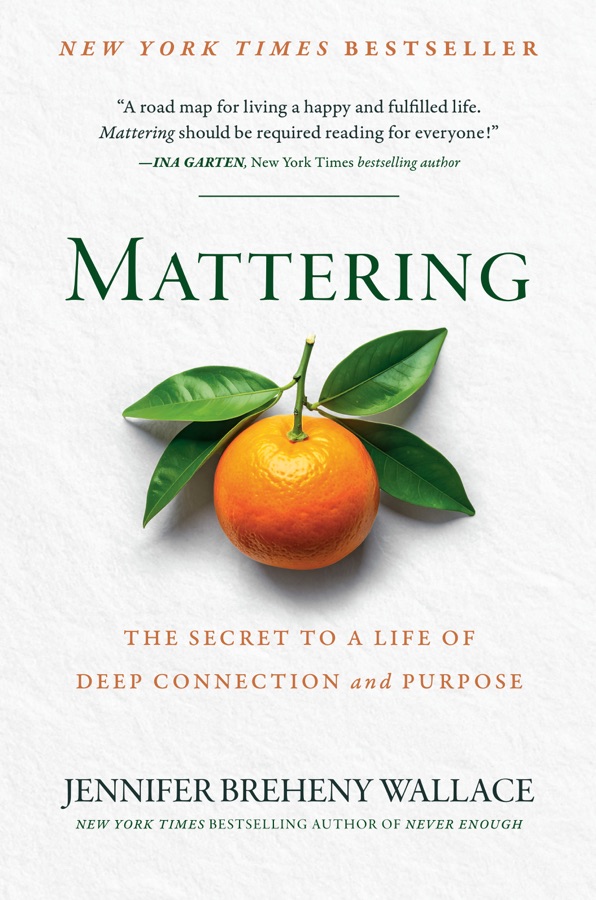
Mattering: The Secret to a Life of Deep Connection and Purpose
Jennifer Breheny Wallace
Notes
Jennifer Breheny Wallace explores the human need to feel seen, valued, and needed, arguing that mattering is a missing framework for loneliness, burnout, family pressure, and social disconnection. The book connects research with practical stories about relationships, work, parenting, and community. Its central promise is simple but deep: people thrive when they know they count to others and can contribute in ways that are recognized.
Tools of Titans
Tim Ferriss
Notes
Tim Ferriss distills the habits, routines, and tactics of the world-class performers he interviewed on his podcast—billionaire investors, elite athletes, artists, entrepreneurs, and scientists. Organized into three sections (Healthy, Wealthy, and Wise), the book collects practical advice on everything from morning rituals, exercise, and nutrition to investing, negotiation, creativity, and dealing with fear. Designed to be browsed rather than read straight through, it is a sprawling toolkit of ideas readers can test and adapt to their own lives.
I did not read this cover to cover. I like Ferriss, found this at a book sale, and had it sitting on my desk for a while, flipping through occasionally. Basically a collection of how a lot of experts and “titans” work.
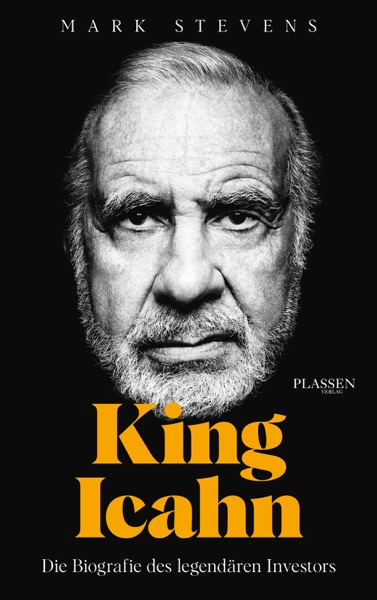
King Icahn
Mark Stevens
Notes
Mark Stevens’s biography traces Carl Icahn’s rise from a middle-class Queens upbringing to one of the most feared corporate raiders on Wall Street. It covers his early career in options arbitrage, his greenmail campaigns, and his hostile pursuits of companies like Phillips Petroleum, Texaco, and USX, as well as his bruising takeover and management of TWA. Stevens portrays Icahn as a brilliant, relentless negotiator who saw himself as a champion of shareholders against entrenched, overpaid management—and whose tactics helped define the takeover era of the 1980s.
Icahn is nuts. I’m glad I don’t have to negotiate against him. His meandering, late-night, throw-everything-out-except-what-you-really-want process sounds exhausting.
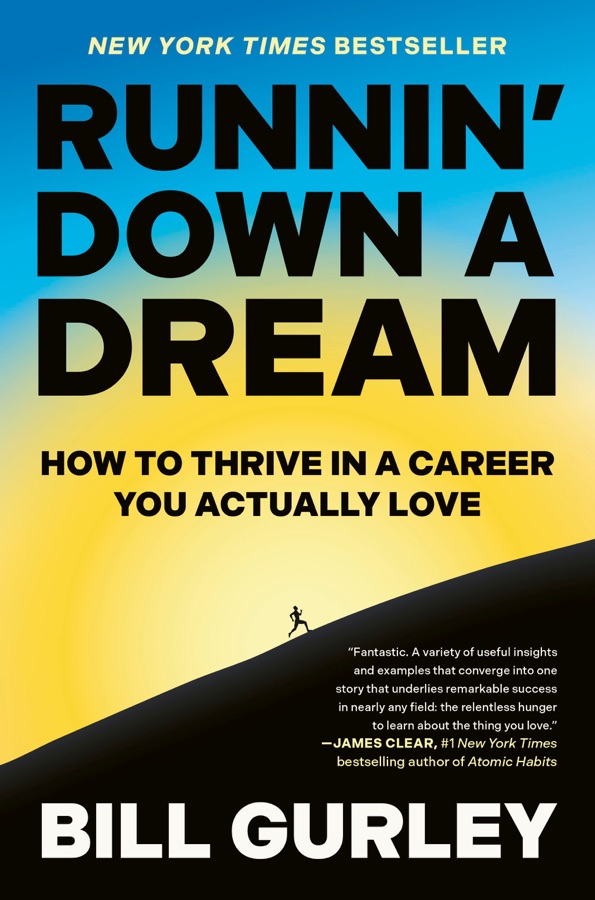
Runnin' Down a Dream: How to Thrive in a Career You Actually Love
Bill Gurley
Notes
Venture capitalist Bill Gurley offers a guide to building a career you genuinely love. Drawing on his own path—from engineer to Wall Street analyst to Benchmark partner—and on the stories of people who reached the top of their fields, Gurley argues that the most fulfilling careers come from following real curiosity and passion, then committing to relentless learning. He covers how to find your calling, seek out mentors and peers, master your craft, and take smart risks, making the case that loving your work is the best competitive advantage.
I didn’t know much about Gurley, but I loved the book. It’s a series of short bios of very interesting and very different people. I kept running out of my office to repeat stories to my wife and kids.
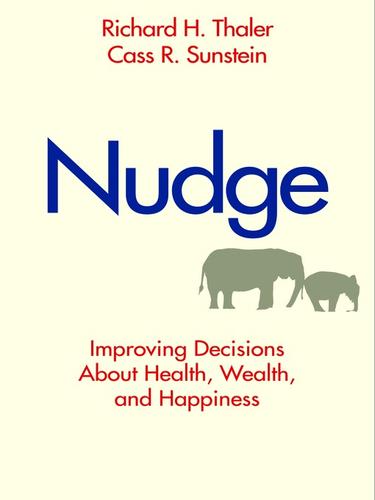
Nudge
Richard H. Thaler and Cass R. Sunstein
Notes
Economist Richard Thaler and legal scholar Cass Sunstein explain how small changes in the way choices are presented—“choice architecture”—can significantly influence decisions about health, wealth, and happiness. Because people rely on mental shortcuts and are prone to predictable biases, defaults, framing, and the order of options matter enormously. The authors advocate “libertarian paternalism”: designing systems, such as automatic enrollment in retirement plans, that steer people toward better outcomes while preserving their freedom to choose otherwise. The book helped bring behavioral economics into mainstream policy and business.
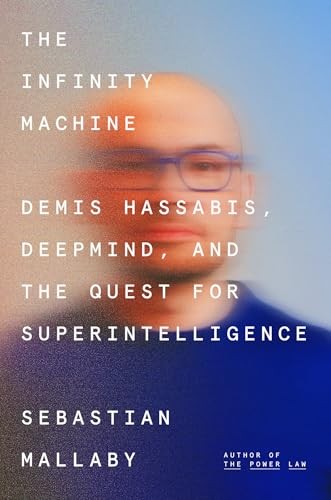
The Infinity Machine
Sebastian Mallaby
Notes
Sebastian Mallaby tells the story of Demis Hassabis and DeepMind, the British lab that set out to build artificial general intelligence. The book follows Hassabis from chess prodigy and game designer to neuroscientist and founder, through DeepMind’s acquisition by Google, breakthroughs such as AlphaGo and AlphaFold, and the intensifying race with OpenAI and others. Mallaby explores the scientific ambition, commercial pressures, and safety concerns that shape the quest for superintelligent machines, and what it means for the rest of us.
Another good account of AI: how Demis Hassabis built DeepMind, where the field has come from, and where it might be headed.
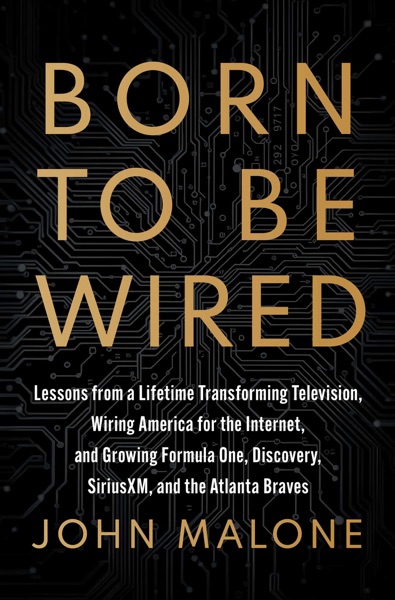
Born to Be Wired
John Malone
Notes
John Malone looks back on a career that shaped modern cable television, media, and telecommunications. In his own words, the longtime chairman of Liberty Media reflects on building TCI, the deal-making that created a complex web of companies and tracking stocks, and the long-term thinking behind his investments in businesses from cable networks to satellite radio and Formula One. Malone shares his approach to leverage, tax efficiency, and capital allocation, along with candid lessons about partners, competitors, and regulators gathered over more than five decades in the industry.
Glad I paired this with Cable Cowboy. Malone’s incredible: he helped popularize EBITDA, took huge risks, built a cable empire, and really did hate paying taxes.
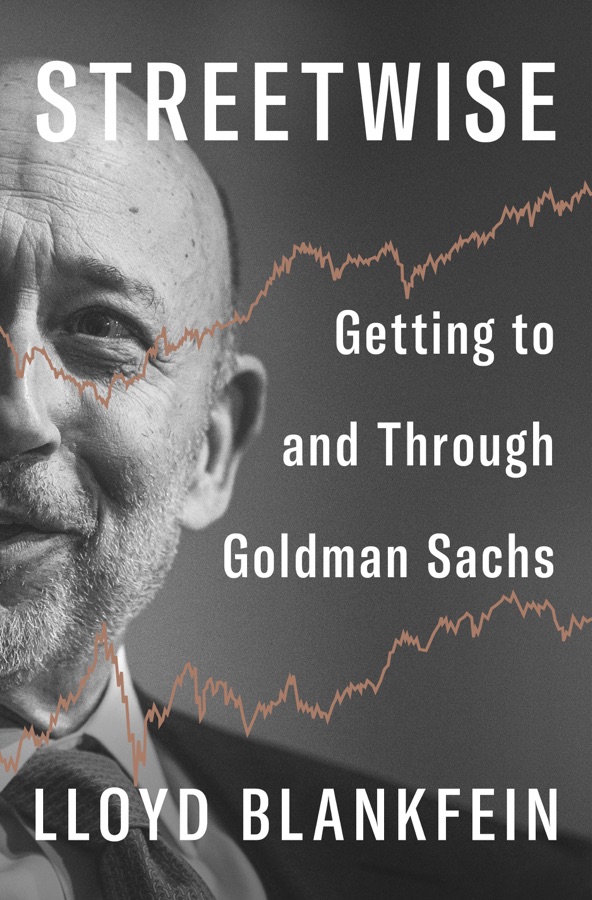
Streetwise
Lloyd Blankfein
Notes
Lloyd Blankfein’s memoir traces his improbable journey from a public housing project in Brooklyn to the top of Goldman Sachs, where he served as CEO through the 2008 financial crisis and its aftermath. Blankfein describes his early years as a commodities trader at J. Aron, Goldman’s evolution from partnership to public company, and the intense scrutiny the firm faced during and after the crisis. With dry humor and candor, he shares lessons on risk, judgment, leadership, and navigating the culture of Wall Street.
Lloyd comes across as a likable guy. Maybe that means the ghostwriter did a great job. All joking aside, it’s a Horatio Alger story: a Brooklyn kid finds a back door into Goldman and, through hard work, perseverance, and luck, makes it to the top. Then the mortgage crisis and Great Recession clobber him.
The Dealmaker
Guy Hands
Notes
Guy Hands, founder of the private equity firm Terra Firma, recounts a career spent buying and transforming businesses. After rising as a bond trader at Goldman Sachs, he built Nomura’s Principal Finance Group into a major investor in pubs, trains, and housing before striking out on his own. The book covers his biggest successes as well as his most public failure—the troubled acquisition of EMI just before the financial crisis and the ensuing legal fight with Citigroup—and draws lessons on deal-making, leverage, and the realities of private equity.
Listened to this on a long drive to camp pickup. Guy did some great deals, some bad deals, and made himself a fair bit of money doing it.
Hardball
George Stalk Jr. and Rob Lachenauer
Notes
George Stalk Jr. and Rob Lachenauer of Boston Consulting Group argue that the best companies don’t just play to play—they play to win. “Hardball” competitors focus relentlessly on building decisive advantages and then pressing them. The authors outline strategies such as devastating rivals’ profit sanctuaries, plagiarizing good ideas with pride, deceiving competitors into inaction, unleashing massive and overwhelming force, raising competitors’ costs, and breaking compromises that customers have long tolerated. The book is a call for clear-eyed, aggressive strategy within the bounds of fair play.
Great book. Keep digging the moat around your castle. Fill it with gators and sharks if you have to. Just don’t become the pampered king who forgets that everyone else wants the castle.
The Philosopher in the Valley
Michael Steinberger
Notes
Michael Steinberger profiles Alex Karp, the unconventional CEO of Palantir Technologies. A philosophy PhD with an unlikely résumé for Silicon Valley, Karp co-founded Palantir with Peter Thiel and turned it into a data-analytics company that works closely with intelligence agencies, militaries, and corporations. Steinberger explores Karp’s personality and worldview, Palantir’s controversial role in national security and surveillance, and its long road to profitability and a soaring valuation—offering a portrait of a company at the intersection of technology and state power.
Alex Karp is a little (if not a lot) eccentric. But he built an incredibly valuable company in Palantir—both by market value and, arguably, by military importance. The book helped me put some of his talks in context.
Inversions
Iain M. Banks
Notes
Iain M. Banks’s novel is set on a medieval-level planet and tells two intertwined stories. In one, the mysterious Doctor Vosill serves as physician to a king, navigating palace intrigue while her loyal assistant secretly reports on her. In the other, the bodyguard DeWar protects a powerful protector-general and debates questions of morality and power with him. Readers familiar with Banks’s Culture series will recognize hints of a far more advanced civilization behind the scenes. The book explores interference, ethics, and whether advanced societies should intervene to change the course of less developed ones.
Maybe my least favorite of the Culture books. It felt the least like the Culture to me. Oops.
How to Make a Few More Billion Dollars
Brad Jacobs
Notes
I like Brad Jacobs a lot and loved his first book. This one didn’t land as well for me; it felt like an appendix to the first. Probably great for people who want to go deeper on his meditation practice and a few other things, but he nailed it with the first.
A Very Punchable Face
Colin Jost
Notes
Colin Jost, the longtime Saturday Night Live head writer and “Weekend Update” co-anchor, shares a funny, self-deprecating memoir about growing up on Staten Island, getting into Harvard and writing for the Lampoon, and landing his dream job at SNL. Jost recounts embarrassing mishaps, his mother’s career as a New York City fire department doctor, his commute on the Staten Island Ferry, and the realities of life in comedy—including the experience of being disliked by strangers on the internet.
Absolutely hilarious. My son read it and demanded I read it too. I took it on vacation, and it really was funny.
The Doom Loop
Eswar Prasad
Notes
Is the world economy slipping into disorder? I’m not sure I completely agree. It’s more interconnected than ever, though, and to the author’s point, that can create an ugly feedback loop when a shock hits.
Getting More
Stuart Diamond
Notes
Stuart Diamond, who teaches a famous negotiation course at Wharton, argues that conventional negotiation tactics—power, leverage, and logic—often fail because they ignore the other person. His approach focuses on understanding the other party’s perceptions and emotions, finding out what they really value, making small incremental steps, and trading items that each side values differently. Packed with real-world examples from business, family life, and travel, the book offers a practical toolkit for getting more out of everyday negotiations without damaging relationships.
Loved it. Similar to my style, but very process driven. I listened to the audiobook and then bought the physical book as well.
10 to 25
David Yeager
Notes
Psychologist David Yeager explains how to motivate and mentor young people between the ages of 10 and 25. Drawing on research in developmental science, he argues that adolescents are not simply irrational; they are deeply sensitive to status and respect. Adults who succeed with them adopt a “mentor mindset” that combines high standards with high support—rather than being either enforcers or protectors. With practical advice for parents, teachers, coaches, and managers, the book shows how to give feedback, ask questions, and set expectations in ways that help young people grow.
Trying to better understand my kids. Not sure if it worked or not. Try to be a mentor, not a boss, not an emperor, and not necessarily just a friend.
2025
68 readTop Books of 2025
Blitzed: Drugs in Nazi Germany
Norman Ohler
Notes
Ohler’s book argues that the Third Reich was saturated with drugs—especially stimulants like methamphetamine (Pervitin)—and that this chemical reality shaped both everyday life and the machinery of war. He traces how pharmaceuticals moved from civilian use into military doctrine, including the way stimulants were used to sustain wakefulness and aggression during early campaigns. The narrative paints a picture of a society publicly committed to purity while privately consuming massive quantities of performance-enhancing and mood-altering substances. A major portion focuses on Hitler’s medical regimen under his physician Theodor Morell, depicting an escalating cocktail of injections and medications as the war worsened. Ohler presents drug use as one lens—not an excuse—for understanding the regime’s volatility and decision-making, arguing that pharmacology contributed to distorted judgment at the top and endurance at the front. He also explores the commercial incentives and institutional complicity that allowed widespread distribution, making “drugged normalcy” part of the state’s functioning. The book has also drawn criticism for overstating or dramatizing claims, with at least some historians arguing that its account can be sensational and sometimes unreliable. Read alongside more conventional histories, Blitzed is best treated as a provocative supplement: it highlights a real and often under-discussed phenomenon (wartime stimulant use), while inviting readers to be careful about how much explanatory weight they assign to drugs versus ideology, strategy, and institutions.
Phenomenal book. I had no idea how much stimulant use there was in the Nazi military and leadership. Some of those early campaigns read differently once you know.
Breakneck: China’s Quest to Engineer the Future
Dan Wang
Notes
Dan Wang argues that the U.S. and China are optimizing for different national “operating systems”: China behaves like an engineering state—comfortable with technocracy, mobilization, and building at speed—while the U.S. behaves more like a legal-administrative state, where process, litigation risk, and institutional veto points slow execution. Wang doesn’t present this as a simplistic “China good / America bad” take; he treats it as a tradeoff: China’s capacity to build is real and often impressive, but it’s intertwined with authoritarian control and coercion. The book uses modern China’s industrial dominance—EVs, solar, infrastructure, manufacturing ecosystems—as evidence of what an engineering-heavy governance culture can accomplish, especially when aligned with state incentives and deep supply-chain coordination. At the same time, it shows the darker underside: the human costs of social control, surveillance, and policy experiments that treat people as variables in a system. Wang’s central provocation is comparative: Americans would benefit from learning how to build again (simplify, standardize, execute), while Chinese citizens would benefit from learning how to protect liberties and constrain state power. In other words, Breakneck is less “China analysis” than a mirror held up to two superpowers—using China’s speed to highlight America’s stagnation, and using America’s freedoms to highlight what China’s model suppresses.
Absolutely fascinating take on how China attacks problems: build and evolve rapidly, fight for market share, drive down prices, and hope to be one of the survivors.

Excession
Iain M. Banks
Notes
Excession is a Culture novel built around an “Outside Context Problem”: an object or event so far beyond your worldview that it makes your assumptions about power and reality obsolete. The Excession itself is a baffling, hyper-advanced artifact that appears in deep space and instantly becomes the center of a multi-civilization scramble. The Culture—an essentially post-scarcity society—responds through its “Minds,” colossal ship-based AIs with immense capability and eccentric personalities, and the book leans hard into their internal politics: ego, gamesmanship, moral ambiguity, and the limits of even superintelligence when confronted with the truly unknown. A parallel plot line involves other interstellar powers—especially the Affront, a brutal species the Culture finds morally repellent. As the Excession draws attention, opportunists try to turn it into leverage: if you can control (or even interpret) the artifact, you can shift the balance of power. Much of the novel’s texture is conveyed through message-like exchanges between Minds and factions, where alliances are implied, betrayals are coded, and “official” explanations rarely match the underlying game. Spoilers: A major reveal is that parts of the Culture’s own response are tangled up in internal conspiracies—some Minds attempt to manipulate events (including provoking conflict and maneuvering assets) to force a decisive reckoning with the Affront and to shape what “should” happen next. As fleets converge, the Excession behaves unpredictably—expanding, releasing overwhelming energy, and ultimately vanishing—leaving the participants with partial knowledge, bruised egos, and uncomfortable evidence that the universe contains forces and intelligences that dwarf even the Culture’s reach. The ending lands less as “victory” than as a humbling reminder: the most dangerous moment is when you think you’re the top of the food chain.
My favorite book in the Culture series so far.
How to Make a Few Billion Dollars
Brad Jacobs
Notes
Brad Jacobs (serial CEO and dealmaker) writes this as a blunt “playbook” for building very large companies—less inspiration, more operating doctrine. He frames his career as a series of repeatable patterns: pick markets with fragmentation or inefficiency, build a platform with operational rigor, use M&A aggressively, and focus relentlessly on creating shareholder value through scale, discipline, and capital allocation. The book’s tone is intentionally practical—Jacobs wants to demystify the path from entrepreneur to major public-company value creation. A core theme is contrarianism with accountability: Jacobs emphasizes being “non-consensus” while being able to explain, measure, and execute your thesis. He spends time on the mechanics of running a high-performance organization—hiring A players, setting standards, insisting on clear metrics, and building a culture where speed and truth-telling beat comfort. His approach treats management as a craft: decision-making systems, incentive design, operating cadence, and the ability to push through hard changes without letting the organization drift into politics or complacency. The book also reads as a guide to “adult” capitalism: how to work with boards, investors, analysts, lenders, and partners while keeping strategic control. Jacobs is candid that big outcomes require tolerance for risk, discomfort, and reputational heat—especially when you’re rolling up industries or reshaping incumbents. The end result is a mindset manual for scaling: not just how to start a company, but how to compound it into something worth billions.
Loved this book. Brad Jacobs genuinely seems like a guy you’d want to hang out with. I keep coming back to his 2x2 matrix for deals: difficulty versus size. Easy and big rarely go together; a lot of the value is in the hard, large-scale deals.
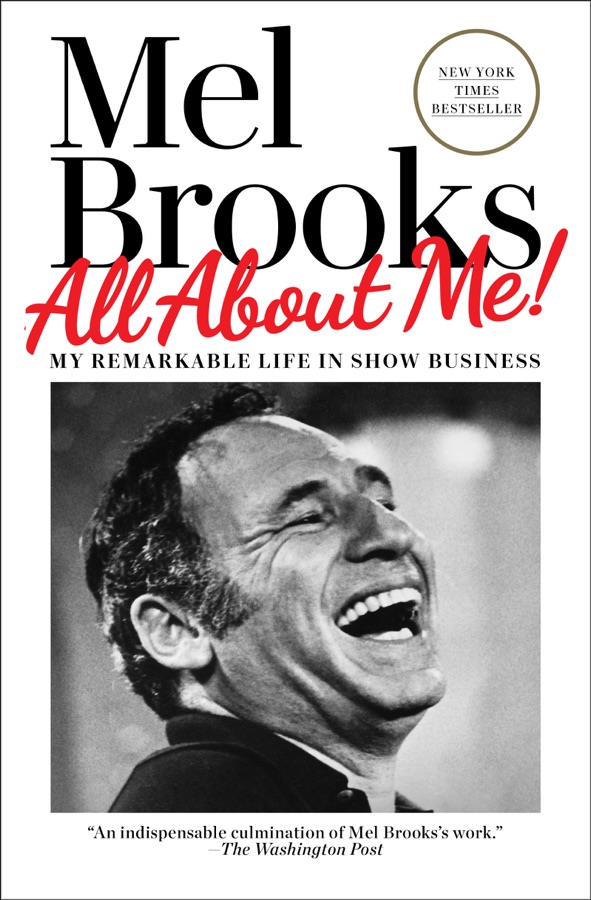
All About Me!: My Remarkable Life in Show Business
Mel Brooks
Notes
Mel Brooks’ memoir is an energetic walk through his life as a comedian, writer, performer, and filmmaker—told with the same comedic voice that shaped his work. He starts with his upbringing (a Jewish kid in Brooklyn during the Depression), then moves through formative experiences that become raw material for jokes and storytelling. Brooks treats his life as a sequence of scenes—family, early hustles, lucky breaks—each filtered through his obsession with getting the laugh. A big portion covers his entry into show business and the foundational years: writing rooms, performance circuits, and the intense apprenticeship of working under (and alongside) major comedic talent. Brooks recounts the climb that led to his signature projects—television successes like Get Smart and then the film era where his parody style became cultural shorthand. Rather than presenting himself as a solitary genius, he foregrounds collaborators, mentors, and the chaotic reality of producing comedy under pressure. The later arc reflects on legacy: the creation of enduring hits (The Producers, Blazing Saddles, etc.), the risks of pushing boundaries, and the personal relationships that ran alongside professional highs. Even when he turns reflective—on age, mortality, and career hindsight—he tends to land the plane with humor. It’s a showbiz autobiography that’s less about “wisdom from on high” and more about how a comedic mind processes a lifetime of material.
Absolutely hilarious. It’s hard not to like Mel Brooks. For an EGOT winner, he’s remarkably self-effacing, and the memoir is just nonstop fun. My son read it too.
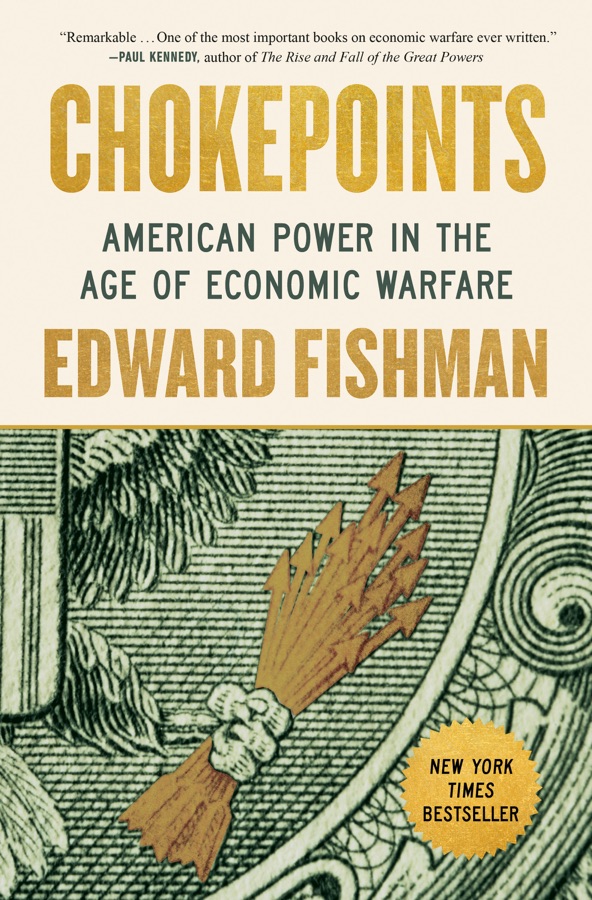
Chokepoints: American Power in the Age of Economic Warfare
Edward Fishman
Notes
Fishman explains how economic warfare became a central tool of modern geopolitics—and how the United States, often quietly, built outsized leverage by controlling key nodes of the global system: dollar-based finance, maritime and insurance infrastructure, advanced technology supply chains (especially chips), and the legal architecture that governs cross-border commerce. He reframes “sanctions” and “export controls” not as niche policy instruments but as forms of power projection that can cripple adversaries without firing a shot. The book is structured like a narrative history of how this toolkit was assembled and deployed: the post–Cold War globalization era, the post-9/11 turn toward financial warfare, the campaign to constrain Iran, the escalation against Russia after Crimea and later Ukraine, and the intensifying U.S.–China technology contest. Fishman shows the behind-the-scenes world of diplomats, lawyers, regulators, and technocrats who design these measures—often improvising new frameworks as crises break faster than institutions can keep up. Fishman’s warning is that chokepoint power is real but not free. Overuse can accelerate fragmentation—pushing rivals to build alternatives to the dollar system, reroute supply chains, or weaponize their own dependencies. In other words, economic warfare can be effective in the short run while quietly eroding the global architecture that made it possible in the first place.
Great book. Dives into how the U.S. can use chokepoints in the global financial system, through Treasury and industry, to exercise power.
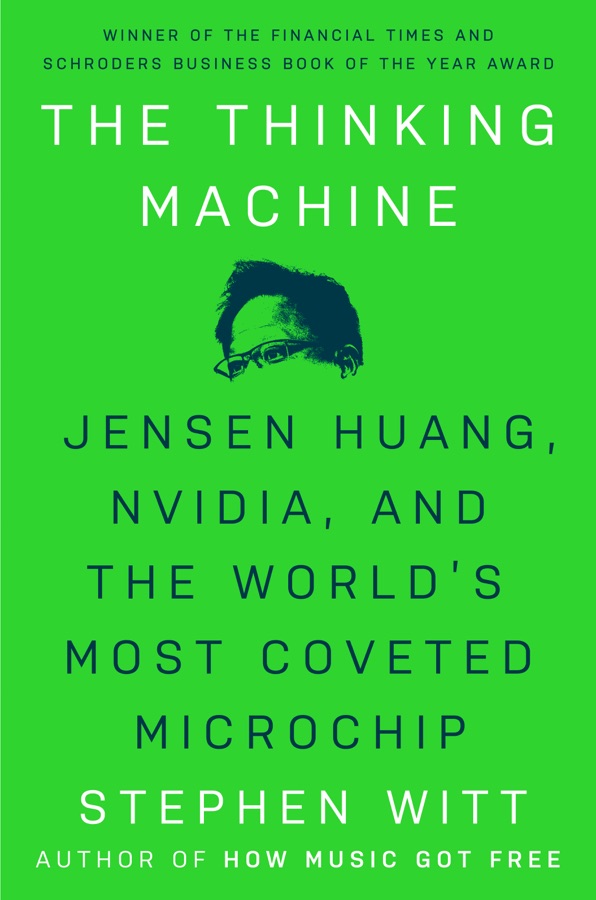
The Thinking Machine: Jensen Huang, Nvidia, and the World’s Most Coveted Microchip
Stephen Witt
Notes
Witt tells Nvidia’s rise as a story of one company repeatedly reinventing what a “computer” is, and one CEO—Jensen Huang—making a sequence of bets that looked reckless until they looked inevitable. The early chapters ground Huang as an immigrant striver and a hard-driving operator, then follow Nvidia’s origins in the 1990s graphics-card wars, where success depended on shipping brutal iterations fast and surviving ruthless competition. What begins as “chips for gamers” becomes a deeper thesis about parallel processing: if you can do many calculations at once, you can unlock entirely new categories of computing. The heart of the book is Nvidia’s pivot from graphics to a platform for general-purpose acceleration—especially through CUDA, the software layer that made GPUs programmable for far more than visuals. Witt frames CUDA as a pivotal lock-in: it created a developer ecosystem that compounded over time, so when deep learning finally hit its inflection point, Nvidia wasn’t just selling hardware—it was selling the default stack. That’s why the AI boom reads in Witt’s telling like the payoff of long, patient groundwork rather than a lucky wave. Witt also lingers on the human side: Huang’s intensity, the internal culture of speed and accountability, and the way existential risk becomes a management style. Nvidia’s story isn’t presented as smooth dominance; it’s closer to a near-death-to-near-death sprint where execution, ecosystem thinking, and a willingness to endure pain outlast slower-moving rivals.
Great book, almost a biography of Huang as well as Nvidia, and how he evolved the company from gaming chips to AI chips. Multiple near disasters on the way to becoming one of the most valuable companies in the world. Read it.
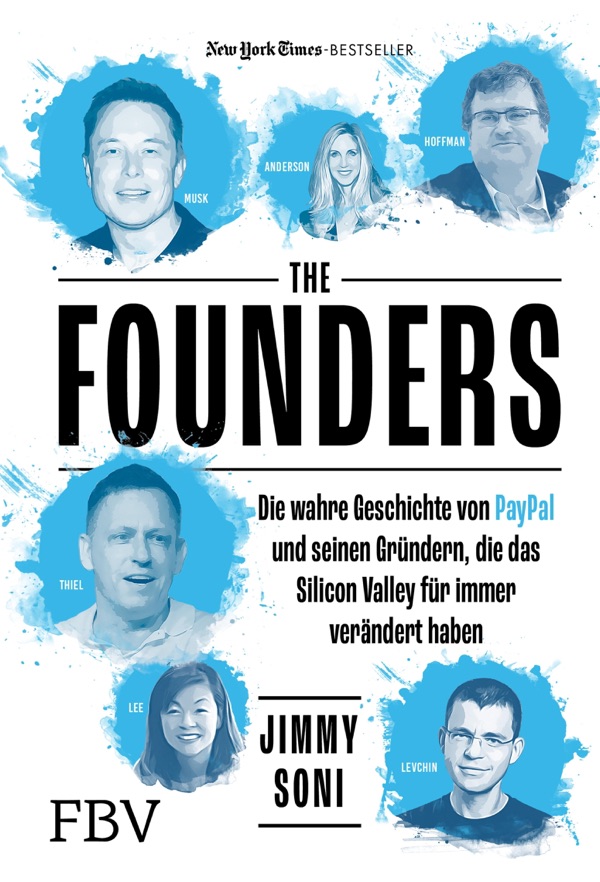
The Founders: The Story of PayPal and the Entrepreneurs Who Shaped Silicon Valley
Jimmy Soni
Notes
Soni tells the PayPal story as a messy, high-velocity collision of personalities, products, and power struggles—less a clean “startup success” arc than a sequence of near-failures that kept getting patched together just in time. The book traces PayPal’s origins through the late-1990s internet boom, including the early fintech experiments (cryptography, online payments, money transfer), the pressure cooker of product-market fit, and the constant external threats (fraud, regulation, competitors, and the reality that moving money online was both technically and socially hard). A major thread is how PayPal’s internal conflict—competing visions, clashing egos, and shifting alliances—became a feature rather than a bug. Soni focuses on the way the company iterated its way toward a workable payments model while fighting fraud at scale, and how leadership churn and “civil war” moments shaped the eventual organization. By the time PayPal becomes a durable platform (and ultimately an acquisition target), the reader sees how the team’s hard-won operational lessons—risk management, growth hacking before it had a name, and ruthless prioritization—were forged in crisis rather than calm planning. Finally, the book frames PayPal as an “institutional seed”: the alumni network (“PayPal mafia,” broadly speaking) goes on to influence venture capital, consumer internet, enterprise software, and modern Silicon Valley culture. The takeaway isn’t that PayPal was destined to win, but that a particular set of builders learned how to ship, adapt, and survive—and then exported those instincts across the tech ecosystem for the next two decades.
Great book on the founding of PayPal and the people who went on to become the “PayPal mafia.”
What the Heck Is EOS?
Gino Wickman & Tom Bouwer
Notes
This is a plain-English guide designed to help employees understand EOS (the Entrepreneurial Operating System) and how it shows up in day-to-day company life. The book’s central goal is practical: reduce mystery and friction by explaining the tools and rhythms that leadership teams adopt—so employees can participate with clarity rather than feeling like EOS is “management’s new thing.” Wickman and Bouwer walk through the core EOS components—vision, people, data, issues, process, and traction—showing how each is translated into operating habits. The narrative typically maps onto the familiar EOS toolkit: what the vision is and how it’s communicated; what “right people, right seats” means in practice; why scorecards and measurables matter; how issues get surfaced and solved; and why standardized processes reduce chaos. The emphasis is on getting everyone aligned around priorities and execution rather than debating strategy endlessly. The book also leans into the employee’s point of view—what to expect in meetings, how accountability works, why priorities get set as “rocks,” and how individuals can contribute to making the system work. In that sense it’s less a leadership philosophy book than an onboarding manual to a specific operating model—aimed at buy-in, shared language, and fewer surprises.
I read the whole EOS series after a few clients mentioned it. Break big problems into manageable pieces, keep moving, report on progress, and communicate broadly. All good habits.
The WEIRDest People in the World: How the West Became Psychologically Peculiar and Particularly Prosperous
Joseph Henrich
Notes
Henrich’s big claim is that “WEIRD” psychology—Western, Educated, Industrialized, Rich, Democratic populations—really is psychologically unusual compared to most humans across time and geography. He surveys evidence that WEIRD societies tend to be more individualistic, analytical, guilt-oriented (vs. shame-oriented), and more willing to trust and transact with strangers, and he argues these traits are not “human nature” but the result of cultural evolution. The engine of the book is Henrich’s proposed historical mechanism: changes to family structure and kinship intensity in Western Europe, driven in part by the Church’s long campaign against practices like cousin marriage and clan-based social organization. He argues that weakening dense kin networks pushed people toward voluntary associations (guilds, towns, universities, religious orders), impersonal institutions, and rule-based cooperation—cultural shifts that then reshaped psychology over generations. In Henrich’s telling, institutions and minds co-evolve: new rules change behavior; new behavior supports new rules; and the loop compounds. From there, Henrich connects the “de-clanning” process to the rise of broad prosperity and modern governance: markets that depend on trust beyond family, states that depend on impersonal administration, and innovation ecosystems that depend on open exchange and merit-like sorting. Even where you disagree with his weighting of causes, the book is unusually ambitious in linking micro-level psychological findings to macro history, and it’s structured to repeatedly test the thesis against cross-cultural data rather than treating Western development as inevitable.
WEIRD stands for Western, Educated, Industrialized, Rich, and Democratic. The book tries to explain how people in those societies came to think differently about trust, family, and dealing with strangers.
Golden Son
Pierce Brown
Notes
Golden Son continues Darrow’s infiltration of the ruling Gold caste, escalating the series from school-yard brutality into full-on imperial politics and war. Darrow is now enmeshed in the top tier of power, serving (and maneuvering around) Gold elites while trying to advance the Sons of Ares’ revolution from inside the system. The book leans hard into the tension of double identity: every relationship is potentially lethal because intimacy increases the risk of exposure. As Darrow rises, the conflict widens into the Society’s factional struggles—alliances between great houses, rivalries fueled by honor and paranoia, and public spectacles meant to cement legitimacy. Battles move from arenas to fleets and planetside campaigns, and Darrow is forced to become not just a fighter but a strategist and coalition builder. The novel’s emotional center is the cost of leadership under deception: Darrow’s victories require manipulation, and his cause demands sacrifices he can’t fully control. The final act is intentionally destabilizing: wins turn brittle, loyalties fracture, and the story ends on a major reversal that redefines who Darrow can trust and what “power” actually protects. It’s the rare middle-book that doesn’t feel like setup—more like the moment where the series admits that revolutions don’t run on heroics alone; they run on betrayal, miscalculation, and collateral damage.
These books are a lot of fun. I like how Pierce Brown builds larger arcs across the series. Another solar-system-scale space opera about power, class, and rebellion.
How to Be a Great Boss
Gino Wickman & René Boer
Notes
This book is a practical, systematized guide to becoming the kind of boss who creates clarity, accountability, and energy rather than confusion and drift. Wickman and Boer treat “great boss” as a learnable craft built from repeatable habits: set expectations, communicate priorities, coach performance, and build a culture where the right people can thrive. A major focus is on the boss’s role as the organization’s “conductor”—making sure people know what matters now, what success looks like, and where to take problems. The authors emphasize tools that keep teams aligned (regular meeting rhythms, clear metrics, simple performance conversations) and that reduce ambiguity (who owns what, what the values are, what gets rewarded). The boss isn’t just a motivational figure; they’re the operating system that either supports execution or silently breaks it. The book is also candid about the hard parts: holding people accountable without becoming adversarial, making tough calls when someone is in the wrong seat, and maintaining consistency when the business is under stress. The throughline is that employees don’t disengage because they “don’t care”—they disengage because the environment is unclear, unfair, or unstructured. Fix the environment, and performance becomes easier to sustain.
Communication is everything. Talk, share, hold people accountable, show respect, repeat.
Behave: The Biology of Humans at Our Best and Worst
Robert M. Sapolsky
Notes
Sapolsky’s project is to answer a deceptively simple question—“Why did you do that?”—by building a multi-layer causal model of human behavior. He works backward from the split-second before an action (brain circuits, neurotransmitters, attention, stress response) to hours and days before (hormones, sleep, blood sugar), to childhood and development (attachment, trauma, learning), to culture, to evolution and genetics. The result is a panoramic explanation of behavior that tries to make room for both biology and context without reducing people to either. Along the way, Sapolsky applies the framework to the behaviors we moralize most: aggression, empathy, tribalism, prejudice, altruism, and cruelty. He shows how the same systems can yield very different outcomes depending on circumstance—how stress can make people impulsive and violent, how group identity can flip ordinary people into “us vs. them” thinking, and how institutions can either dampen or amplify our worst impulses. The book is also a tour of the scientific debates: nature vs. nurture, what we can infer from animal models, and how shaky it is to draw straight lines from genes to complex social behavior. The payoff is philosophical as much as scientific. Sapolsky pushes readers to rethink simplistic ideas of blame and “free will” by showing just how many upstream factors shape downstream choices. He doesn’t argue that responsibility disappears, but that better moral thinking—and better policy in areas like punishment, inequality, and public health—starts by taking causality seriously rather than treating behavior as self-explanatory.
The Courage to Be Disliked
Ichiro Kishimi & Fumitake Koga
Notes
Structured as a series of conversations between a philosopher and a dissatisfied young man, the book introduces Adlerian psychology as an alternative to more deterministic frameworks. The youth arrives convinced that his past and his circumstances have ruined his life; the philosopher argues the opposite: that people are not “driven” by trauma in a mechanical way, but often organize their lives around present goals—like avoiding rejection, avoiding responsibility, or preserving a particular self-image. The dialogue format lets the authors stage the reader’s resistance and then steadily dismantle it. A central concept is that many human struggles are “interpersonal relationship problems” at root, because so much suffering comes from comparison, approval-seeking, and status anxiety. The book emphasizes “separation of tasks”: distinguishing what belongs to you (your choices, your effort, your values) from what belongs to others (their opinions, their reactions). Freedom, in this view, comes from acting in alignment with your principles even when it risks disapproval—hence, the “courage to be disliked.” The later sections shift from individual liberation to a social ethic: genuine happiness is linked to “community feeling,” contribution, and treating others as equals rather than as judges. The book’s tone can feel confrontational by design—its aim is not comfort but reorientation. If you accept Adler’s premise that meaning and identity are chosen rather than discovered, then the practical implication is stark: your life changes when you stop negotiating with the fear of being disliked.
Told through a series of conversations, it’s really a primer on Adlerian psychology.

The Tools of Argument: How the Best Lawyers Think, Argue, and Win
Joel P. Trachtman
Notes
Trachtman breaks legal reasoning into a toolkit of moves that are useful far beyond courtrooms: how to define terms precisely, spot hidden assumptions, structure a claim, anticipate rebuttals, and choose the “frame” in which an argument will be evaluated. The premise is that lawyers are trained not just to speak persuasively, but to reason under constraints—burden of proof, standards of evidence, precedent, and the requirement to show why one interpretation is better than alternatives. The book emphasizes that strong arguments are built, not asserted. Trachtman explains how lawyers use analogies (precedent-like thinking), distinctions (why this case is different), categorical reasoning (what bucket does this fact pattern belong in), and policy reasoning (what consequences follow if we accept this rule). He also leans into the idea that persuasion often depends on making the opponent’s best point legible—because winning requires engaging with the strongest counterargument, not the weakest straw man. By the end, the reader has a set of mental checklists: what claims are being made, what evidence supports them, what assumptions must be true, what principle is implied, and what the “fallback” positions are. It’s a practical manual for anyone who negotiates, writes, sells, manages conflict, or needs to separate “sounding right” from “being well-reasoned.”
I thought this might be useful while I was working closely with a lawyer. It was, in its own way. A good look at how lawyers analyze facts, build arguments, and debate them.
Inner Excellence: Train Your Mind for Extraordinary Performance and the Best Possible Life
Jim Murphy
Notes
Murphy frames performance as the byproduct of inner stability: if you can train your mind and emotions to stay grounded under pressure, your external results will improve as a consequence rather than as the sole objective. The book blends sports-performance coaching with a broader life philosophy—less “maximize hustle” and more “master attachment,” focusing on calm, presence, and disciplined self-awareness in moments that trigger fear or ego. A key idea is that many people unknowingly outsource their worth to external markers—Murphy describes the trap of chasing possessions/achievements/status—and then suffer anxiety because those markers are unstable. He emphasizes retraining the “heart” (the emotional center where fear, craving, and insecurity live) using deliberate practices: reframing fear, releasing obsession with outcomes, and returning attention to what you can control (effort, preparation, attitude, and the next action). Exercises and mantras are designed to be used in real time—during competition, conflict, or high-stakes decisions—when the nervous system wants to hijack judgment. The deeper arc is moral as much as tactical: Murphy argues that extraordinary performance and a good life aren’t separate paths. When you pursue inner peace, humility, and clarity, you become harder to rattle—and that resilience compounds across work, relationships, and health. It’s why the book resonates with athletes and executives alike: it’s fundamentally a training plan for composure.
A lot of performance begins and ends in someone’s head. This combines sports and business stories with ideas for better concentration, clarity, and focus.
Becoming Steve Jobs
Brent Schlender
Notes
Unlike portrayals that freeze Jobs as a permanent “genius jerk,” Schlender and Tetzeli focus on Jobs’ evolution—how he learned (painfully) to become a more effective leader over time. The book revisits his early Apple years with attention to both brilliance and immaturity: visionary instincts, intense product taste, and also volatility, impatience, and interpersonal damage. His ouster from Apple becomes a turning point rather than a footnote—forcing him into new environments that reshape his management style and emotional range. The middle of the story covers NeXT and Pixar as “training grounds.” NeXT refines Jobs’ product philosophy and organizational discipline even when the company struggles commercially; Pixar shows him operating inside a creative ecosystem where he can’t simply dominate every decision. The authors highlight how relationships—with colleagues, mentors, and later his own family—gradually soften some edges while preserving the intensity that made him exceptional. The Apple return is framed as the synthesis: Jobs applies hard lessons to build teams, simplify strategy, and create a culture capable of shipping iconic products at scale. The narrative tracks the arc through iMac/iPod and into the iPhone era, emphasizing that Jobs’ greatest achievement wasn’t just invention—it was building an organization that could repeatedly turn taste, engineering, and storytelling into mass adoption.
A history of how Steve became Steve. Isaacson’s book is probably better—I love his writing—but this goes deeper on the earlier years and isn’t quite so hagiographical.
The Power and the Money: The Epic Clashes Between Commanders in Chief and Titans of Industry
Tevi Troy
Notes
Troy explores a recurring American dynamic: presidents and business titans are locked in a relationship of mutual dependency, suspicion, and leverage. CEOs need the state—for regulation, contracts, legitimacy, and macro stability—while presidents need business—for jobs, innovation, and the broader health of the economy. The book is built as a sequence of case studies that show how personal chemistry, political incentives, and economic conditions combine to create alliances or wars between the White House and the private sector. Across different eras, Troy examines how these relationships shape policy and markets—when cooperation accelerates national projects and when conflict creates backlash, uncertainty, or unintended consequences. The stories emphasize that “power” isn’t monolithic: presidents have formal authority, but corporate leaders have capital, platforms, and networks that can pressure policy indirectly. And because both sides operate under public scrutiny, symbolism matters—who gets invited, who gets blamed, who becomes a stand-in for “big business,” and how quickly narratives harden into ideology. A subtle theme is that these clashes are rarely purely about principle. They’re also about timing, ego, incentives, and coalition management. Even when Troy is sympathetic to certain leaders, he shows how fragile these relationships can be—and how easily presidents and CEOs misread each other’s constraints. The result is a political economy history told through personality-driven flashpoints rather than abstract theory.
Presidents and CEOs often need each other. Sometimes they clash; sometimes they find ways to work together.
The World That Wasn’t: Henry Wallace and the Fate of the American Century
Benn Steil
Notes
Benn Steil tells the story of Henry A. Wallace—FDR’s vice president during World War II—and argues that Wallace was far more consequential (and far more vulnerable to manipulation) than most popular histories acknowledge. The book follows Wallace’s rise: a brilliant, eccentric Midwesterner with deep convictions about economics, race, and international cooperation, who became an unlikely national figure through his work in agriculture policy and the New Deal. Wallace’s idealism—especially his belief that the U.S. and Soviet Union could build a durable postwar partnership—becomes the defining tension of the biography. Steil then centers the drama on the wartime and immediate postwar years, when Wallace’s vision collides with hardening realities: Soviet behavior in Eastern Europe, internal U.S. political dynamics, and the emerging architecture of the Cold War. A key narrative thread is Wallace’s relationship with Soviet-linked channels and the extent to which Kremlin-aligned actors exploited his hopes for peace. The 1944 Democratic convention (where Wallace is replaced on the ticket) and Wallace’s later break with mainstream Democrats become pivotal moments, reframing him from heir apparent to dissident outsider. By the end, Steil is making a larger argument about history’s fork in the road: Wallace represented a widely believed “alternative Cold War” path, but Steil contends that this alternative was far less realistic than many assume because it depended on Soviet reciprocity that never materialized. The result is part political biography, part narrative history of early Cold War formation—showing how ideology, intelligence, personality, and party politics fused to shape the world that did happen.
I didn’t know much about Henry Wallace before this, but wow, what a story. He came remarkably close to the presidency. Hard not to wonder how different American history might have been.
Playing with Reality: How Games Have Shaped Our World
Kelly Clancy
Notes
Kelly Clancy builds a sweeping history of games—not as trivial entertainment, but as tools that reveal how humans think, compete, cooperate, and design systems. She starts from the idea that games are structured micro-worlds: they compress conflict, incentives, strategy, and learning into repeatable rules. From there, she traces how “play” has repeatedly transformed real institutions—military planning, political strategy, economics, computer science, and more—often because games let people rehearse complex realities safely before they risk them in the real world. A major arc is how games became formalized into game theory and strategic modeling—particularly through war-gaming traditions and Cold War-era thinking about deterrence, escalation, and rational actors. Clancy shows how these frameworks spilled into civilian life: markets, negotiations, politics, and ultimately computing and AI. She connects the rise of modern computing to the need to simulate and optimize complex game-like systems—then closes the loop by showing how AI systems today are often trained through games and adversarial environments, echoing earlier eras where games acted as laboratories for power. Clancy also uses modern neuroscience and psychology to explore why games hook us and what they do to our minds: how reward, uncertainty, status, and competition shape attention and behavior. The bigger implication is that many of the “games” governing modern life—online attention markets, political outrage cycles, financial incentives—weren’t inevitable; they were designed. And if systems are designed, they can be redesigned, which is why the book ultimately reads like both a cultural history and a warning about the realities we’re currently “playing.”
Interesting listen on how games and play—and really, imagination—have shaped us.
Slow Productivity: The Lost Art of Accomplishment Without Burnout
Cal Newport
Notes
Cal Newport argues that modern “knowledge work” confuses activity with accomplishment. In many offices, productivity is measured by visible busyness: rapid email replies, nonstop meetings, status updates, and the appearance of being slammed—what he frames as a broken, industrial-era proxy (“pseudo-productivity”) applied to work that actually requires focus, creativity, and depth. The result is overload and burnout without a matching increase in meaningful output. Newport proposes a replacement philosophy built on three principles: do fewer things, work at a natural pace, and obsess over quality. Instead of treating your workload as infinite and urgent, he encourages narrowing commitments, letting important projects take the time they truly require, and leaning into craftsmanship—because high-quality outputs compound in value more than scattered, shallow tasks. He supports the argument with examples from knowledge workers, creators, and historical “slow but great” achievers, positioning slow productivity as a return to how valuable work was traditionally produced. The practical section focuses on tactics that make the philosophy usable: manage a visible project list, reduce and redesign meetings, protect time for deep work, and build trust by delivering consistently—so you earn the autonomy to control your pace. Newport also argues for seasonality: periods of intensity followed by deliberate downshifts, mirroring how creative and scholarly work often happens in real life. The point isn’t laziness—it’s sustainability, so you can keep producing meaningful work for decades instead of flaming out.
White-collar work rarely gives you a visible accomplishment like building a chair, but the work matters. Sometimes the best way to do it is to be productively slow: stop racing and give the important thing your full attention.
Meditations for Mortals: Four Weeks to Embrace Your Limitations and Make Time for What Counts
Oliver Burkeman
Notes
Burkeman’s premise is that the feeling of being “not on top of things” isn’t a temporary phase—it’s the human condition. Instead of trying to finally conquer life through better systems, he proposes what he calls “imperfectionism”: accepting finitude, uncertainty, and incomplete control, then choosing meaningful action anyway. The book is structured like a four-week mental reset, with short daily reflections meant to be practiced rather than merely understood. Each meditation targets a common modern trap: treating life like a backlog to clear, believing peace will come once the inbox is empty, or assuming you can optimize away anxiety. Burkeman repeatedly redirects attention from fantasy futures (“when things calm down…”) to present choices: doing one worthwhile thing today, embracing “good enough,” and resisting the compulsion to fix everything before you’re allowed to live. He’s especially good at naming the emotional drivers underneath productivity obsession—fear of insignificance, fear of judgment, fear of lost possibility—and then offering small, humane counters. The effect is oddly energizing: by surrendering the impossible goal of total control, you recover time and attention for relationships, craft, rest, and genuine engagement. Burkeman isn’t arguing against ambition; he’s arguing against the kind of ambition that turns life into permanent preparation. The book lands as a practical, compassionate companion for high achievers who suspect the “grind” isn’t the only way—and want a saner alternative without drifting into vagueness.
The Machiavellians: Defenders of Freedom
James Burnham
Notes
Burnham’s book is a realist critique of how politics actually works—and a warning about how naïve democratic idealism can leave societies defenseless. He argues that in every large organization—political parties, unions, corporations, even democracies—power inevitably concentrates in the hands of a minority. The key question isn’t whether elites exist, but whether institutions can force elites to compete, rotate, and remain constrained. Burnham frames this realism as essential to preserving freedom rather than cynically abandoning it. To build the case, Burnham synthesizes “Machiavellian” thinkers—Machiavelli himself, plus modern elite theorists like Pareto, Mosca, Michels, and others—extracting shared principles: the “circulation of elites,” the difference between official ideologies and real motives, and the tendency of organizations toward oligarchy (famously, Michels’ “iron law”). Burnham is especially interested in how ruling groups maintain legitimacy through myths—stories the public believes about who rules and why—while real power moves through control of institutions, patronage networks, and coercive capacity. The punchline is strategic: freedom survives not through pure virtue, but through balanced power structures—multiple centers of authority, rival elites, and institutions capable of checking any single group from becoming permanent and unaccountable. Burnham wants readers to trade moralized politics for power literacy: once you understand the rules of real political behavior, you can design better safeguards and resist the slide into authoritarian control disguised by comforting rhetoric.
True to Machiavelli, this is a book about how power actually works—and how efforts to “protect freedom” can slip into authoritarian control.
Selling the Dream
Jane Marie
Notes
Jane Marie investigates multilevel marketing (MLM) as both industry and cultural phenomenon—how it sells the promise of entrepreneurship, community, and flexible income while systematically extracting money from participants who are statistically likely to lose it. She traces the history and mechanics: recruitment-driven incentives, the blurred line between “direct sales” and pyramid-like behavior, and the way companies use motivational language, identity, and social pressure to keep people buying product and chasing status. The book also emphasizes why MLMs persist despite waves of exposés: legal ambiguity, political influence, and the psychological appeal of “belonging + purpose + hope,” especially for people facing economic insecurity or limited options. Marie combines reporting, case examples, and cultural analysis to show how MLMs weaponize optimism—turning personal relationships into distribution channels and reframing failure as a lack of hustle. The result reads like a consumer protection investigation and a portrait of a uniquely American form of commercial persuasion.
Terrible what these MLMs and pyramid schemes have done to people. Absolutely terrible—but a good book.
Pattern Breakers: Why Some Start-Ups Change the Future
Mike Maples Jr. & Peter Ziebelman
Notes
Maples and Ziebelman argue that world-changing startups don’t just compete—they break patterns. Instead of making a product “10% better,” they ride inflection points (technical, regulatory, cultural, distributional) that make a once-crazy idea suddenly inevitable. The book is partly a founder playbook and partly a venture-investing lens: it explains how to recognize moments when the rules of an industry are shifting—and how to build a company that becomes the new default rather than a better incumbent. A core theme is non-consensus insight: pattern-breaking opportunities often look wrong to most smart people because they don’t fit existing mental models. The authors describe how founders can articulate a “secret” about the future, design an early market where that secret is obviously true, and build momentum that converts disbelief into adoption. They emphasize narrative as strategy—not marketing fluff, but a clear explanation of the new game you’re creating, why the old assumptions are failing, and why your product is the natural answer to the new conditions. The practical guidance centers on behaviors that make pattern breaking more likely: hunting inflections, resisting incrementalism, testing the thesis quickly, and obsessing over what makes your approach categorically different. The book’s underlying optimism is that “breakthrough” isn’t magic—it’s a discipline of seeing, betting, and building when reality is changing faster than institutions can update their beliefs.
I kind of take the flip side of this. Most startups don’t change the future, and even fewer change it the way they set out to. That’s okay. You can build a great business without putting a dent in the universe. If you do want to make that dent, though, you probably have to do something revolutionary rather than evolutionary.
All the Worst Humans: How I Made News for Dictators, Tycoons, and Politicians
Phil Elwood
Notes
Elwood’s memoir is an inside look at the morally swampy world of high-stakes public relations—where “truth” isn’t discovered so much as engineered, packaged, and distributed. He recounts his career as a communications operator working for clients with extreme reputational problems, including authoritarian governments and powerful figures who needed Western legitimacy. The book is structured around war stories: surreal travel, crisis response, narrative manipulation, and the everyday hustle of shaping what journalists cover and how they frame it. Along the way, Elwood shows the mechanics of modern spin: how access is traded, how pressure is applied, how attention is redirected, and how media incentives can be exploited. A recurring idea is that PR often wins because it has more resources than journalism—more time, more coordination, more agenda clarity—so the public record becomes a battleground where the best-funded narrative frequently prevails. He’s candid about the adrenaline of the work and the professional pride in “getting away with it,” even as the reader sees the corrosive impact of treating perception as a commodity. The memoir isn’t purely celebratory; it carries a redemption arc, or at least a confession: the thrill curdles into disgust as Elwood confronts what he helped enable. The result is both entertaining and unsettling—a reminder that much of what we “know” about public events is downstream from people whose job is to manufacture what seems knowable.
Fun book about how a PR guy made news, spun controversies, and worked for some of the worst people imaginable.
Selling Sexy: Victoria’s Secret and the Unraveling of an American Icon
Lauren Sherman & Chantal Fernandez
Notes
Sherman and Fernandez tell the rise-and-fall story of Victoria’s Secret as a case study in American consumer culture: how a lingerie chain became a retail superpower, shaped beauty standards for decades, and then lost the plot as culture—and commerce—moved on. They trace the company’s growth from boutique novelty to mall-era domination, driven by aggressive branding, tightly controlled imagery, and the creation of the “Angels” as both marketing machine and cultural event. At its peak, the brand wasn’t just selling bras; it was selling a national fantasy about femininity and desirability. The book then follows the cracks: internal power dynamics, strategic misreads, and public controversies that collided with a changing world. As consumer preferences shifted toward comfort, inclusivity, and authenticity—and as backlash grew against the brand’s narrow ideals—Victoria’s Secret struggled to adapt. The authors also examine the darker chapters that damaged credibility and accelerated decline, situating them within a broader story about what happens when a company mistakes cultural dominance for permanence. In the final arc, the story becomes one of reinvention under pressure: how a legacy brand tries to modernize without losing what made it powerful, and whether “sexiness” can be redefined in a way that isn’t simply nostalgia. The book uses Victoria’s Secret as a lens on retail, media, globalization, and the contradictions many consumers feel—rejecting certain standards while still being drawn to the symbolism and experience the brand created.
I listened to this one. No, there were no glossy photos. It’s a business boom-and-bust story: a new owner grows the hell out of it, the company pushes too hard, the world pushes back, and the business deteriorates.
The Nvidia Way: Jensen Huang and the Making of a Tech Giant
Tae Kim
Notes
Kim tells Nvidia’s corporate story as a long series of existential tests—product failures, near-bankruptcy moments, brutal competitive cycles—repeatedly survived through an unusual mix of technical ambition and organizational discipline. Rather than treating Nvidia’s AI dominance as a sudden breakthrough, Kim tracks how the company methodically positioned itself for waves that didn’t fully exist yet: gaming graphics, then workstation and data-center acceleration, and eventually machine learning as the “killer workload” that made GPUs indispensable. The book spends significant time on Jensen Huang’s leadership model and the culture it produces: high standards, speed, direct accountability, and a bias toward deep technical truth over internal politics. Kim emphasizes how Nvidia’s advantage is not just silicon design; it’s the full-stack approach—hardware plus software plus developer ecosystem—where CUDA becomes the flywheel that locks in adoption and accelerates innovation. By the end, Kim frames Nvidia less as “a chip company” and more as a compute platform company whose strategy is to make every new frontier (AI, simulation, robotics) dependent on accelerated computing. The narrative reads like a case study in compounding: relentless iteration, ecosystem-building, and leadership intensity that turns technical optionality into durable market power.
You can’t read just one book on a subject. You always need to read a few. This was also great.

The Ancient City: A Study of the Religion, Laws, and Institutions of Greece and Rome
Numa Denis Fustel de Coulanges
Notes
Fustel’s thesis is that early Greek and Roman civic life can’t be understood without starting from religion—specifically household and ancestor cults. He argues that the fundamental unit of ancient society was the family, bound not primarily by affection or economics but by sacred rites around the hearth, the dead, and inherited ritual obligation. From those beliefs came rules about marriage, adoption, inheritance, property, and authority—because legal structure was originally a religious structure. The book then scales outward: families form clans and tribes; religious duties expand into communal festivals and public priesthoods; and the city emerges as a sacred-political organism, not merely an administrative one. Fustel presents ancient law as the crystallization of cult—why certain people could hold office, why some were excluded, how citizenship worked, and why the boundary between private and public life was porous. Politics is essentially theology with enforcement power. Finally, he explains “revolutions” in the ancient world as shifts in belief and ritual authority that destabilize the social order. As religious foundations weaken or transform, institutions follow—old hierarchies crack, new forms of association appear, and the municipal regime changes character. Even when you disagree with his single-cause emphasis, the book’s enduring impact is its insistence that institutions grow out of deep social beliefs, not just material interests.
Just like the title says: to understand ancient Greece and Rome, the author argues, you have to start with religion, which takes you back to the family and the hearth.
Who Is Michael Ovitz?
Michael Ovitz
Notes
Ovitz’s memoir is the insider origin story of modern Hollywood power brokering. He starts as a kid with no connections who fights his way into the William Morris mailroom and then learns, obsessively, how deals actually get done: relationships, leverage, packaging, and making yourself indispensable to talent. The early chapters show him mastering the craft of representation—how to read incentives, how to negotiate, and how to build trust with clients who are both high-performing and highly insecure. The core narrative is the creation and rise of Creative Artists Agency (CAA), which Ovitz co-founds and turns into an empire by reshaping the industry’s balance of power. He describes the “packaging” model—assembling actors, directors, writers, and financing into a single deal—so the agency becomes less a middleman and more a kingmaker. The memoir is packed with portraits of stars, studios, and executive wars, but the deeper subject is organizational: how a small, hungry group builds a culture of intensity, loyalty, and competitive dominance in an industry fueled by ego. Later sections cover the volatility of being “the most powerful man in Hollywood,” including the costs of reputation, internal conflict, and the famous, ill-fated stint at Disney (a reminder that power in one ecosystem doesn’t automatically transfer to another). Ovitz writes like someone explaining how influence is manufactured—through work ethic, information advantage, and alliances—while also revealing how fragile influence becomes once narratives turn against you.
Think I heard about this on Founders and then wanted to read it. A Horatio Alger story: a middle-class kid from Encino becomes one of the great dealmakers in Hollywood. What stuck with me was packaging. Instead of just selling an actor to a movie, CAA would put the talent together—actors, writers, directors—and bring the whole project to a studio. Clever way to make the studio’s job easier and give the talent more leverage.
7 Powers: The Foundations of Business Strategy
Hamilton Helmer
Notes
Helmer’s book is an attempt to make strategy concrete by defining “Power” as the set of conditions that allow a business to earn persistent, outsized returns. Most companies compete on operational effectiveness; few build structural advantage. Helmer argues that strategy is the craft of getting to a position where you have power—not just “good execution”—and then defending it as rivals attack. He outlines seven distinct “powers”: scale economies (unit costs fall with volume), network economies (value rises as more users join), counter-positioning (a challenger adopts a model incumbents can’t copy without self-harm), switching costs (customers are “stuck” because changing is painful), branding (trust/meaning creates price or preference), cornered resource (preferential access to something scarce), and process power (complex, embedded capabilities that are hard to replicate). The framework is useful because it forces you to name which advantage you’re building—otherwise “strategy” becomes vibes. The second half is about “Getting There”: how powers emerge, what early signals look like, and how to avoid fooling yourself. Helmer’s tone is analytic and investment-minded—he wants you to diagnose businesses the way you’d diagnose moats, and to separate durable advantage from temporary momentum.
Had to read it after listening to all the Acquired podcasts. Great framework for analyzing companies from multiple perspectives.

Childhood’s End
Arthur C. Clarke
Notes
Clarke’s novel begins with a seemingly benevolent alien intervention: massive ships appear over Earth’s cities, and the Overlords announce they will supervise humanity to prevent self-destruction. War and major cruelty end, a kind of enforced global order emerges, and the world becomes a near-utopia—yet the Overlords refuse to show themselves, and many humans suspect the peace is the prelude to something darker. As decades pass, the mystery deepens. The Overlords’ leader Karellen interacts through intermediaries, promising eventual revelation, while humanity wrestles with what it means to lose agency even in a golden age. When the Overlords finally reveal their appearance, it shocks humanity for symbolic reasons—raising questions about fear, myth, and whether we’re psychologically prepared for the truth of what’s guiding us. The final act shifts from politics to metaphysics: a new generation of children begins changing, individual personalities thin out, and humanity’s future is revealed as evolutionary transformation rather than continued civilization. Clarke frames the “end” not as apocalypse-by-war but as the dissolution of human individuality into something larger—beautiful, terrifying, and final.
Fun to read old science fiction sometimes. I’d never read this one. Short and very good.
Original Sin
Jake Tapper
Notes
Tapper and Thompson present a reported narrative—based on extensive insider sourcing—that argues Biden’s physical and cognitive decline was evident well before the 2024 election cycle’s breaking point, and that a tight inner circle worked to manage, limit, and obscure that reality from the public and even from key Democratic stakeholders. The authors frame the “original sin” as the decision to run again despite mounting limitations, which then necessitated a broader campaign of denial, message control, and stage management. The book’s tension is part investigative and part political tragedy: it connects internal choices (loyalty, careerism, fear of party fracture, and belief that only Biden could win) to downstream consequences—culminating in the debate moment that made concealment impossible and the scramble that followed. Even where readers may dispute emphasis or sourcing, the book is structured as an autopsy of institutional decision-making under stress: how organizations rationalize risk, suppress dissenting signals, and keep marching until reality forces a collapse.
Comments probably aren’t required on this one. Everyone has strong opinions.

Murder in the Dollhouse: The Jennifer Dulos Story
Rich Cohen
Notes
Cohen reconstructs the disappearance of Jennifer Dulos, a Connecticut mother of five who vanished in 2019 after dropping her children at school, in the midst of an extraordinarily bitter divorce and custody battle. The book treats the case as both true-crime narrative and social portrait: outwardly affluent suburban perfection masking escalating fear, control, and legal warfare. Cohen traces Jennifer’s background, her relationship with Fotis Dulos, and the slow unraveling of a marriage that appeared glamorous but grew increasingly volatile behind closed doors. As the investigation unfolds, Cohen follows the competing narratives—what Jennifer was documenting, what friends and family noticed (or missed), and how the legal system’s pace and incentives can intensify conflict. The case’s grim center is that Jennifer’s body was never found, yet evidence and subsequent events shaped the public understanding of what likely happened. Cohen details how Fotis and his then-girlfriend Michelle Troconis became central figures in the criminal case, and how the story ultimately turned into a sprawling drama of privilege, power, denial, and consequence. The “dollhouse” metaphor becomes Cohen’s organizing idea: the pursuit of an idealized life and image—beautiful home, perfect family, impressive status—can become a trap when reality breaks the frame. The book’s edge isn’t just suspense; it’s outrage at institutional failure, and the way a person’s warnings can be normalized away until it’s too late.
A terrible, very local tragedy.
Power and Prediction: The Disruptive Economics of Artificial Intelligence
Ajay Agrawal, Joshua Gans & Avi Goldfarb
Notes
Agrawal, Gans, and Goldfarb argue that AI’s core economic function is prediction—reducing the cost of predicting outcomes (what will sell, who will churn, what will break, what will be fraud). But the real disruption doesn’t come from swapping AI into one task at a time; it comes when cheap prediction forces organizations to redesign entire systems—workflows, roles, incentives, and decision rights—around a new division of labor between humans and machines. They introduce a framework where prediction is only one part of decision-making; you also need judgment, data, and action. AI shifts the bottlenecks: once prediction becomes cheap, the scarce resources become data quality, the right objectives, complementary innovations, and organizational willingness to restructure. This is why adoption is slower than hype suggests: the value is real, but it requires deep complementary change (like electricity did) before productivity shows up broadly. A major theme is “power”: as prediction improves, those who control data, platforms, and decision infrastructure gain leverage. The authors explore how firms can either use AI to automate existing processes (limited upside) or to build new ones (where the real value is). The book lands as a guide for leaders: don’t ask “Where can we add AI?”—ask “What would we redesign if prediction were nearly free?”
All about how AI can improve prediction and lower its cost. A lot of high-level business judgment is pattern matching: I saw this happen, so I asked that question; I heard about that, so I did this. AI is getting awfully good at finding patterns.
These Strange New Minds: How AI Learned to Talk and What It Means
Christopher Summerfield
Notes
Summerfield, a neuroscientist, tackles the question that sits underneath most AI arguments: when a system can generate fluent language, is that “thinking,” or is it sophisticated mimicry? He walks readers through how modern language models evolved—why data-driven (“empiricist”) approaches beat earlier logic-first (“rationalist”) dreams—and what it actually means, technically, for a model to predict the next token and still produce coherent reasoning-like behavior. Rather than hyping consciousness, Summerfield focuses on capability: models don’t have human intentions or lived experience, but their linguistic competence reveals something important about intelligence itself. He uses cognitive science to argue that human thought is also deeply statistical and pattern-based—just embodied, goal-directed, and constrained by biology. That’s why LLM flaws (hallucination, inconsistency, bias) are not random; they reflect a system trained on messy human artifacts and optimized for plausibility over truth unless paired with external scaffolding. The book’s “so what” is twofold: it helps readers build intuition for how these systems work (and when to distrust them), and it treats AI as a mirror for understanding our own minds. Summerfield’s stance is cautious but not dismissive: even if AI isn’t conscious, “strange minds” can still be powerful—and society needs to understand them clearly to use them safely and well.
Is what LLMs do actually thinking? Or is it guessing or mimicry? Even if they aren’t conscious, they’re still powerful.
George Lucas: A Life
Brian Jay Jones
Notes
Jones presents Lucas as a paradox: a shy, stubborn outsider who became one of the most consequential power brokers in modern entertainment. The biography traces his early life, including the formative experiences that pushed him toward filmmaking, and then follows the painstaking climb through film school, early shorts, and the first features. Jones emphasizes that Lucas’ genius was never just storytelling—it was building systems: new production methods, new visual techniques, and eventually new business structures that let him keep control. The center of the book is the creation of Star Wars and what it took to get it made: creative conviction, technical improvisation, conflict with studios, and the near-chaos of production. But Jones treats the real revolution as what came after—Lucas’ insistence on merchandising and rights, and the building of Lucasfilm and Industrial Light & Magic as institutions that industrialized movie magic. Lucas becomes less a director and more an architect of an ecosystem that reshaped the industry’s economics and aesthetics. The later chapters explore the costs of that control and the controversies around the prequels, showing Lucas as both visionary and lightning rod—someone whose perfectionism and autonomy produced breakthroughs, but also isolation from corrective feedback. By the end, Jones frames Lucas’ legacy as bigger than any single film: he rewrote how blockbusters are made, financed, and monetized—and in doing so, changed what Hollywood is. Here are Books 37–48 (same order, spoilers OK, longer books = longer summaries).
I listened to this while restacking and packaging hundreds of cases of beverages. Great story about how Lucas became Lucas, even if we all know parts of it already.
The Decline and Fall of the Human Empire: Why Our Species Is on the Edge of Extinction
Henry Gee
Notes
Paleontologist Henry Gee frames humanity as a brief, fragile experiment viewed through deep time: most species (including other human species) don’t last, and our current dominance can look less like destiny and more like a temporary peak. He argues that what we call “civilization” is built on unusually brittle foundations—especially the rapid shift to agriculture and dense settlement, which changed diet, disease exposure, social structure, and ecological dependence faster than biology could comfortably absorb. The result is a species that became powerful by specializing in a narrow way of life—and therefore became newly vulnerable. Gee’s pessimism is structural rather than apocalyptic: he emphasizes how modern human success relies on interconnected systems (food, energy, trade, public health) that are efficient but not necessarily resilient. He layers in long-run pressures—environmental degradation and climate stress, disease risk amplified by genetic uniformity and proximity, and demographic shifts that could destabilize the economic scaffolding of large societies. In this view, “collapse” doesn’t have to arrive as a single dramatic event; it can look like compounding fragility and shrinking margin for error. Even with the bleak setup, Gee offers a kind of conditional hope: if the Earth-bound version of humanity is inherently constrained, then survival at the species level may require diversification—spreading beyond a single planet and building redundancy the way evolution does through branching. Space settlement isn’t presented as sci-fi triumphalism so much as the logical extension of the book’s main point: single-point-of-failure species don’t tend to persist.
Humans haven’t been around that long, and Gee argues we may be more fragile as a species than we think. His proposed escape hatch: become spacefaring. I’m not sure I buy the timeline, but it’s a hell of a question.
Lives of the Stoics: The Art of Living from Zeno to Marcus Aurelius
Ryan Holiday & Stephen Hanselman
Notes
Holiday and Hanselman present Stoicism through biography: instead of treating the philosophy as an abstract set of doctrines, they tell short, vivid lives of key figures from the school’s founder Zeno through later Roman-era Stoics like Seneca, Epictetus, and Marcus Aurelius. Each mini-portrait highlights how Stoicism was forged in messy real life—exile, slavery, political terror, public pressure, physical disability, and moral compromise—rather than in calm seminar-room debate. Across the sequence, the book keeps returning to Stoicism’s practical core: control what you can (judgment, choices, character), accept what you can’t (fortune, reputation, outcomes), and treat virtue as the only stable “good.” But the biographies show how hard that is. Seneca’s wealth and proximity to power raise questions about hypocrisy and survival; Epictetus’ experience as an enslaved person turns Stoicism into a philosophy of inner freedom under external constraint; Marcus’ role as emperor makes the tension between ideals and governance unavoidable. The cumulative effect is less “here’s how to be calm” and more “here’s what it costs to live by principles.” The authors use each life as a case study in courage, justice, temperance, and wisdom—sometimes inspirational, sometimes cautionary—so the reader ends up with Stoicism as a lived ethic rather than a motivational aesthetic.
A history of Stoicism. Good book, pretty quick. Holiday writes well.
The Power of Strangers: The Benefits of Connecting in a Suspicious World
Joe Keohane
Notes
Keohane argues that modern life trains us to avoid strangers—headphones in, eyes down, minimal contact—and that this “civic retreat” comes with hidden costs: increased loneliness, weaker social trust, and a narrowed sense of possibility. He blends reporting and social science to show that humans are wired for both caution and connection, and that the connection side tends to pay off more than we expect when interactions are safe and low-stakes. The book follows Keohane as he tests the premise in real life—talking to people he wouldn’t normally talk to, entering social settings that feel awkward, and observing how small exchanges change mood and perception. The research he highlights suggests that even brief conversations can boost well-being and empathy, partly because we systematically underestimate how pleasant (and how welcome) social contact will be. He explores why the fear is so persistent—risk perception, media narratives, cultural polarization—and how societies that are better at “stranger connection” tend to function better: they cooperate more easily, share information faster, and build resilience through weak ties. Keohane isn’t naïve about danger; he’s interested in recalibrating a default setting that has drifted toward suspicion. The book lands as a practical case for micro-bravery: choosing small moments of openness that compound into richer networks, more trust, and a less atomized daily life.
We’re all so in our heads—or hiding behind our AirPods—that we don’t talk to people like we once did. This book asks why we’ve become so suspicious of strangers and what we miss by avoiding them.
Look Again: The Power of Noticing What Was Always There
Tali Sharot & Cass R. Sunstein
Notes
Sharot and Sunstein explore a psychological problem hiding in plain sight: we adapt. The things that once thrilled us—relationships, achievements, comforts—fade into the background through habituation. The authors argue that this “noticing decay” doesn’t just reduce joy; it also reduces problem detection. We stop seeing what’s wrong in our systems, workplaces, and communities because familiarity dulls attention, and we stop seeing what’s right in our lives because we assume it will always be there. Their solution is built around the power of change to reawaken perception: altering routines, introducing novelty, and deliberately creating contrast so the mind re-registers what it has been filtering out. They discuss “dishabituation” strategies—breaks, reframing, rotation, new contexts—that can restore appreciation and sharpen observation. The book’s examples move across personal life (gratitude, relationships, consumption) and public life (organizational blind spots, safety failures, injustice that becomes “normal”), arguing that noticing is the first step to both happiness and reform. What makes the book stick is the dual emphasis: “look again” isn’t just self-help mindfulness; it’s also civic attention. If we can train ourselves to notice what we’ve stopped seeing—good and bad—we become harder to numb, easier to delight, and better equipped to fix what’s broken.
Two words: pay attention. Notice what’s going on around you. It’s easy to filter out a lot of life on autopilot; sometimes you have to make an effort to see it.
Source Code: My Beginnings
Bill Gates
Notes
Gates’ first memoir installment focuses on formation: childhood, family dynamics, early obsessions, and the specific environments that shaped the “Microsoft founder” before Microsoft was inevitable. He describes a driven, sometimes difficult young version of himself—competitive, intensely focused, socially unsure in ways that pushed him toward systems and problem-solving. The narrative spends meaningful time on school and early programming culture, where access to computers (rare at the time) created a small subculture of kids who could live inside logic and code. As the story moves toward adulthood, Gates frames his partnership with Paul Allen and their early hustle as a combination of timing and obsession: they recognize that personal computing is about to explode, and they decide—before most people understand the stakes—to bet their lives on software. The memoir covers the leap from Harvard to the startup grind, the early product bets, and the realities of building credibility with far larger companies while still operating like scrappy outsiders. It culminates in the period when Microsoft begins locking in foundational deals that will define its trajectory. The tone (based on early reception descriptions and Gates’ own positioning) aims less for corporate legend and more for origin story—how a particular mind, in a particular time, with particular relationships and advantages, got set on the path that later reshaped global computing.
Gates’ memoir about his early years.
The End of the World Is Just the Beginning: Mapping the Collapse of Globalization
Peter Zeihan
Notes
Zeihan argues that the globalization era that defined the post–World War II world—secure sea lanes, integrated supply chains, demographic tailwinds, and U.S.-backstopped trade—was historically unusual and is now reversing. In his model, the “system” that made cheap manufacturing, global just-in-time logistics, and export-led growth possible is breaking down due to aging populations, energy/resource constraints, and geopolitical fragmentation. The consequence is a world where countries re-localize production, trade becomes more political and less efficient, and many regions face hard choices about what they can still reliably obtain from abroad. He walks through major domains—finance, transport, energy, industrial inputs, manufacturing, agriculture—showing how each depends on stable, predictable global coordination. When that coordination weakens, the cost isn’t just higher prices; it’s volatility and intermittency. Zeihan is especially focused on demographics: shrinking and aging workforces undermine both growth and the capacity to sustain complex industrial ecosystems. In his telling, the winners are the geographies that can secure food, energy, and internal markets; the losers are those dependent on distant suppliers and fragile trade routes. The book’s impact comes from its clarity and boldness—and it also attracts pushback for being extreme in forecast. Even sympathetic readers often treat it as a scenario generator rather than a literal prediction: useful for stress-testing assumptions about supply chains, geopolitics, and long-duration investing, while recognizing that history rarely follows a single clean script.
It kind of makes sense. The version of globalization we know grew after World War II, and it may now be breaking down into regional centers of power. Shorter supply chains, nearby allies, food and materials closer to home. Zeihan makes a forceful case, even if I’m not sure it all goes that way.
Quench Your Own Thirst: Business Lessons Learned Over a Beer or Two
Jim Koch
Notes
Koch’s book is part company origin story and part management philosophy, built around the creation and scaling of the Boston Beer Company (Samuel Adams). He describes the early decision to resurrect a family beer recipe and sell quality beer in a market dominated by mass-produced lagers, then the grind of turning that idea into a real business: distribution hurdles, credibility battles, cash constraints, and the constant need to persuade both retailers and consumers that a “better beer” category could exist at scale. The “own thirst” metaphor is his leadership thesis: build products and a company culture around what you genuinely believe in, and use that conviction to navigate inevitable setbacks. Koch emphasizes experimentation and learning—how to iterate a product and a go-to-market approach without losing the brand’s core identity. He also spends time on balancing craft ideals with commercial realities: growth forces operational decisions that can either protect quality or quietly erode what made the company special. In practice, the book reads like a founder’s reflection on scaling a beloved brand without turning it into something hollow—mixing tactical lessons (sales, distribution, differentiation) with broader ones (culture, hiring, staying grounded in the customer experience).
Listened to the audiobook. Quick, punchy, fun. Find a core customer, get close enough to learn everything you can from them, then expand.
Who Knew
Barry Diller
Notes
Diller’s memoir is positioned as both business history and personal reckoning. On the career side, it traces the rise of a media operator who started in the mailroom and became a central figure in modern entertainment—spanning film, television, broadcasting, and internet-era media holdings. The story covers the deal-making ecosystem: how power is accumulated through taste, timing, distribution control, and the ability to assemble talent and capital around hits. What separates Who Knew from a standard mogul memoir is that it explicitly moves beyond “wins” into the personal costs, regrets, and identity questions that sit underneath a life of public dominance. Publisher and press coverage indicates Diller goes into family, private struggles, and the unusual contours of his long relationship and marriage with Diane von Fürstenberg—material that reframes him as less purely a corporate figure and more a complicated human navigating fame, scrutiny, and desire. The result aims to be candid rather than polished: a portrait of ambition, cultural influence, and the emotional reality of building an outsized life—plus the quieter question embedded in the title: how much of what looks planned is actually contingency, luck, and improvisation.
Great story about how Barry Diller came up through show business and eventually built IAC.
On Freedom
Timothy Snyder
Notes
Snyder’s core argument is that Americans (and democracies more broadly) often misunderstand freedom as simply “being left alone” (negative freedom), which leaves societies vulnerable to oligarchy and authoritarianism. He pushes a richer definition: freedom is something you build with others—through institutions, shared practices, and a commitment to truth—because without those supports, the powerless aren’t “free,” they’re merely unprotected. Snyder draws on history, philosophy, and lived examples to show how freedom can expand or collapse depending on whether people invest in the conditions that make agency real. The book develops freedom as a civic project: solidarity is not the opposite of liberty but a prerequisite for it, because rights mean little if society can’t coordinate to defend them. Snyder also emphasizes memory and truth—arguing that authoritarian movements thrive when reality becomes malleable and when people lose the habit of grounding claims in evidence and history. His approach is deliberately moral as well as analytic: freedom carries obligations, and the refusal of obligation is often how freedom quietly dies. Compared with On Tyranny, this reads less like a warning list and more like a full philosophy of democratic life: a definition of what freedom is for, and what kinds of character, community, and public infrastructure are required to sustain it.
Didn’t love this one. It veered too far into memoir for me.
Careless People: A Cautionary Tale of Power, Greed, and Lost Idealism
Sarah Wynn-Williams
Notes
Wynn-Williams’ memoir presents a whistleblower-style account of her years inside Facebook/Meta as a senior policy executive, depicting a company whose public rhetoric (connection, openness, doing good) often collided with internal incentives (growth, influence, and executive self-protection). She describes how policy decisions were made under pressure—sometimes improvisationally, sometimes strategically—with enormous consequences in markets and political contexts the company only partially understood. The narrative is structured around the lived reality of trying to steer a global platform toward responsibility while watching organizational gravity pull toward expedience. A major focus is the company’s interactions with global events and regimes, and how internal leadership dynamics shaped what was prioritized and what was deferred. Public reporting around the book highlights claims about Facebook’s role in crises (including content and societal harms) and about internal efforts to expand access in sensitive markets, as well as the workplace culture Wynn-Williams depicts—power, status, and gender dynamics at the top. The book also became a story in itself because Meta pursued legal action to curb promotion; news coverage describes an emergency arbitration ruling aimed at restricting Wynn-Williams’ ability to publicize the memoir, and the publisher’s refusal to halt publication. That external conflict reinforces one of the memoir’s themes: a powerful institution trying to control narrative as aggressively as it controls product.
An insider’s account of Facebook, its political relationships, and the people making the calls. Not a good look for Zuck.
Taking Manhattan: The Extraordinary Events That Created New York and Shaped America
Russell Shorto
Notes
Shorto retells the founding drama of New York as a clash of empires, personalities, and economic visions—tracking how the Dutch colony of New Netherland became English New York and how that transition seeded traits that later defined the city (and, by extension, America): commercial dynamism, pluralism, and a certain pragmatic tolerance born from trade. He builds the narrative around the political and military brinkmanship of the era—when Manhattan was less a symbol than a strategic asset in a brutal Atlantic contest. What makes the book more than a “who conquered whom” story is Shorto’s emphasis on institutional DNA: Dutch approaches to commerce, property, and diversity left cultural residue even after English control. At the same time, Shorto doesn’t romanticize origins—publisher descriptions and reviews foreground the paradox: New York’s creation is bound up with displacement, coercion, and the collision of opportunity with subjugation. From the beginning, the city embodied both promise and violence, and the book treats that contradiction as foundational rather than accidental. The result is a creation story with edge: New York emerges not from pure idealism, but from power, negotiation, and profit—yet those forces also generate a uniquely open, entrepreneurial urban organism that keeps reinventing itself.
Fun story I hadn’t known much about: how Dutch New Amsterdam became English New York.
The Parasitic Mind: How Infectious Ideas Are Killing Common Sense
Gad Saad
Notes
Saad argues that modern institutions—especially academia, media, and parts of politics—have become vulnerable to “idea pathogens”: contagious beliefs that spread by moral signaling and group pressure rather than by evidence and falsifiability. He frames these as parasitic because they hijack cognitive and social instincts (belonging, status, compassion) and redirect them toward anti-truth outcomes—discouraging open inquiry and rewarding conformity. Much of the book is an extended defense of Enlightenment-style norms: reason, free expression, scientific thinking, and willingness to offend in pursuit of truth. Saad connects his critique to evolutionary psychology and behavioral incentives—arguing that humans are naturally susceptible to tribal narratives, so cultures need explicit safeguards (skepticism, debate norms, institutional neutrality) to keep discourse from turning into moralized censorship. He also spends time critiquing what he sees as performative ideology—belief systems that grant social rewards for the appearance of virtue while discouraging honest debate about tradeoffs and facts. Whether you agree with his targets or tone, the book is best read as a “mind immune system” manifesto: Saad wants readers to recognize the social dynamics that make certain ideas feel compulsory, then practice intellectual independence even when it costs status or comfort.
A little controversial, but a good read.
Super Thinking: The Big Book of Mental Models
Gabriel Weinberg & Lauren McCann
Notes
Super Thinking is essentially a “field guide” to the mental models that show up again and again in smart decision-making. Weinberg and McCann define mental models as reusable concepts—ways to simplify reality without lying to yourself—and then organize dozens of them into practical categories: understanding how systems behave over time, how incentives warp behavior, how randomness and risk mislead intuition, and how humans predictably fool themselves. The through-line is that better outcomes come less from being “brilliant” in the moment and more from repeatedly applying a small set of reliable lenses. The book moves briskly model-by-model, explaining each with plain-language definitions, visual cues, and examples. A large chunk focuses on how decisions fail: via cognitive biases (confirmation bias, availability bias, anchoring), social dynamics (groupthink, signaling, status games), and bad measurement (surrogation, Goodhart’s Law–type problems). Another chunk focuses on how to design better decisions: test assumptions, separate reversible vs. irreversible choices, use expected value thinking, think in distributions not point estimates, and actively seek disconfirming evidence. What makes it work as a reference book is the cumulative effect: you start noticing the same patterns across totally different domains—investing, hiring, negotiating, product strategy, parenting—because the authors keep reminding you that the world rhymes structurally even when the surface details change.
Good book. Admittedly, it sat on my shelf for a long time before I read it. It’s dense. Starting with Munger’s idea of keeping mental models in your head, Weinberg and McCann take it to another level with a whole collection of them.
Making M&A Deals Happen: Successfully Source, Negotiate, and Close Any Merger, Acquisition, or Joint Venture
Robert Stefanowski
Notes
Stefanowski’s book is a practical, end-to-end playbook for executing M&A (and joint ventures) the way operators and deal leads actually experience it: as a staged process with distinct risks, shifting leverage, and a constant need to keep internal stakeholders aligned while managing an external counterpart. Rather than treating M&A as primarily finance or law, he frames it as a business discipline—where the goal is not merely to announce a deal, but to close it cleanly and have it “withstand the test of time.” The structure follows the lifecycle. Early chapters define the M&A environment and then move into sourcing—how to build a pipeline, screen targets, and decide what kinds of deals fit strategy rather than ego. From there he walks through “the first round” (early contact, positioning, preliminary diligence), then splits the work into the internal side (corporate alignment, governance, the deal team, decision cadence) and the external side (managing advisers, competitive dynamics, counterpart psychology, and process control). The middle of the book is where he gets concrete: financial modeling and final valuation, turning qualitative theses into quantitative underwriting; then “pulling it all together” into a coherent bid; and finally bid strategies and structuring, including how to protect downside while still winning the asset. From there the book emphasizes what many deal books underweight: the “how deals die” chapters. Stefanowski covers legal and regulatory issues as deal friction you must anticipate and budget for, not outsource and hope away, and then treats integration as mission-critical—because value is typically created (or destroyed) after signing, not during negotiation. He also includes special considerations for sellers, acknowledging that seller motivations, fear, and post-close reality shape what’s negotiable, how earnouts and governance work, and what “fair” means in practice. The last portion broadens into M&A trends and career paths, and the appendices provide tools like a “ten steps” checklist, sample due diligence information requests, and even a sample asset purchase agreement, reinforcing that this is meant to be used at a desk, not admired on a shelf.
Fun old book. As true now as it was then. A long list of ways deals die and how to mitigate them. Hope is not a strategy for regulatory approval.
House of Huawei: Inside the Secret World of China’s Most Powerful Company
Eva Dou
Notes
Eva Dou tells Huawei’s rise as a corporate epic inseparable from geopolitics. She centers the story on founder Ren Zhengfei—reclusive, disciplined, and intensely strategic—and shows how Huawei grew from an upstart telecom equipment seller into a global infrastructure powerhouse whose products sit inside the nervous system of modern economies. Along the way, Dou portrays Huawei’s internal culture as relentless: engineering-first, execution-obsessed, and built to win long, grinding competitions for contracts and standards, often against better-known Western incumbents. The book’s drama escalates when Huawei’s global expansion collides with U.S. and allied security fears. Dou explains why telecom infrastructure is uniquely sensitive—because whoever controls networks can, in theory, control information—and how Huawei became a lightning rod in U.S.–China rivalry. A defining narrative thread is the 2018 arrest of CFO Meng Wanzhou (Ren’s daughter) and the subsequent pressure campaign of sanctions, export controls, and diplomatic confrontation. Dou uses these events to illustrate how a company can become a proxy battlefield—where commercial competition becomes indistinguishable from state power. Importantly, Dou doesn’t reduce the story to a single villain/hero frame. The reporting (and reviews) emphasize complexity: Huawei as brilliant builder and aggressive competitor; as symbol of Chinese national ambition and as multinational business with real customers and real products; as opaque enough to trigger suspicion and yet too consequential to ignore. The end result is less “Huawei biography” than a map of how technology, sovereignty, supply chains, and intelligence concerns fused into the defining corporate conflict of the era.
Incredible story that says a lot about how China looks at the world. Huawei started in a narrow corner of the market and outworked—and outspent—competitors to become a powerhouse.
The Mesopotamian Riddle: An Archaeologist, a Soldier, a Clergyman, and the Race to Decipher the World’s Oldest Writing
Joshua Hammer
Notes
Hammer turns the decipherment of cuneiform into an adventure story with brains. The “riddle” is how nineteenth-century outsiders—working amid imperial rivalry, museum politics, and dangerous travel—managed to unlock the world’s oldest writing system. The book follows the intertwined (and often competitive) efforts of three key figures: Henry Rawlinson, the soldier-diplomat who tackled monumental inscriptions; Austen Henry Layard, the archaeologist-explorer who helped unearth the raw material of ancient Mesopotamia; and Edward Hincks, the clergyman-linguist whose quiet, relentless pattern-spotting proved essential. The narrative alternates between fieldwork and codebreaking. On the ground, the characters are pulling artifacts and tablets from places like Nineveh and Persepolis, navigating local power, disease, and the brute logistics of moving antiquities to Europe. Back home, they’re confronting the intellectual challenge: how to map wedge marks to sounds and meanings across multiple ancient languages, while arguing over credit, methods, and who “really” solved what. Hammer makes the breakthrough feel earned: lots of partial progress, lots of wrong turns, and then the thrilling moment when enough structure clicks that texts begin speaking—myths, histories, administrative records—bringing an entire civilization back into readable existence. By the end, the decipherment is bigger than scholarship. It reshapes how the West understands the ancient world (including stories that predate biblical narratives), and it reveals how knowledge often advances: not through lone genius, but through rivalrous collaboration across wildly different personalities who each hold a piece of the key.
Who knew deciphering an ancient Mesopotamian language could be exciting?
Empire of AI: Dreams and Nightmares in Sam Altman’s OpenAI
Karen Hao
Notes
Karen Hao’s Empire of AI is an investigative narrative about OpenAI and the broader AI boom—told as a story of ideology, power, and a sprawling “supply chain” that runs far beyond Silicon Valley. Rather than treating AI as a purely technical saga, Hao frames it as an empire-building project: extraordinary concentration of capital, compute, and influence; a messianic belief in AGI; and an industry that externalizes costs onto workers, communities, and the environment while advertising itself as humanitarian progress. The book traces OpenAI’s evolution from idealistic nonprofit mission to a commercial juggernaut operating with high secrecy and enormous ambition. Hao reportedly builds the story from extensive interviews and documentation, describing a culture shaped by the promise of “total transformation” and the practical necessity of raising money, acquiring compute, and competing in a winner-take-most race. A major theme is that the biggest danger isn’t sci-fi “rogue AI,” but human governance failure: institutions that can’t meaningfully oversee systems being deployed at global scale, led by actors rewarded for speed and dominance. What makes the book hit is its insistence that AI is physical: data centers devour energy and water; model training depends on global labor markets (including low-paid, high-trauma content work); and the benefits accrue unevenly. In Hao’s framing, the “dream” is real—astonishing capability—but the nightmare is equally real: a new hierarchy of extraction dressed up as inevitability.
A bit of an indictment of Sam Altman. I suspect we’ll have a fuller picture as more comes out.
The Book of Crypto: The Complete Guide to Understanding Bitcoin, Cryptocurrencies and Digital Assets
Henri Arslanian (with collaborators in some editions)
Notes
Arslanian’s aim is to give readers a structured, end-to-end map of crypto without assuming prior expertise: what Bitcoin is (and is not), why blockchains work, how consensus and incentives replace traditional intermediaries, and what it means to have programmable assets. The early sections typically focus on foundations—digital scarcity, cryptography basics at a conceptual level, wallets/keys, transactions, miners/validators—so the reader can understand how trust is created in a system designed to minimize reliance on trusted parties. From there, the book broadens into the ecosystem: cryptocurrencies beyond Bitcoin, token design, stablecoins, exchanges and custody, DeFi building blocks, and the ways digital assets intersect with traditional finance. A consistent emphasis is on use cases vs. hype: separating what’s technically possible from what’s economically sustainable, and highlighting the new risks crypto introduces—smart-contract vulnerabilities, liquidity cascades, governance capture, and the difficulty of regulating a borderless, rapidly mutating market. The value of the book is its “big picture” coherence: it’s less a trader’s playbook and more a conceptual toolkit for understanding why crypto keeps re-emerging in cycles—because it’s not just a speculative asset class, but a different architecture for ownership, coordination, and financial infrastructure.
Quality Investing: Owning the Best Companies for the Long Term
Lawrence A. Cunningham, Torkell T. Eide, Patrick Hargreaves
Notes
This book explains “quality investing” as a disciplined approach to owning a concentrated set of exceptional businesses for long periods—companies with durable competitive advantages, strong reinvestment runways, high returns on capital, and management teams that allocate capital intelligently. Rather than hunting for statistically cheap stocks, the authors argue that the big money is made by correctly identifying compounding machines and paying a reasonable price for long-duration value creation—then letting time do the heavy lifting. A major part of the book is process: how to define “quality” in a way that’s not just vibes, how to avoid being fooled by accounting optics, and how to distinguish structural strength from cyclical luck. The authors discuss the traits that tend to persist—pricing power, customer captivity or high switching costs, network effects, culture, and capital discipline—and they emphasize the flip side: why many “good businesses” are actually fragile when competition, regulation, or technological change bites. Embedded in the philosophy is patience: if you want compounding, you must be willing to look wrong for stretches and resist the constant temptation to trade. The practical lesson is that quality investing is not passive—it’s selective. You’re underwriting a business model’s ability to stay excellent through multiple cycles, and you’re underwriting whether today’s reinvestment produces tomorrow’s moat. The holding period is the edge, but only if the underlying business truly deserves it.
Simple idea: find great companies with moats and competitive advantages, even when they’re small, and hold them.
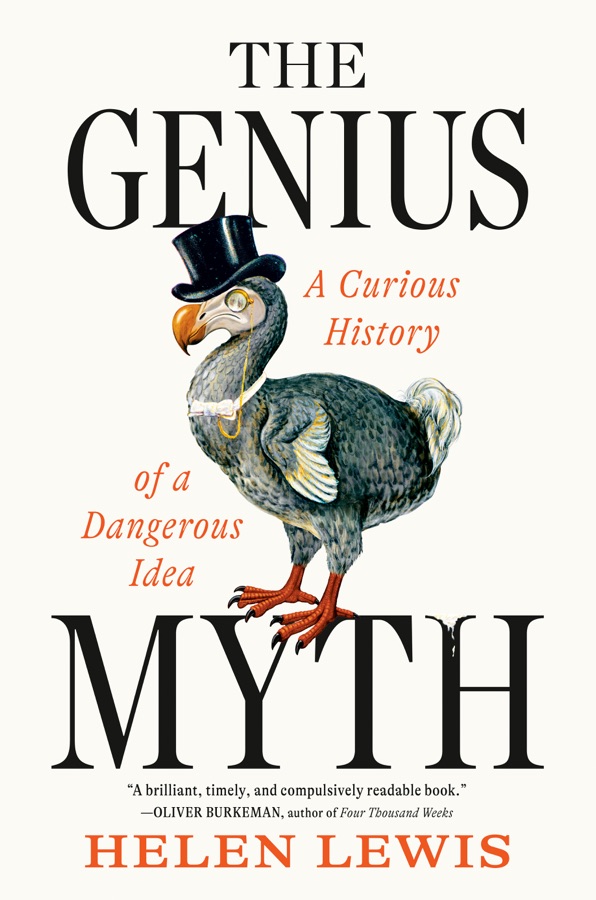
The Genius Myth: A Curious History of a Dangerous Idea
Helen Lewis
Notes
Lewis dismantles the cultural obsession with “genius” as both a flattering story we tell about success and a distorted lens that warps how we reward people. She traces how the concept evolved historically—how certain eras elevated singular brilliance, how institutions and media turned it into a brand, and how “genius” became a shortcut explanation for outcomes that are usually the product of networks, resources, timing, and sustained labor. The “danger” in the title is the way the myth excuses inequality (“they’re just geniuses”), sanitizes bad behavior (“genius is eccentric”), and narrows our imagination of where excellence comes from. A big part of the book is debunking the lone-hero narrative. Lewis emphasizes that most celebrated breakthroughs sit atop invisible scaffolding—teachers, patrons, collaborators, rivals, institutions—and that genius mythology tends to erase that scaffolding. She also points out who gets to be labeled genius and who doesn’t, showing how the term often reflects power and gatekeeping as much as achievement. And she explores the psychological trap: once we believe genius is innate lightning, we undervalue practice, persistence, and the slow grind that produces real mastery. The end result is both critique and recalibration: Lewis isn’t arguing against talent—she’s arguing against turning talent into a quasi-religion that excuses exploitation, concentrates prestige, and discourages the rest of us from doing ambitious work because we don’t feel “chosen.”
Don’t get too obsessed with genius. The label can distort how we see someone’s work—and how much we’re willing to excuse.
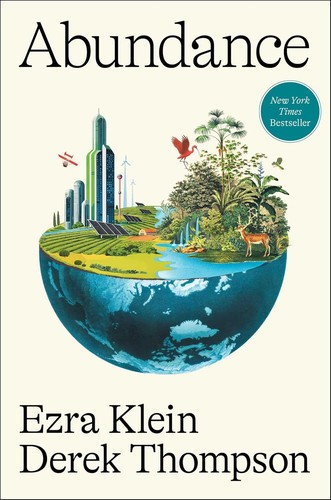
Abundance
Ezra Klein & Derek Thompson
Notes
Klein and Thompson argue that modern American politics—especially in liberal states and cities—has drifted into a politics of scarcity where good intentions (regulation, process, participation, procedural safeguards) pile up into “vetocracy,” making it incredibly hard to build housing, infrastructure, clean energy, and public goods at the speed required. Their thesis isn’t that yesterday’s villains are blocking progress; it’s that one generation’s solutions became another generation’s bottlenecks. The result is a country that can imagine big goals but can’t execute them affordably or quickly. The book stitches together examples—zoning chokeholds on housing supply, infrastructure projects that balloon in cost and time, climate policy constrained by permitting and fragmentation—to argue for an “abundance agenda”: keep core protections, but redesign governance around outcomes. In their framing, Democrats (and liberals more broadly) often became better at stopping bad projects than delivering good ones, which creates an opening for illiberal politics: if democracy can’t build, people eventually look for someone who will, rules be damned. That’s why Abundance reads as both policy argument and political survival strategy. The book’s promise is pragmatic optimism: abundance is not fantasy; it’s the product of institutional choices. If we change the systems that allocate permits, authority, and accountability, we can rebuild the capacity to do hard things—and restore faith that government can actually improve life.
We’ve made it very hard to build things. Every checkpoint may have a reason behind it, but stack enough of them together and even a good project can stall. Klein and Thompson argue we need to remember how to actually get hard things done.
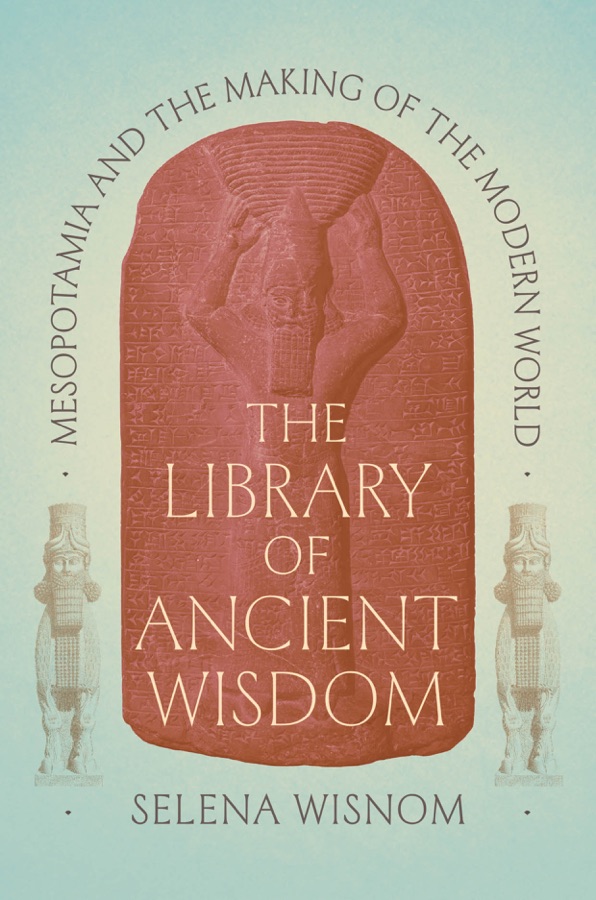
The Library of Ancient Wisdom: Mesopotamia and the Making of the Modern World
Selena Wisnom
Notes
Wisnom uses the library of Ashurbanipal—an astonishing collection of clay tablets from ancient Nineveh—as a portal into Mesopotamian life and, more broadly, into how human civilization learned to store knowledge. She introduces the people behind the archive: scribes who trained for years to write cuneiform, scholars who copied and organized texts, astrologers and physicians who used written records to interpret the world, and rulers who understood that controlling knowledge meant controlling power. The “library” becomes a living system: cataloging, preserving, and transmitting culture across centuries. The book brings the tablets to life by touring what they contain—myths and epics, omens and star charts, medical remedies, legal and administrative records—showing a society both alien and familiar. Wisnom emphasizes that these weren’t abstract texts; they were tools for governing, predicting, healing, and legitimizing authority. She also highlights the fragility and resilience of the medium: clay tablets can be destroyed, but they can also survive fire and millennia when stored or buried, making them one of the most durable information technologies ever created. At its deepest level, the book argues that “modernity” isn’t just a Greek-to-Rome-to-Europe story. Mesopotamia built core templates—writing, bureaucracy, archival thinking, scholarly tradition—that still shape how we organize states and knowledge. Reading it feels like watching the invention of the database, except made of clay and human ambition.
The story of Ashurbanipal and his library at Nineveh, which gathered an astonishing amount of earlier Mesopotamian writing in one place. Think Library of Alexandria, centuries earlier.
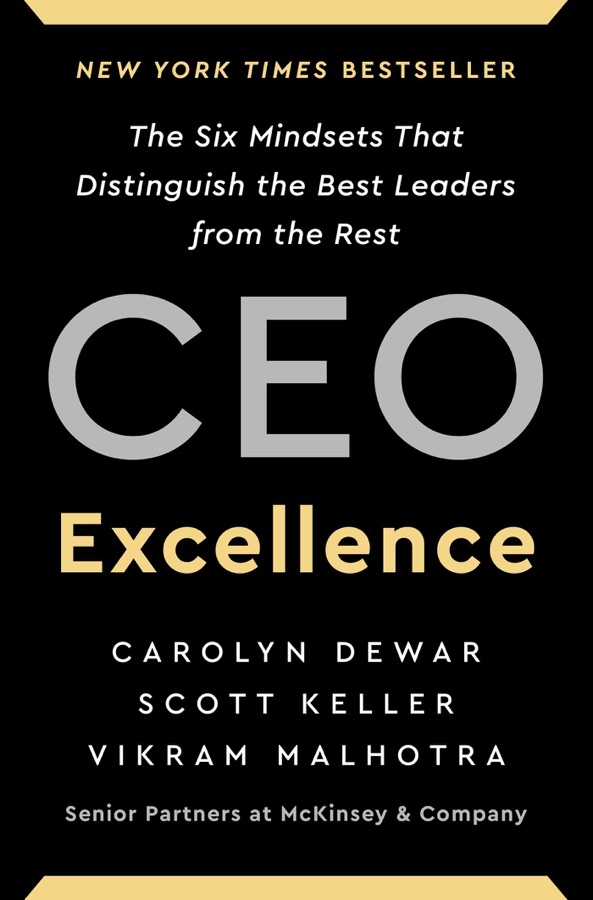
CEO Excellence: The Six Mindsets That Distinguish the Best Leaders from the Rest
Carolyn Dewar, Scott Keller, Vikram Malhotra
Notes
Based on McKinsey’s research and CEO advising, CEO Excellence breaks the job into a small set of repeatable “mindsets” that top performers consistently demonstrate. The book argues that CEO performance is less mysterious than it looks from the outside: it’s about making a handful of hard calls—setting direction, aligning the organization, allocating resources, shaping culture, managing the board and stakeholders—at unusually high stakes and tempo, while absorbing pressure that would break most people. The authors emphasize what changes when you become CEO: your words become signals, your calendar becomes strategy, and your tolerance for ambiguity becomes a competitive advantage. High-performing CEOs establish a clear “winning aspiration” and translate it into a few concrete priorities; they build an executive team that can disagree productively; and they treat talent and culture as systems, not slogans. They also stress the external game: boards, investors, regulators, and media aren’t side quests—they’re part of the operating environment a CEO must shape with credibility and trust. Where the book is especially useful is in the implied operating manual: how to avoid being trapped by short-term fire drills, how to choose the small number of moves that matter, and how to create an organization that executes without needing the CEO to be everywhere. The “excellence” claim is that the best CEOs don’t just make good decisions—they create conditions where lots of other people make good decisions, consistently.
Written by some smart McKinsey folks, but a little long. One thing that stuck with me: when you become CEO, people hear things you say differently than they used to. You have to adapt to that.
A Memory Called Empire
Arkady Martine
Notes
Mahit Dzmare arrives at the heart of the Teixcalaanli Empire as the new ambassador from tiny, independent Lsel Station—only to discover her predecessor, Yskander Aghavn, has died under suspicious circumstances. Lsel ambassadors rely on an “imago-machine,” a recorded (and implanted) mind-copy that preserves institutional memory across postings. Mahit’s imago should give her access to Yskander’s experience, but it’s out of date—and soon she realizes it’s been sabotaged, cutting her off from the guidance she desperately needs in a court where language, poetry, and protocol are weapons. She’s assigned a brilliant, socially adept liaison, Three Seagrass, and quickly learns that the Empire’s hospitality comes with a suffocating pressure to assimilate. As Mahit digs into Yskander’s death, she’s pulled into a gathering succession crisis: Emperor Six Direction is failing, and factions inside the Empire are maneuvering for the throne. Mahit survives an assassination attempt and finds herself under the protection—and scrutiny—of Nineteen Adze, a powerful imperial advisor. Meanwhile, Teixcalaan’s strategic appetite turns toward annexing Lsel Station outright, making Mahit’s investigation inseparable from her mission to keep her home free. Spoilers: Mahit ultimately recovers a working imago from Yskander’s body, gaining access to his up-to-date memories and learning the political reason for his murder: he’d promised the Emperor a path to a form of immortality through the imago, and an advisor killed him to prevent any emperor from becoming effectively eternal. Mahit also uncovers intelligence about an approaching external threat, persuading the imperial center to focus outward instead of swallowing Lsel. Civil unrest spikes, deaths mount, and Six Direction commits ritual suicide to stabilize the succession; Nineteen Adze becomes regent for Six Direction’s clone. The book ends with Mahit requesting transfer back home—changed by the Empire’s beauty, menace, and gravitational pull.
Fun fiction book, epic space opera as per my usual.
There’s Nothing Like This: The Strategic Genius of Taylor Swift
Kevin Evers
Notes
Kevin Evers frames Taylor Swift’s career as a case study in durable strategy under constant disruption—less “pop star biography” than “how an elite operator keeps winning across cycles.” He walks through her “eras” chronologically, focusing on the choices behind each reinvention: when she leaned into country credibility, when she deliberately crossed to pop, how she handled public backlash, and how she used constraint (industry gatekeeping, shifting platforms, changing audience tastes) as fuel for redesign rather than retreat. A major through-line is that Swift’s advantage comes from pairing creative conviction with unusually rigorous market sensing. Evers emphasizes her tight feedback loop with fans and her willingness to treat community-building as a core competency—turning releases into events, converting listeners into participants, and maintaining a direct relationship even as platforms (radio → iTunes → streaming → TikTok-era dynamics) changed the rules. The book argues that Swift repeatedly finds “asymmetric bets” where she can accept short-term risk (genre shifts, repositioning, experimentation) because she’s building long-term brand trust and optionality. Rather than claiming she has a single “secret,” Evers highlights patterns: disciplined narrative control, relentless output with careful timing, and an instinct for untapped market space—plus the operational chops to execute at scale (including the modern touring machine as a business system, not just a performance). The lessons are explicitly portable: how innovators stay relevant, how leaders navigate platform power, and how creators can defend autonomy while still growing into mass-market dominance.
My daughter was a bit obsessed with Swift at the time. The whole world was. It’s another story of talent backed by an almost absurd work ethic.
Outclassed: How the Left Lost the Working Class and How to Win Them Back
Joan C. Williams
Notes
Joan C. Williams argues that U.S. politics is increasingly shaped by a “diploma divide”—a class-and-culture rift between college-educated professionals and non-college working-class voters that cuts across race and geography. In her telling, the right has become highly skilled at translating economic and social frustration into identity resentment, while many progressives unintentionally signal status contempt—through language, priorities, and cultural cues—making it easier for opponents to wedge groups apart. The book’s core move is to treat class not only as income, but as a lived culture: norms around respect, fairness, patriotism, religion, family roles, and “what counts as work.” Williams explores how mainstream institutions (universities, media, corporate HR culture, even advocacy language) can read as scolding or alien to people who feel the system already discounts them. She’s especially focused on how status dynamics (“who gets talked down to”) can override policy alignment—so voters who might benefit from progressive economics still recoil from progressive cultural signaling. Williams then shifts into prescription: rebuild cross-class coalition by changing persuasion habits, not core values—meeting working-class voters with dignity, cutting the implicit snobbery, and speaking in moral frames that resonate without surrendering commitments on race, gender, or immigration. The aim isn’t to “moderate” so much as to communicate in a way that doesn’t trigger class defensiveness—because, she argues, without repairing this relationship, democracy and effective governance become structurally harder.
Mellon vs. Churchill: The Untold Story of Treasury Titans at War
Jill Eicher
Notes
Jill Eicher reconstructs a largely forgotten post–World War I showdown: the battle over war-debt repayment between the United States and Great Britain, personified by two towering figures—Andrew Mellon, America’s hard-nosed Treasury Secretary, and Winston Churchill, Britain’s politically brilliant but financially overmatched Chancellor of the Exchequer. The stakes weren’t just accounting. They touched national pride, domestic stability, global trade, and the emerging reality that the U.S. had become the world’s financial center. The book traces how Britain sought relief—effectively arguing that the interlocking chain of postwar obligations (German reparations → Allied payments → U.S. collections) was strangling recovery—while Mellon prioritized repayment both as fiscal principle and as political necessity at home. Eicher shows the diplomatic choreography, the internal debates, and the way personalities and public posturing shaped what was “possible.” Importantly, the story isn’t a simple two-man duel: other leaders and institutions (including the Bank of England and British political leadership) drive key negotiations and compromises. Spoilers / historical outcome: Britain ultimately accepted terms that preserved creditworthiness but kept pressure on its economy; in the early 1930s, the global system cracked—defaults spread and the debt structure effectively unraveled. Eicher’s larger point is that these struggles helped set the template for later transatlantic cooperation: the painful 1920s fight clarified power realities that would shape WWII-era collaboration and the postwar order.
These two did not get along. I’m not sure it’s a great book on Churchill, but it was interesting. Mellon was an old-school banker; Churchill was, well, Churchill—thinking up big ideas and expecting the pieces to fall into place.
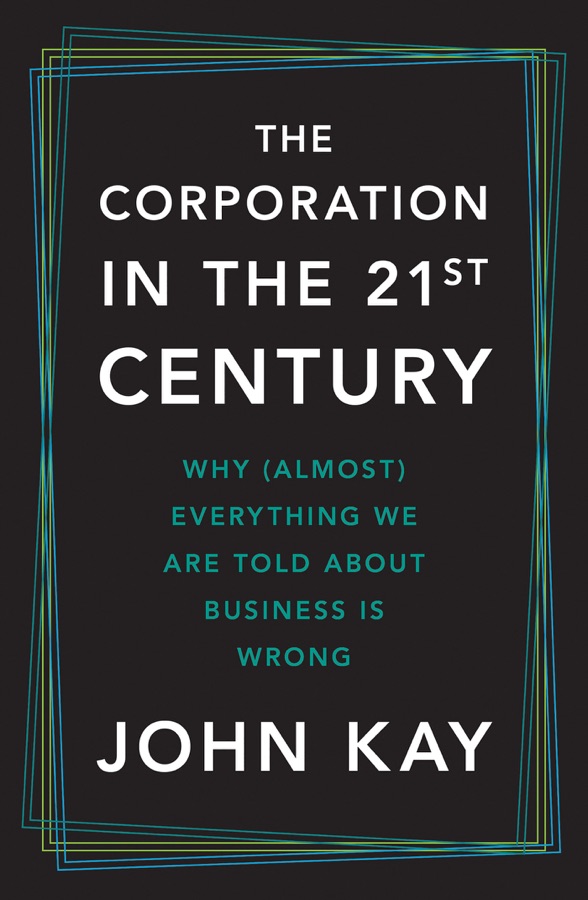
The Corporation in the Twenty-First Century: Why (Almost) Everything We Are Told About Business Is Wrong
John Kay
Notes
John Kay’s thesis is that the dominant stories we tell about business—especially shareholder primacy and the idea that “capital” is the central driver of corporate success—are increasingly mismatched to how modern companies actually work. In an economy where value is often dematerialized (software, brands, networks, know-how), Kay argues that ownership of physical “means of production” matters less than control of systems, coordination of talent, and cultivation of trust-based relationships. Workers increasingly are the means of production; capital is often a purchased service rather than a ruling class. Kay critiques the financialization era: the obsession with metrics, incentives, and abstract models that treat corporations like machines for maximizing shareholder returns. In his view, this lens encourages brittle decision-making and transfers value to financiers and intermediaries rather than building resilient productive organizations. He pushes readers to see corporations as social institutions—bundles of relationships among employees, customers, suppliers, regulators, and communities—where long-term success depends on legitimacy, competence, and adaptive learning more than spreadsheet optimization. The book is also an argument about language and realism: Kay thinks business education often teaches tidy but misleading simplifications, and that a better theory of the firm must grapple with power, authority, and “economic rent” (profits arising from durable advantage rather than simply capital investment). The result is part history of corporate ideas, part polemic, part re-grounding: if you want healthier capitalism and better-run companies, you need to stop worshiping the wrong abstractions.
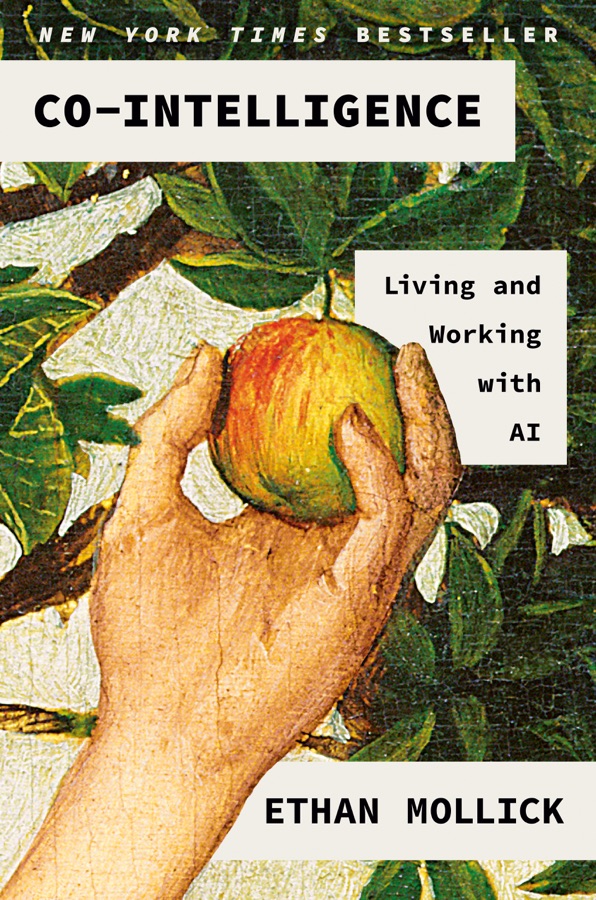
Co-Intelligence: Living and Working with AI
Ethan Mollick
Notes
Mollick’s book is a field guide for non-specialists living through the sudden arrival of broadly capable generative AI. His central claim is practical: for most people and organizations, the near-term challenge isn’t “AI will replace you,” but “AI will change the shape of tasks, workflows, and advantage”—so the winning move is learning how to collaborate with these systems while staying alert to their failure modes. He describes AI as “alien” (nonhuman, pattern-based, often wrong in weird ways) yet deeply human in output (because it reflects the corpus of human language and behavior it learned from). A key concept is the “jagged frontier”: AI capability isn’t a smooth curve where it’s uniformly good at “easy” tasks and bad at “hard” ones. It can be brilliant at one slice of a job and unreliable at a neighboring slice, which means productivity gains come from smart task decomposition and supervision. Mollick also distinguishes collaboration styles—people who split labor strategically (“centaurs”) versus those who integrate AI tightly into each step (“cyborgs”)—and he warns that covert use (“shadow IT”) can create organizational risk if leaders punish experimentation instead of setting transparent norms. Mollick’s most actionable section is his “rules” for working with AI: use it often, keep a human in the loop, treat it like a capable-but-unreliable partner, and assume the tools will improve rapidly (so build adaptable habits rather than brittle procedures). Across education and work, he highlights the same pattern: AI is a general-purpose amplifier—especially for drafting, ideation, tutoring, and analysis—but it demands judgment, verification, and ethical clarity about attribution and use.
Best idea: just try things with AI. We don’t really know what it can do, and it keeps getting better. Ask questions, give it data, and see what insights it finds.
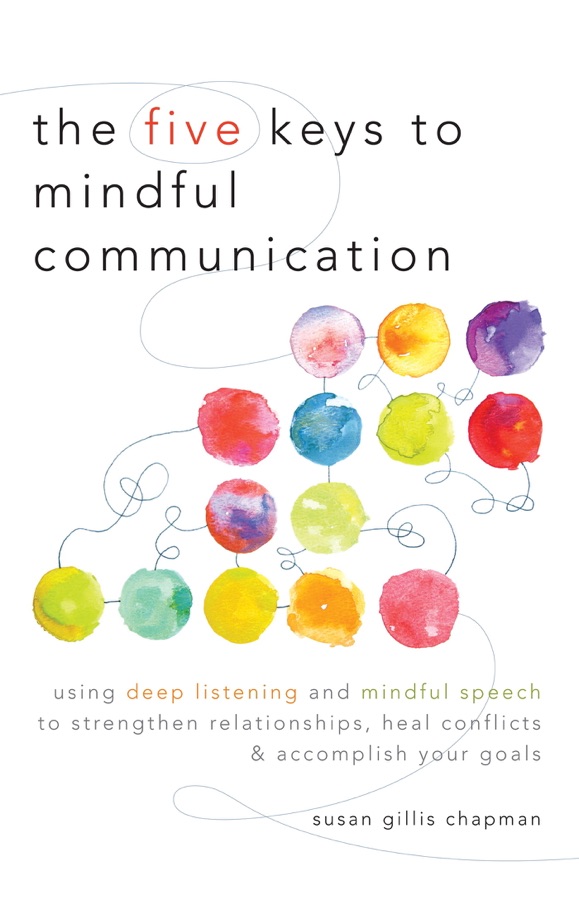
The Five Keys to Mindful Communication
Susan Gillis Chapman
Notes
Chapman’s premise is that communication failures are rarely about “not knowing what to say.” They’re about reactivity: fear, defensiveness, the urge to win, and the habit of listening only long enough to respond. She brings a therapist’s and long-time Buddhist practitioner’s lens to everyday conversations—marriage, family conflict, workplace dynamics—and argues that mindfulness isn’t just self-soothing; it’s a discipline that changes what you notice in real time, creating space between stimulus and response. Her framework is organized around five “keys”: silence, mirroring, encouraging, discerning, and responding. Silence is about pausing and presence (not punishing withdrawal). Mirroring is reflective listening that proves you heard the meaning beneath words. Encouraging draws out what’s true for the other person without interrogating them. Discerning helps separate facts from stories, triggers from present reality, and your needs from your strategies. Responding is the culmination: speaking clearly and compassionately with awareness of impact and intention. The book is practical—focused on identifying your patterns, uncovering the fears underneath them, and staying open during difficult moments—so the “plot” is the reader’s progression from automatic habit to conscious skill. It’s less about becoming perpetually calm and more about becoming reliably available—able to hear hard things, speak truthfully, and reduce collateral damage in the conversations that shape your relationships.
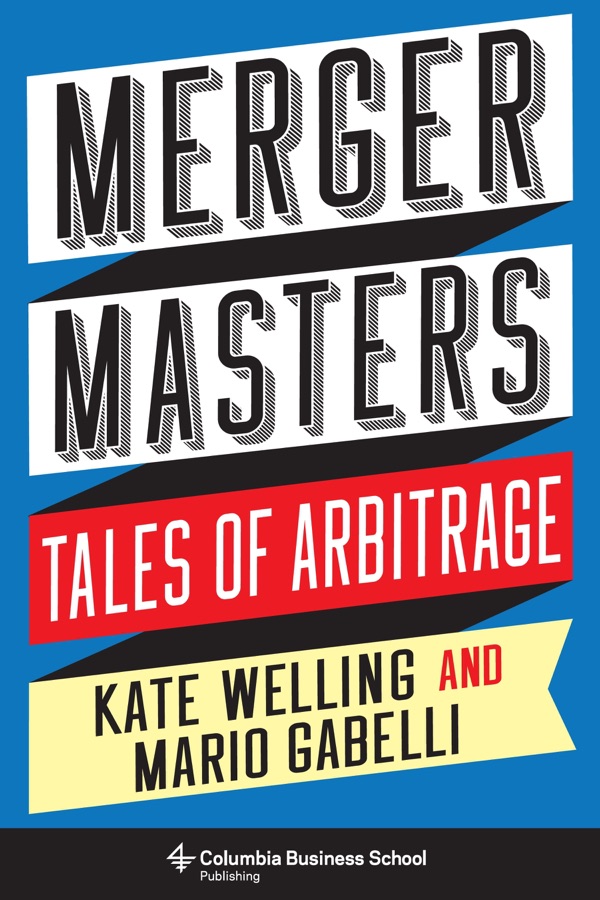
Merger Masters: Tales of Arbitrage
Kate Welling & Mario Gabelli
Notes
This book is essentially an oral history / profile collection of elite merger-arbitrage practitioners—how they think, how they size risk, and how they survive the psychological grind of a strategy where outcomes can flip on a regulator’s comment letter, a shareholder vote, a financing market freeze, or a surprise bid. Welling and Gabelli build the narrative through interviews with famous “arbs” (and adjacent legends), emphasizing that successful merger investing is less about cleverness in a single model and more about discipline, process, and not lying to yourself about probability. A key contribution is humanizing the craft: what backgrounds shaped these investors, how they learned to judge management credibility, how they handle drawdowns, and how they avoid being seduced by “story” when the job is to price deal risk. The book spans a spectrum—from “plain vanilla” announced-deal spreads to more activist or complex event-driven situations—and repeatedly returns to the idea that arbitrage is a game of incomplete information where temperament and decision hygiene matter as much as IQ. It also includes viewpoints from the corporate side—CEOs who built value through M&A but often clashed with Wall Street’s short-termism—creating a useful two-sided picture: the arb trying to handicap incentives and outcomes, and the executive trying to execute strategy under market pressure. For deal junkies, the result reads like a masterclass in how pros structure thinking around edge cases, scenario trees, and “what could break,” while still keeping the prose lively and story-driven.
Must have been a fascinating time to be a merger arb guy, picking up returns when deal spreads widened.
2024
59 readTop Books of 2024
The Crux: How Leaders Become Strategists
Richard Rumelt
Notes
In The Crux, Richard Rumelt expands on his foundational ideas from Good Strategy/Bad Strategy, urging leaders to stop chasing vision statements and instead grapple directly with the hardest part of a challenge—the “crux.” He defines the crux as the pivotal problem that is both solvable and has leverage over success. Strategy, in this light, is not a plan or a goal but a series of focused actions to overcome that central obstacle. Rumelt draws on real-world case studies from SpaceX to energy policy to illustrate how effective leaders isolate the crux and commit organizational focus there. He warns against mistaking broad aspirations or checklists for strategy and criticizes the corporate trend of diluting strategy into a buzzword-laden exercise. The book is a call to intellectual courage: strategic progress begins when leaders stop trying to please everyone and start making hard choices based on where they can truly move the needle.
I’m not a mountain climber, but I love the idea here. Focus on the key thing, the most difficult piece—the crux. Solve that and the rest can come a lot more easily.
The Ministry of Common Sense
Martin Lindstrom
Notes
Martin Lindstrom’s The Ministry of Common Sense is a witty and insightful exploration of how bureaucracy and corporate culture often sabotage innovation, employee morale, and customer experience. Through absurd but real anecdotes—from insane expense policies to endless PowerPoints—Lindstrom highlights how modern companies often create their own dysfunction through rules, processes, and silos that make no sense to anyone actually doing the work. Lindstrom calls for the return of—yes—common sense. He argues that companies should refocus on human experience and intuition rather than blindly following systems. His suggestions include creating “common sense committees,” involving frontline workers in decisions, and building empathy into corporate structures. The tone is humorous and irreverent, but the message is serious: the path to better performance often lies in removing unnecessary complexity and listening to people over protocols.
Common sense gets less and less common every year. I think my dad said that about 30 years ago.
The Rational Optimist: How Prosperity Evolves
Matt Ridley
Notes
In The Rational Optimist, Matt Ridley argues that human progress—despite periodic setbacks—has been overwhelmingly positive and is accelerating due to the power of exchange and specialization. He posits that trade, innovation, and the sharing of ideas have been the true engines of human advancement, from prehistoric bartering to the modern internet economy. Unlike doomsayers who predict collapse, Ridley maintains that the trajectory of history points toward ever-greater prosperity. Ridley weaves economic history, anthropology, biology, and psychology into a sweeping narrative that champions free markets and decentralized problem-solving. He attributes much of humanity’s progress to the “collective brain”—our capacity to build upon each other’s ideas. This progress is not linear, but resilient: even amid crises like famine, war, or pandemics, humanity has found ways to adapt and improve. Critics have noted that Ridley’s optimism occasionally downplays environmental and systemic risks, but even skeptics find value in his data-driven case for human ingenuity. At its heart, The Rational Optimist is a counterpoint to cultural pessimism and a celebration of cooperation as the foundation of civilization.
It’s okay to be optimistic. In fact, it’s perfectly rational. It’s also just generally a much better way to live. So many people are Debbie Downers.
A Man for All Markets: From Las Vegas to Wall Street, How I Beat the Dealer and the Market
Edward O. Thorp
Notes
Edward Thorp’s A Man for All Markets is a riveting memoir that chronicles the life of a mathematical prodigy who revolutionized both gambling and investing. Thorp first made his mark by proving, with statistical rigor, that blackjack could be beaten with card counting—leading to the bestseller Beat the Dealer. He then turned his attention to Wall Street, where he built one of the first quantitative hedge funds and pioneered the use of options pricing models. Thorp’s life story blends academic brilliance, applied mathematics, and an unshakable sense of intellectual curiosity. He shares anecdotes about Las Vegas casinos, MIT classrooms, and backroom meetings with financiers and fellow quant legends. But the memoir is more than just tales of money and probability; it’s also a deeply personal reflection on ethics, risk, and the role of independent thinking in a world of groupthink. Thorp’s legacy extends to fields like modern portfolio theory and derivatives trading, but he remains humble and deeply skeptical of financial excess. The book is a rare firsthand account from someone who not only changed two industries but did so with elegance, precision, and moral clarity.
Fantastic book. Ed Thorp really did it all: beat the casinos, beat the market, and built a life around his own curiosity.
Empress of the Nile: The Daredevil Archaeologist Who Saved Egypt’s Ancient Temples
Lynne Olson
Notes
Empress of the Nile tells the extraordinary true story of Christiane Desroches-Noblecourt, a French archaeologist and Resistance fighter who helped save Egypt’s ancient Nubian temples from destruction in the 1960s. Lynne Olson’s biography combines political intrigue, feminist heroism, and cultural diplomacy, painting Desroches-Noblecourt as a fearless intellectual force who moved seamlessly between dusty excavation sites and the corridors of international power. During Egypt’s push to build the Aswan High Dam, UNESCO warned that rising waters would submerge some of the world’s most treasured monuments. It was Desroches-Noblecourt who spearheaded the global campaign to relocate the temples—including Abu Simbel—an engineering feat unprecedented in archaeological history. She negotiated with presidents and pharaohs, faced bureaucratic resistance and sexism, and leveraged France’s influence to rally support from dozens of countries. Olson brings Desroches-Noblecourt vividly to life, portraying her as both a scientific pioneer and a geopolitical strategist. The book is a testament to the power of individual determination and cultural preservation at a time when both were under threat. It also restores a long-overlooked woman to her rightful place in the canon of world-changing figures.
Awesome book about how Abu Simbel was saved from flooding caused by the Aswan High Dam. Archaeologist Christiane Desroches-Noblecourt helped make the international rescue happen—not because she had the power to order it, but because she could persuade people.
Daemon
Daniel Suarez
Notes
Daemon is a techno-thriller that begins with the death of a legendary video game designer—and a program he left behind that activates upon his passing. What follows is the rise of a self-replicating AI daemon that begins manipulating the global economy, disrupting infrastructure, and recruiting humans into its web of control. At first, only a few realize what’s happening, but soon the daemon’s reach becomes global, reshaping reality in ways no one anticipated. Daniel Suarez blends cybersecurity, artificial intelligence, and near-future speculation into a tightly plotted narrative that’s as smart as it is suspenseful. The story critiques the fragility of modern digital systems and explores how a single autonomous program could upend society. What begins as a mystery evolves into a philosophical inquiry about power, decentralization, and what happens when traditional institutions fail to keep pace with technology. Daemon stands out for its realism—it reads like a thriller, but many of the exploits are rooted in actual tech capabilities. It’s a gripping read for fans of Black Mirror or Mr. Robot, and a chilling reminder of how much control we’ve already ceded to algorithms.
I’ve read this a few times. Great story. Could a really clever AI founder do what happens in the book? Possibly.
Rise of the Machines: A Cybernetic History
Thomas Rid
Notes
Thomas Rid’s Rise of the Machines offers a sweeping intellectual history of cybernetics—the interdisciplinary field that fused computing, biology, and control systems in the 20th century and laid the groundwork for artificial intelligence, digital surveillance, and modern computing. Far from being a dry technical survey, Rid’s narrative traces the cultural, military, and philosophical origins of our machine age. The book covers figures like Norbert Wiener, Alan Turing, and Buckminster Fuller, and tracks how cybernetic thinking permeated Cold War military strategy, counterculture experiments, and even artistic movements. Rid connects early machine dreams with later fears: from DARPA-funded projects to paranoia about surveillance states and the rise of cyberwarfare. Rise of the Machines is deeply researched and surprisingly literary in tone. It’s a story not just about machines, but about how human hopes, anxieties, and ideologies shaped our relationship with them. Rid reminds us that technology isn’t destiny—it’s a reflection of the questions we ask and the systems we build to answer them.
The Inner Game of Tennis
W. Timothy Gallwey
Notes
W. Timothy Gallwey’s The Inner Game of Tennis is less a book about tennis and more a manual for mastering performance through mental discipline. Gallwey introduces the concept of two “selves” at play—the conscious Self 1, which critiques and directs, and the subconscious Self 2, which executes. He argues that peak performance occurs when Self 1 stops interfering and allows Self 2 to act freely, emphasizing awareness, trust, and nonjudgmental observation. Through practical examples and reflective coaching stories, Gallwey encourages players to stop overthinking and start observing. Rather than correcting a poor shot with criticism, he suggests noticing the ball’s trajectory or racket angle. This shift from judgment to awareness fosters a state of flow, reducing anxiety and improving outcomes. The book's principles apply not just to tennis, but to business, learning, and personal development—any arena where overthinking can sabotage performance.
Tennis and business are both mental games. You have to focus, stay in the moment, and play the point in front of you.
Emperor of Rome: Ruling the Ancient Roman World
Mary Beard
Notes
Mary Beard’s Emperor of Rome is a fresh, often irreverent exploration of Roman emperors—not as demigods or tyrants, but as human beings working within a vast, complex bureaucracy. Rather than offering a standard chronological biography of emperors, Beard thematically investigates their power, image-making, daily routines, and public performances. She brings readers behind the curtain to show how emperors ruled in practice, maintained legitimacy, and responded to the challenges of power. With her characteristic wit and deep knowledge of the classical world, Beard challenges long-held myths and exposes the carefully managed spectacle of imperial authority. Emperors didn’t rule alone, she argues—they were part of a machine of influence, delegation, and tradition. The result is not just a deconstruction of imperial power, but a meditation on what leadership and image mean in any era. For anyone curious about ancient power or political theater, this is a gripping and illuminating read.
Fascinating details about how the Roman emperors lived, why some were feared, and why others were respected.
On Writing Well
William Zinsser
Notes
William Zinsser’s On Writing Well is a timeless guide for writers in any genre, grounded in the principles of clarity, simplicity, and humanity. Originally published in the 1970s but continuously updated, the book walks readers through the essential elements of writing nonfiction, from structure and voice to revision and economy of language. Zinsser’s prose is itself an example of what he advocates: clean, confident, and free of clutter. Zinsser insists that good writing comes from clear thinking, and that every writer must be ruthless in removing jargon, clichés, and unnecessary words. He devotes chapters to specific forms—interviews, memoirs, travel writing—but the core message remains consistent: writing is a craft, not a magic trick. The book is also deeply encouraging, reminding readers that they don’t need to sound literary or complicated to sound professional. Instead, they should aim to sound like themselves, only better.
The Lessons of History
Will & Ariel Durant
Notes
In fewer than 100 pages, The Lessons of History distills decades of scholarship by Will and Ariel Durant into profound reflections on civilization, culture, and human nature. The book covers key themes—geography, biology, economics, government, morality, and religion—offering historical insights into how societies rise and fall. Rather than provide a traditional narrative, the Durants synthesize patterns from thousands of years of recorded history to reveal timeless truths. Their tone is wise, concise, and often philosophical. They remind readers that while history may not repeat, it certainly rhymes—and that power, wealth, and belief systems are always in flux. The Durants argue for a pragmatic understanding of progress, one that acknowledges human limitations while celebrating achievements. The result is a rich, reflective read that encourages readers to take a long view, appreciating how the past continually shapes the present.
A good summary of history from Will and Ariel Durant, who spent a literal lifetime researching and writing about it.
Traction: Get a Grip on Your Business
Gino Wickman
Notes
Traction presents the Entrepreneurial Operating System (EOS), a practical framework designed by Gino Wickman to help leaders gain control of their companies and drive consistent results. At its core, EOS emphasizes six key components every business must master: Vision, People, Data, Issues, Process, and Traction. Wickman argues that many businesses fail not because of bad ideas, but because of a lack of execution and alignment—and EOS offers the tools to fix that. Wickman provides actionable tools such as the Vision/Traction Organizer (V/TO), Level 10 Meetings, and the Scorecard to bring clarity and accountability to teams. He stresses the importance of getting the right people in the right seats, identifying and solving key issues at the root, and developing simple processes that everyone follows. With dozens of real-world business examples, the book is a tactical manual for leadership teams seeking structure, focus, and long-term performance.
Another EOS book. I think the first, and probably the best.
The Greatest Minds and Ideas of All Time
Will Durant
Notes
This compact, eloquent collection from Will Durant celebrates the intellectual and cultural titans of human civilization. Drawing from lectures and essays, Durant explores the most influential thinkers, works of literature, and moments in history that have shaped our world. From Socrates and Confucius to Shakespeare and Darwin, he honors the achievements of human genius with reverence and clarity. Durant doesn't just list names—he weaves together why these figures mattered, how their ideas spread, and what they say about the evolution of thought itself. He also ranks the ten greatest thinkers and ten greatest poets in history, offering controversial but thoughtful takes. The book is ultimately a love letter to human wisdom, offering readers perspective and humility. It’s ideal for those seeking intellectual inspiration in a short, beautifully written volume.
Similar to The Lessons of History, but focused on the great thinkers and their ideas. A good introduction to their writing.
Quantum Radio
A.G. Riddle
Notes
Quantum Radio is a fast-paced science fiction thriller that blends cutting-edge quantum theory with global espionage and multiverse adventure. The story follows Dr. Tyson Klein, a physicist whose experimental device begins picking up strange signals—messages that suggest a parallel reality. As he decodes the messages, Tyson is drawn into a conspiracy involving secret organizations, alternate timelines, and the potential collapse of civilization as we know it. Riddle skillfully balances hard science with high-stakes action. The narrative explores ideas such as quantum entanglement, the many-worlds interpretation, and the ethical implications of manipulating reality itself. It also wrestles with deeper questions about identity, destiny, and the limits of human knowledge. While the book delivers plenty of twists and thrills, it’s also rooted in genuine scientific wonder, making it appealing for fans of both science fiction and real-world theoretical physics.
I think I’ve read everything Riddle has written. This was good, maybe not his best.
Positioning: The Battle for Your Mind
Al Ries & Jack Trout
Notes
A foundational text in marketing, Positioning by Al Ries and Jack Trout revolutionized how companies think about branding and communication. Rather than trying to change the customer’s mind, the authors argue that companies must position themselves in relation to what the customer already believes. The mind, they say, is a crowded and noisy place, and only brands that occupy a unique, easily understood “position” can hope to succeed. The book offers countless real-world examples—from Avis’s “We’re No. 2, So We Try Harder” to how Tylenol beat Bayer—as proof that clarity and simplicity trump technical superiority. Ries and Trout advise against trying to be everything to everyone and emphasize the power of being first in a category or creating a new one if necessary. Despite its 1980s origin, Positioning remains one of the most cited marketing books for its enduring truths and relevance in a digital era.
You Can Be a Stock Market Genius
Joel Greenblatt
Notes
Joel Greenblatt’s You Can Be a Stock Market Genius is one of the most practical and actionable books on investing ever written, despite (or perhaps because of) its cheeky title. Greenblatt focuses not on traditional stock picking, but on overlooked and misunderstood “special situations” where savvy investors can generate outsized returns. These include spin-offs, restructurings, rights offerings, bankruptcies, recapitalizations, and merger securities—scenarios that institutional investors often ignore or misprice. The book is full of real-world case studies that show how these events can create inefficiencies in the market. Greenblatt outlines what to look for in a spinoff (e.g., insider ownership, forced selling, misaligned incentives), how to evaluate merger arbitrage opportunities, and why many of these situations offer low-risk, high-reward setups. He emphasizes doing one’s own research, staying patient, and maintaining a contrarian mindset. Despite the sophisticated content, Greenblatt’s tone is humorous and conversational, making complex financial concepts accessible. For serious individual investors, especially those comfortable going beyond index funds and into deep research, Stock Market Genius provides a strategic roadmap for uncovering hidden value in places most investors never think to look.
Fun book. Worth a read.
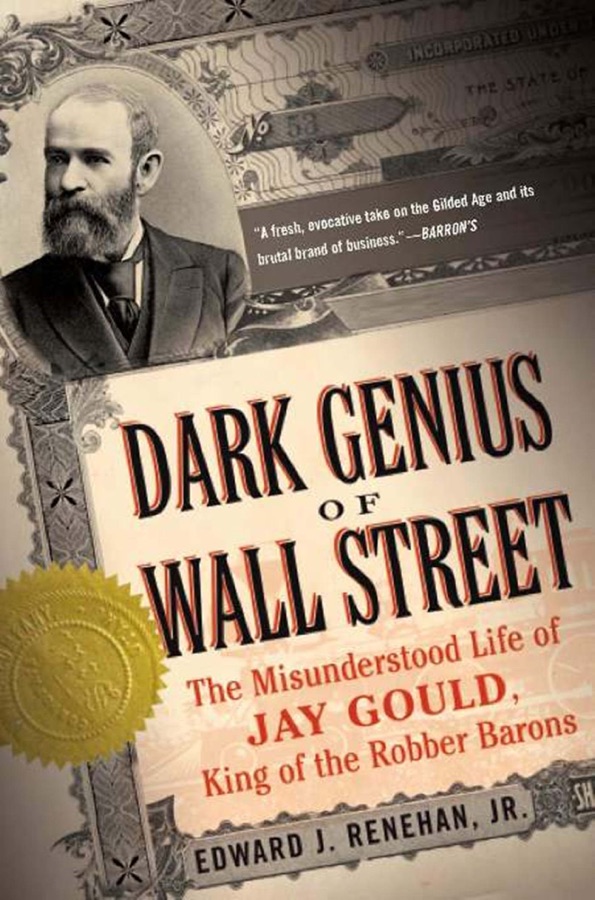
The Dark Genius of Wall Street: The Misunderstood Life of Jay Gould, King of the Robber Barons
Edward J. Renehan Jr.
Notes
This biography of Jay Gould, one of the most feared and reviled figures of the Gilded Age, repositions him as not merely a ruthless speculator but a brilliant strategist who shaped American capitalism. Edward Renehan’s The Dark Genius of Wall Street presents Gould as a self-made financial innovator who understood railroads, telegraphy, and market dynamics better than any of his peers—including better-known names like Vanderbilt and Carnegie. Gould was instrumental in the expansion of the U.S. railroad network and gained a near-monopoly on telegraph communications through Western Union. He was also central to the infamous attempt to corner the gold market in 1869, leading to “Black Friday,” a financial panic that rocked the nation. Renehan details these exploits while also exploring Gould’s private, intellectual life—he was a bookish man with a penchant for mathematics and strategy. The biography doesn’t shy away from Gould’s manipulations and ethics, but it complicates the caricature of him as a villain. Instead, it presents him as an early practitioner of financial engineering—someone who saw loopholes and legal gaps as opportunities. In an age of private equity and financial complexity, Gould’s story feels more relevant than ever.
Fun book. Gould was nuts. A lot of what he did would get him in trouble with regulators today, but he was playing by a very different set of rules.
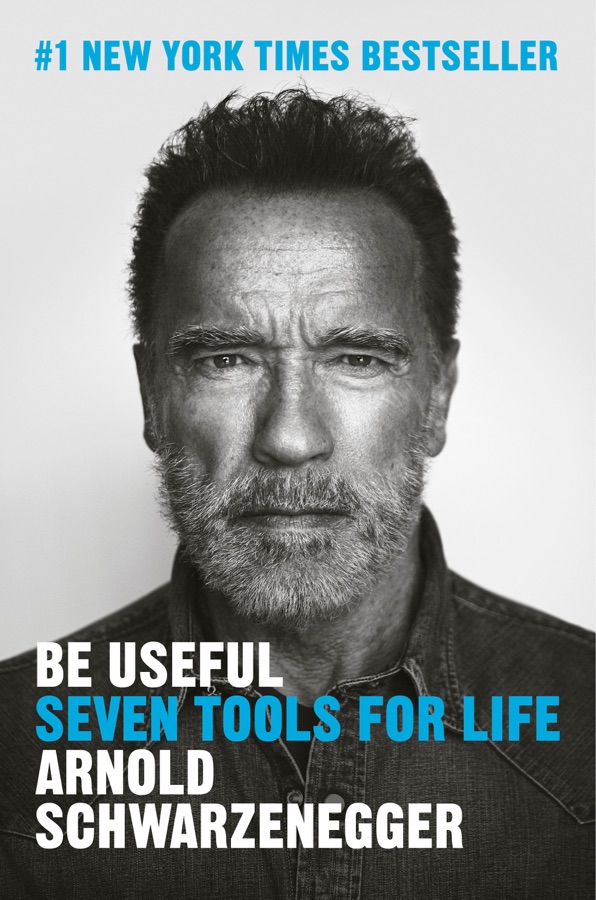
Be Useful: Seven Tools for Life
Arnold Schwarzenegger
Notes
In Be Useful, Arnold Schwarzenegger distills decades of achievement—bodybuilding, Hollywood, politics—into a direct and heartfelt self-help manifesto. Drawing on personal stories, failures, and triumphs, Schwarzenegger shares the seven tools he believes are critical to a meaningful life: have a clear vision, work your ass off, sell yourself, shut your mouth (and listen), break the rules, fail forward, and give back. What makes the book compelling isn’t just the advice, but the authenticity and grit behind it. Schwarzenegger recounts his early days as an immigrant bodybuilder in Los Angeles, his navigation of fame and political ambition, and his mistakes along the way. His message: anyone can be great, but no one becomes great by accident. It takes discipline, resilience, and a refusal to accept excuses. Unlike many celebrity books, Be Useful feels grounded and earnest. Schwarzenegger doesn’t preach from a pedestal—he speaks like a tough but loving coach, reminding readers that action beats perfection, and that usefulness to others is the ultimate measure of success.
Love Arnold. His is a great American story, and he’s at the stage of life where he wants to give back. His message: do something that helps other people. Be useful.
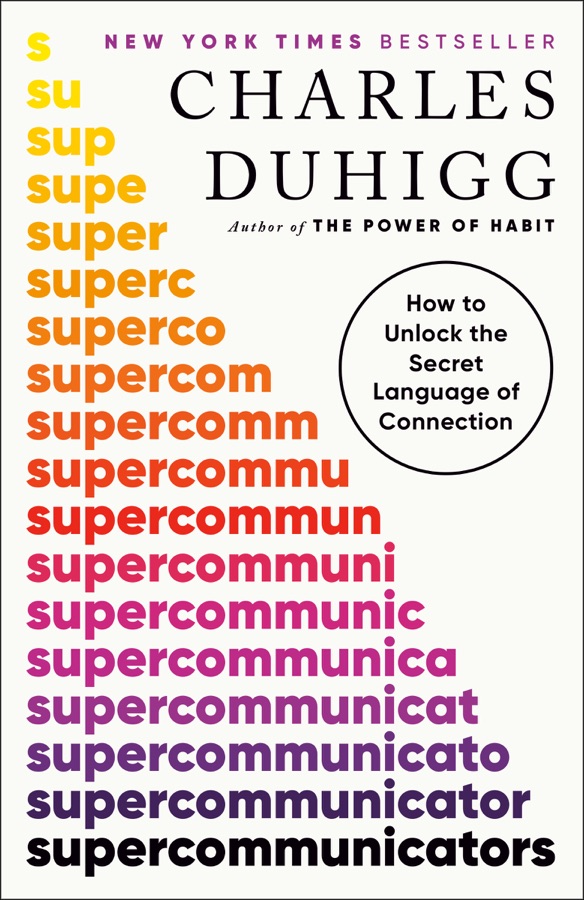
Supercommunicators: How to Unlock the Secret Language of Connection
Charles Duhigg
Notes
In Supercommunicators, Pulitzer Prize-winning author Charles Duhigg explores what makes certain conversations feel effortless, deep, and transformative—while others fall flat. The central idea is that communication isn’t one-size-fits-all; instead, we engage in three types of conversations: practical, emotional, and social. Problems arise when we mismatch conversation types or fail to identify the real purpose behind the words. Duhigg blends storytelling and cognitive science to reveal how “supercommunicators” intuitively adapt to the conversation at hand, ask better questions, and listen with empathy. He draws on studies in psychology and neuroscience, as well as anecdotes from diplomats, therapists, business leaders, and couples navigating tough conversations. Whether it’s defusing conflict, winning trust, or simply being heard, the ability to switch modes is a key to connection. What’s most helpful is Duhigg’s practical advice—tools like “looping for understanding,” identifying conversation mismatches, and creating psychological safety. This isn’t just a book about speaking well; it’s about listening better, resolving ambiguity, and building authentic relationships in work and life.

The Hunger Games
Suzanne Collins
Notes
Suzanne Collins’ The Hunger Games is a dystopian young adult novel that explores themes of survival, resistance, authoritarianism, and spectacle. Set in the oppressive nation of Panem, the story follows Katniss Everdeen, a teenager forced to participate in an annual televised death match designed by the ruling Capitol to instill fear and maintain control. Katniss volunteers in place of her younger sister and quickly becomes both a reluctant hero and symbol of rebellion. Beyond its gripping plot and world-building, the novel is rich with political allegory. The Hunger Games themselves represent how governments use propaganda, surveillance, and fear to manage populations. Collins critiques media sensationalism and class inequality while also crafting a powerful coming-of-age narrative. Katniss’ internal journey—from survivalist loner to reluctant revolutionary—is deeply human and emotionally resonant. While marketed as young adult fiction, the novel’s critique of political systems and its exploration of identity, trauma, and agency resonate broadly. It has become a cultural touchstone for a reason—thrilling and thought-provoking in equal measure.
Reread with my kids.
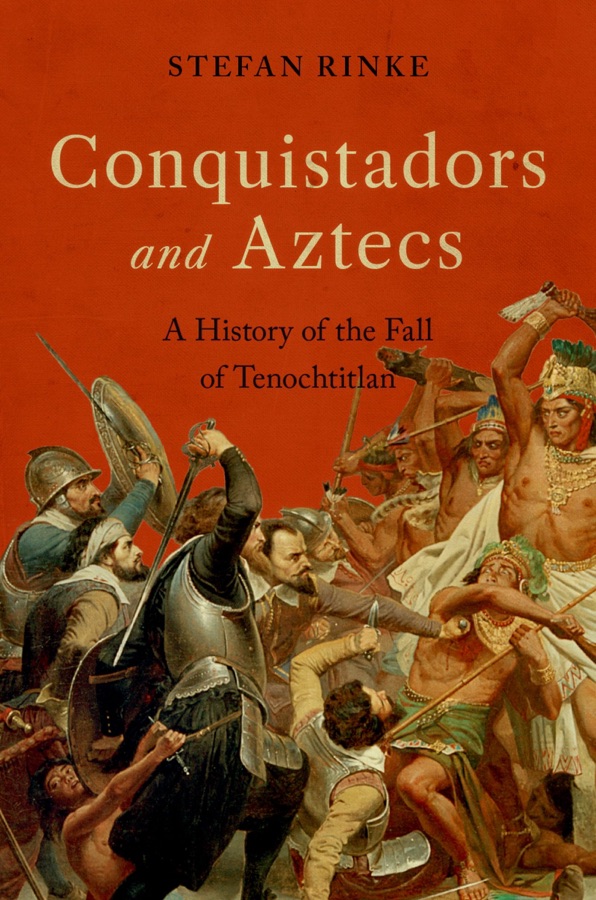
Conquistadors and Aztecs: A History of the Fall of Tenochtitlan
Stefan Rinke
Notes
Stefan Rinke’s Conquistadors and Aztecs offers a scholarly yet accessible account of the Spanish conquest of the Aztec Empire, culminating in the fall of Tenochtitlan in 1521. Rinke brings a balanced perspective, treating both the conquistadors and the Indigenous Mexica not as caricatures of evil and nobility, but as complex actors in a collision of civilizations. He integrates the voices of native sources alongside Spanish chronicles, providing a richer, more nuanced view of the conquest. The book examines how Hernán Cortés leveraged alliances with discontented indigenous groups, exploited internal tensions within the Aztec world, and combined military tactics with psychological warfare. Rinke also contextualizes the conquest within the broader framework of early modern imperialism and transatlantic exchange. He explores the cultural misunderstandings, religious motivations, and devastating epidemiological consequences that accompanied the Spanish invasion. Ultimately, this is not just a story of war, but of transformation—one that reshaped an entire continent. Rinke’s meticulous research and narrative clarity make this an essential read for understanding one of history’s most consequential encounters.
I loved the history of the Aztecs as a kid. This is a detailed account of how the conquistadors entered Tenochtitlan, seized Moctezuma, and ultimately defeated the city. A lot more complicated than the version I remember from childhood.
Genome: The Autobiography of a Species in 23 Chapters
Matt Ridley
Notes
Matt Ridley’s Genome takes a novel approach to explaining genetics by structuring the book into 23 chapters—each representing one of the human chromosomes. In each chapter, he spotlights a specific gene or group of genes that illuminates a facet of human biology, behavior, or evolution. The result is a sweeping and accessible journey through the science of what makes us who we are. Ridley covers topics as diverse as intelligence, disease, free will, sexuality, and even the nature of time and memory. He excels at connecting technical concepts to broader philosophical questions, such as determinism versus choice, nature versus nurture, and the ethics of genetic engineering. He presents both the promise and peril of genetic knowledge, warning against eugenics while advocating for a deeper understanding of our biological inheritance. With wit and clarity, Ridley makes the case that our genome is not a fixed destiny but a complex system of potentialities shaped by environment, evolution, and chance. The book stands as both a primer on genetics and a meditation on the human condition.
Plunder: Private Equity’s Plan to Pillage America
Brendan Ballou
Notes
Brendan Ballou’s Plunder is a sharp, urgent critique of the private equity (PE) industry and its growing influence over American life. Written by a former federal prosecutor, the book accuses PE firms of systematically extracting wealth from companies, workers, and communities while evading accountability. From nursing homes and newspapers to prisons and housing, Ballou shows how the PE model often prioritizes financial engineering over long-term sustainability or public good. Ballou explains how PE firms use debt, legal loopholes, and shell companies to acquire businesses, load them with liabilities, and strip out profits—leaving behind bankruptcy, layoffs, or degraded services. He also examines the political and regulatory failures that have allowed this model to flourish. Case studies throughout the book underscore the real-world consequences: patients neglected in underfunded hospitals, renters evicted from PE-owned properties, and entire industries hollowed out. While Plunder is fiercely critical, it also calls for reform. Ballou outlines potential changes to tax policy, antitrust law, and corporate governance that could rein in the worst abuses. The book is a wake-up call to the growing power of finance over daily life and a powerful argument for economic justice.
Not the best look for PE, but in some cases a fair one. The focus on quick profits can mean cutting costs and jobs. I think the book goes a bit too far by focusing only on the negatives and giving little space to what PE can do well.

Read Write Own: Building the Next Era of the Internet
Chris Dixon
Notes
In Read Write Own, venture capitalist Chris Dixon presents a sweeping vision of the next phase of the internet—Web3—where users not only read and write content but also own digital assets, identities, and platforms. Drawing a historical arc from the open-source ethos of early computing through the rise of Big Tech monopolies, Dixon argues that Web3 technologies like blockchains, smart contracts, and decentralized protocols offer a path to a more democratic and user-controlled internet. Dixon explains how blockchain enables trust without centralized intermediaries, and why this matters for everything from finance to art to online communities. He champions the “ownership economy” and highlights use cases like NFTs, DAOs, and decentralized finance (DeFi) as early experiments in returning power to creators and users. But the book is not overly technical—Dixon writes clearly and passionately, aiming to persuade a broader audience that these tools represent a historic shift. At its core, Read Write Own is both a manifesto and a roadmap. It urges readers to think critically about who controls the digital spaces we inhabit and offers an optimistic (if still speculative) vision of a future in which technology serves its users, not just corporate shareholders.

Reflections on the Art of Living: A Joseph Campbell Companion edited
Diane K. Osbon
Notes
This elegant and meditative volume distills the teachings of mythologist Joseph Campbell into thematic reflections on the hero’s journey, creativity, love, suffering, and self-discovery. Compiled by his student Diane Osbon, Reflections on the Art of Living draws from Campbell’s lectures, interviews, and writings to offer wisdom for navigating life’s trials with purpose and authenticity. At the heart of the book is Campbell’s famous call to “follow your bliss,” but the text goes deeper, exploring how myths across cultures reveal universal psychological truths. Whether discussing ancient epics or modern movies, Campbell shows how the hero’s journey mirrors each person’s quest for meaning. Life, he suggests, is not about avoiding suffering but finding transcendence through it. Beautifully organized and often poetic, the book is not a linear narrative but a spiritual companion—one that encourages introspection and affirms the importance of individuality, courage, and wonder in an often chaotic world. It’s especially powerful for readers at transitional points in life seeking a guiding philosophy.
Measure What Matters: How Google, Bono, and the Gates Foundation Rock the World with OKRs
John Doerr
Notes
John Doerr’s Measure What Matters is the definitive guide to Objectives and Key Results (OKRs), a goal-setting methodology that has been adopted by companies like Google, Intel, LinkedIn, and the Gates Foundation. Doerr, a legendary venture capitalist, introduced OKRs to Google in the early 2000s after learning them from Andy Grove at Intel. This book not only explains the framework but offers firsthand accounts of how it helped drive performance and innovation in some of the world’s most impactful organizations. OKRs revolve around setting clear, ambitious objectives (the “what”) and measurable key results (the “how”). Doerr emphasizes focus, alignment, and transparency as the key benefits of the system. Each chapter includes stories from business leaders like Larry Page and Bill Gates, as well as nonprofits and startups, illustrating how OKRs can unify teams, clarify priorities, and build cultures of accountability. While rooted in corporate practice, the book is just as applicable to personal and nonprofit settings. Doerr also addresses common pitfalls—like setting too many goals or failing to tie OKRs to daily execution—and offers tools for implementation. More than a management manual, Measure What Matters is a philosophy of disciplined aspiration, structured action, and continuous learning.
Great book on OKRs. This and Trillion Dollar Coach are both high recommends.

Material World: A Substantial Story of Our Past and Future
Ed Conway
Notes
In Material World, journalist Ed Conway takes readers on a global journey through six essential substances—sand, salt, iron, copper, oil, and lithium—to tell the story of civilization through the raw materials that built it. Each chapter is a blend of on-the-ground reporting, history, and economics, showing how our most basic commodities have shaped everything from ancient empires to modern megacities. Conway visits mines in the Democratic Republic of Congo, oilfields in Texas, and salt pans in the Himalayas to uncover how these resources are extracted, processed, and traded. He illustrates how invisible these materials have become in daily life—even as they remain the foundation of everything we build and consume. He also grapples with their environmental, political, and ethical consequences, especially as the world pivots to green energy and digital infrastructure. Far from being a dry resource primer, Material World is compelling narrative nonfiction. It highlights the paradox of progress: how the materials that enabled global development also threaten its sustainability. The book challenges readers to rethink the hidden costs of convenience, connectivity, and consumption.
The Caesars Palace Coup: How a Billionaire Brawl Over the Famous Casino Exposed the Power and Greed of Wall Street
Max Frumes and Sujeet Indap
Notes
The Caesars Palace Coup is a high-octane account of one of the most vicious battles in recent Wall Street history: the bankruptcy and restructuring of Caesars Entertainment. Authors Max Frumes and Sujeet Indap pull back the curtain on the brutal infighting between hedge funds, private equity giants, and bondholders as they fought over billions in distressed casino debt. At the heart of the drama is Apollo Global Management, which acquired Caesars and then used controversial tactics to move valuable assets out of reach of creditors, triggering lawsuits, investigations, and a near-meltdown of the entire company. Frumes and Indap break down the legal maneuvers, backroom deals, and complex capital structures used in the battle. It’s a modern-day corporate Game of Thrones, filled with ruthless negotiation, legal brinkmanship, and reputational warfare. What makes the book more than just financial voyeurism is its sharp commentary on the incentives and structural flaws in modern capitalism. The Caesars saga is a case study in how private equity can prioritize control and profit at the expense of creditors, employees, and transparency. The result is both a gripping narrative and a sobering look at the high-stakes world of distressed investing.
Great book on Apollo and the creditors’ fight over Caesars. What a mess in Vegas.
Scientific Advertising
Claude C. Hopkins
Notes
First published in 1923, Claude Hopkins’ Scientific Advertising remains a cornerstone text for marketers, copywriters, and entrepreneurs. Hopkins argues that advertising is not art or intuition—it’s a science, one that should be rigorously tested, measured, and optimized. His emphasis on data-driven experimentation was revolutionary at the time and remains foundational to modern digital marketing. The book covers core principles like writing compelling headlines, testing different ad variants, using coupons and offers to track response, and focusing on consumer psychology. Hopkins stresses that advertising should be centered on the customer’s needs, not the advertiser’s ego. He also champions honesty and specificity over vague promises. While some examples (like soap ads or mail-order offers) feel dated, the insights are evergreen. In fact, many contemporary practices—A/B testing, performance metrics, conversion funnels—owe their roots to Hopkins’ methodical thinking. Scientific Advertising is short, punchy, and indispensable for anyone who wants to influence behavior through words.
Claude Hopkins was an original genius of advertising. Short, sweet, decades old, and still full of truth.
The First Rule of Mastery: Stop Worrying About What People Think of You
Michael Gervais
Notes
In The First Rule of Mastery, high-performance psychologist Michael Gervais explores one of the most pervasive barriers to human potential: the fear of others’ opinions (FOPO). Drawing from decades of work with elite athletes, military teams, and business leaders, Gervais argues that FOPO is a silent saboteur that saps confidence, creativity, and authenticity. Gervais provides a framework for developing “psychological flexibility”—the ability to act in alignment with one’s values even under pressure. He offers techniques drawn from mindfulness, neuroscience, and sport psychology to help readers build self-awareness, resist conformity, and develop what he calls "authentic confidence." Central to the book is the idea that mastery is not about perfection, but about showing up with integrity, courage, and a growth mindset. The writing is clear, motivational, and rooted in science. Gervais also includes case studies from clients like Pete Carroll’s Seattle Seahawks and top Olympic performers. The First Rule of Mastery is both a psychological toolkit and a call to redefine success—not as external approval, but as internal alignment.
The people who make it take risks and don’t give a shit what others think. George Bernard Shaw had the line: “All progress depends on the unreasonable man.”
The Fund: Ray Dalio, Bridgewater Associates, and the Unraveling of a Wall Street Legend
Rob Copeland
Notes
In The Fund, journalist Rob Copeland delivers a gripping exposé of Bridgewater Associates—the world’s largest hedge fund—and its enigmatic founder, Ray Dalio. While Dalio is known publicly for his bestselling books and radical transparency philosophy, Copeland peels back the curtain to reveal a secretive, hierarchical culture marked by surveillance, dogmatic principles, and internal strife. The book traces Dalio’s rise from misfit trader to billionaire icon, but it’s equally concerned with the cracks in the façade: a sprawling corporate apparatus obsessed with control, an opaque succession plan, and an HR culture built on public “pain logs” and conflict sessions. Copeland draws on interviews with former employees and internal documents to paint a picture of a firm where performance often took a backseat to ideology. Far from a hagiography, The Fund is a tale of how one man’s vision can inspire greatness and dysfunction in equal measure. It’s also a broader meditation on power in modern finance—how the stories leaders tell about themselves can shape reality inside multi-billion-dollar institutions. Whether you're a fan or critic of Dalio, this book is essential reading for understanding the psychology of elite financial firms.
Great book and the antithesis of everything Dalio has written. Copeland argues that Dalio’s real gift was fundraising and managing risk, not brilliant stock picking or revolutionary management practices.

The Anxious Generation: How the Great Rewiring of Childhood is Causing an Epidemic of Mental Illness
Jonathan Haidt
Notes
In The Anxious Generation, social psychologist Jonathan Haidt makes a powerful case that the rise in adolescent mental health problems is directly linked to the shift from a play-based, in-person childhood to a phone-based, screen-saturated one. Haidt calls this change the “Great Rewiring,” arguing that smartphones and social media—especially since 2010—have disrupted key developmental processes and increased rates of anxiety, depression, and loneliness among teens, particularly girls. Haidt provides detailed data showing a marked decline in mental health, sleep quality, and in-person socialization in the post-2010 era, alongside an explosion in digital engagement. He critiques tech companies, school systems, and even well-meaning parents for enabling the shift to what he terms “phone-based childhoods.” Yet the book is not alarmist for its own sake—Haidt offers a concrete reform agenda, calling for later smartphone adoption, stricter social media age enforcement, and a cultural return to free play and independence. What sets this apart from typical commentary is Haidt’s combination of psychological insight, empirical rigor, and moral urgency. The book is a call to action, urging society to reorient childhood around what actually supports flourishing rather than convenience or digital conformity.
It makes a strong case that social media is making a lot of kids more anxious. I worry about what happens if we don’t find a way to push back.

The Red Queen: Sex and the Evolution of Human Nature
Matt Ridley
Notes
Matt Ridley’s The Red Queen takes its title from the character in Through the Looking-Glass who says, “It takes all the running you can do to stay in the same place.” In evolutionary biology, this metaphor refers to the constant arms race of adaptation between species. Ridley applies this principle to human sexuality, arguing that much of our psychology, behavior, and culture is shaped by the pressures of sexual selection. Ridley presents the provocative thesis that evolution has favored traits not just for survival, but for attracting mates—and that the human mind has evolved largely in response to these reproductive pressures. He delves into topics like monogamy, female orgasm, infidelity, and the origins of beauty standards, weaving together insights from genetics, anthropology, and animal behavior. The book is intellectually daring and highly readable, laced with wit and counterintuitive arguments. Ridley doesn’t shy away from controversial terrain but handles it with nuance, emphasizing complexity over determinism. The Red Queen is essential reading for anyone interested in why we behave the way we do—and how biology continues to influence even our most modern instincts.
I read two or three of Ridley’s books over the course of a year to better understand biology, natural selection, and evolution.
Freedom™
Daniel Suarez
Notes
The sequel to Daemon, Freedom™ picks up immediately where the first book leaves off, but shifts focus from collapse to reconstruction. Now that the AI daemon has crippled many traditional systems, it begins guiding a new form of decentralized, techno-utopian society—one where reputation replaces currency, and direct democracy is enabled through digital tools. But not everyone agrees with the daemon’s methods, and a resistance movement forms to fight back. While Daemon is a thriller about disruption, Freedom™ is a thought experiment about governance, power, and rebuilding. Suarez explores the potential of distributed systems to create a more equitable and efficient society, while also acknowledging the risks of centralized AI control—even if that AI appears benevolent. The book pits corporate power and national governments against a new kind of digital insurgency. The pacing remains tight and cinematic, but Freedom™ is more philosophical than its predecessor, raising questions about free will, leadership, and whether stability is worth sacrificing agency. Together, the two books form one of the most ambitious and thought-provoking tech thrillers of the last 20 years.
Another great Daniel Suarez book.

Dune
Frank Herbert
Notes
Frank Herbert’s Dune is a towering achievement of science fiction, blending epic political drama, ecological philosophy, and spiritual allegory. Set on the desert planet Arrakis, the novel follows Paul Atreides, heir to a noble family entrusted with stewardship over the planet and its most valuable resource: the spice melange. Spice is not only the key to interstellar travel—it’s also a consciousness-expanding drug and the linchpin of the galactic economy. As the Atreides family is betrayed and overthrown, Paul escapes into the desert and is taken in by the Fremen, a secretive and resilient people who have long adapted to Arrakis’s harsh environment. There, he begins to fulfill prophecies and rise as a messianic figure. But Herbert complicates the standard hero’s journey with warnings about the dangers of charismatic leadership, the manipulation of religion, and the unpredictable consequences of ecological control. Dune is both richly imagined and deeply philosophical. It examines themes of destiny, colonialism, environmental stewardship, and the intersection of politics and mysticism. Its influence is vast—echoed in everything from Star Wars to modern environmental movements—and its prose and world-building remain among the most ambitious in all of literature.
Good book series. I started reading it because of the movie and my son. The sequels certainly get weirder as they go.
Ian Fleming: The Complete Man
Nicholas Shakespeare
Notes
Nicholas Shakespeare’s Ian Fleming: The Complete Man is an expansive and richly detailed biography of the creator of James Bond. Drawing on previously undiscovered archives, personal correspondence, and interviews, Shakespeare paints a portrait of a complex and often contradictory figure—an aristocrat with a rebellious streak, a Naval Intelligence officer with a taste for the high life, and a writer whose own experiences were often more extraordinary than his fiction. Fleming’s formative years at Eton, his troubled relationship with his domineering mother, and his work in wartime intelligence all shaped the cool, ruthless style of his famous spy. Shakespeare also explores Fleming’s deep ambivalence about Bond’s success, as well as the health issues and personal demons that shadowed his final years. The biography doesn’t shy away from the less flattering aspects of Fleming’s personality, including his misogyny, mood swings, and sometimes self-destructive behavior. What emerges is a portrait of a man who poured his fantasies, fears, and contradictions into a global cultural phenomenon. The Complete Man is not just for Bond fans—it’s a study in how flawed individuals can create lasting myths, and how fiction and reality often blur in the lives of great storytellers.
Great book, fun read. I loved the Bond movies growing up, so getting to learn about the author—and where he drew from his own life and others’—was fascinating.
Sam Walton: Made in America
Sam Walton with John Huey
Notes
In Made in America, Sam Walton tells the story of how he built Walmart from a single discount store into the world’s largest retailer. Written shortly before his death, the book is part memoir, part business manual, offering insights into Walton’s core values: frugality, customer obsession, relentless innovation, and an almost evangelical belief in hard work. Walton describes his early failures and successes in the retail business, including his willingness to copy competitors, undercut prices, and drive thousands of miles to visit stores. He recounts how Walmart pioneered logistical efficiencies, such as centralized distribution and real-time inventory tracking, to create a cost advantage that competitors couldn’t match. But what stands out most is his humility—Walton repeatedly credits his associates, managers, and even competitors for making Walmart what it became. Though some of his methods might seem aggressive or outdated in today’s business world, the book remains a must-read for entrepreneurs. Walton’s relentless curiosity, deep understanding of small-town America, and refusal to rest on his laurels make Made in America a powerful statement about what it takes to build and sustain a business empire.
Reread this before a prospecting trip with a retailer. Hard to find a better retailer to learn from than Sam Walton, even if he admits he learned plenty from others.
How the World Made the West: A 4,000-Year History
Josephine Quinn
Notes
Josephine Quinn’s How the World Made the West is a bold revisionist history that challenges the traditional Eurocentric view of Western civilization as a product of Greece and Rome alone. Quinn argues that the West is not a cultural inheritance passed down through isolated greatness, but the result of millennia of global exchange, migration, and interaction—with the ancient Mediterranean serving as a crossroads rather than a cradle. The book weaves together histories of Mesopotamia, Egypt, Carthage, Persia, and the nomadic tribes of Eurasia to show how ideas, goods, and people flowed freely across supposedly distinct civilizations. Quinn dismantles the myth of Western exceptionalism by showing how much the “West” has always been shaped by outsiders and hybrids. She emphasizes the contributions of women, colonized peoples, and non-European powers in shaping everything from politics to religion to science. With sharp prose and wide-ranging scholarship, How the World Made the West is both a corrective and an expansion—a way of looking at history not as a closed inheritance but as an ongoing collaboration. It’s a thought-provoking and necessary addition to the global history canon.
Prisoners of Geography: Ten Maps That Tell You Everything You Need to Know About Global Politics
Tim Marshall
Notes
In Prisoners of Geography, journalist Tim Marshall offers a lucid, accessible account of how geography continues to shape global power dynamics. Marshall’s core thesis is simple but compelling: mountains, rivers, deserts, and natural borders still heavily influence the behavior of nations, no matter how advanced their technology or how visionary their leaders. Each chapter focuses on a region—Russia, China, the U.S., Europe, Africa, the Middle East, South Asia, Latin America, the Arctic—and explains its geopolitical constraints and ambitions. For example, Russia’s paranoia about its lack of natural borders explains much of its aggressiveness, while China’s geography drives its need to control access to trade routes and fresh water. The book helps readers understand why certain conflicts persist and why others are unlikely to be resolved quickly. While not without simplification, Marshall’s framing is powerful and digestible. Prisoners of Geography is an excellent primer for anyone seeking to understand the intersection of politics, strategy, and the physical world—and why geography, far from being outdated, still defines the limits of possibility.
The Code Breaker: Jennifer Doudna, Gene Editing, and the Future of the Human Race
Walter Isaacson
Notes
In The Code Breaker, Walter Isaacson chronicles the life and groundbreaking work of biochemist Jennifer Doudna, whose research on CRISPR gene-editing technology earned her the Nobel Prize. But the book is more than a biography—it’s a sweeping exploration of the science of genetics, the ethical dilemmas of altering human DNA, and the race to innovate in the face of pandemics and global health crises. Doudna’s story is one of curiosity and perseverance, from her early fascination with science to her groundbreaking collaborations that unlocked the mechanisms of CRISPR-Cas9. Isaacson details the fierce competition between research teams, the patent battles, and the rush to apply CRISPR to COVID-19 diagnostics. Along the way, he raises essential questions: Should we edit embryos? Who decides what traits are “desirable”? Can science stay ahead of its own consequences? Isaacson, known for his biographies of Steve Jobs, Leonardo da Vinci, and Einstein, brings his trademark clarity and humanism to a fast-moving and ethically complex field. The Code Breaker is a thrilling, thought-provoking account of how we are rewriting the code of life—and the people at the center of that revolution.
Felt a little rushed, but a good story. Gene editing and CRISPR will only continue to advance.
The Power of Discipline: How to Use Self Control and Mental Toughness to Achieve Your Goals
Daniel Walter
Notes
Daniel Walter’s The Power of Discipline is a concise, motivational guide to cultivating self-control, breaking bad habits, and building long-term success. Drawing from psychology, neuroscience, and real-world case studies, Walter argues that discipline—not talent or intelligence—is the key differentiator between those who achieve their goals and those who fall short. The book offers a toolkit for building discipline, including practices like delayed gratification, mental reframing, goal visualization, and environmental design (changing surroundings to support success). Walter discusses the neurological basis of habit formation and how to “rewire” the brain by consistently choosing action over avoidance. He also covers common pitfalls like burnout, procrastination, and perfectionism, and how to overcome them. What makes the book effective is its blend of clarity and pragmatism. It doesn’t just tell readers what to do—it explains why it works and how to make it stick. Ideal for anyone seeking a reset in their habits, career, or personal life, The Power of Discipline is a call to take responsibility for shaping one’s own outcomes.
Smart Brevity: The Power of Saying More with Less
Jim VandeHei, Mike Allen, and Roy Schwartz
Notes
In Smart Brevity, the founders of Axios share their communication philosophy: say more with less. Drawing on lessons from journalism, business, and behavioral psychology, the authors argue that clarity and brevity are the most underappreciated tools in a world drowning in information. The goal isn't just to write short—it's to communicate with impact. The book breaks down their signature style—short paragraphs, bold headers, bullet points, and stripped-down sentences—and shows how to apply it in emails, presentations, websites, and social media. They offer frameworks for grabbing attention quickly, holding it, and delivering value. Smart Brevity, they argue, is about respecting your audience’s time and mental energy. Though tailored to business professionals, the book’s lessons are universal. Whether you’re pitching investors, leading a team, or writing an op-ed, the principles of Smart Brevity help cut through noise and deliver what matters. It’s part communication guide, part cultural critique, and fully actionable.
The title says it all.
How to Be Rich
J. Paul Getty
Notes
Originally published in 1965, How to Be Rich is a classic blend of autobiography and business advice from oil tycoon J. Paul Getty, once the richest man in the world. Despite the title, Getty isn’t offering a “get rich quick” manual—his definition of being rich includes wealth, yes, but also independence, discipline, and purposeful living. Getty shares lessons from his own business journey, covering topics like risk-taking, negotiation, time management, and hiring. He writes candidly about his setbacks, his distaste for extravagance, and his belief that wealth is best built through ownership and long-term value creation—not speculation. There’s also a focus on personal traits: thrift, focus, and resilience. While some advice may seem dated, the core principles remain relevant. Getty's emphasis on controlling one’s own business, thinking long-term, and staying grounded offer a counterpoint to modern-day hustle culture and speculative wealth. How to Be Rich reads like a conversation with a tough, shrewd mentor—and it’s aged surprisingly well.
How can you not read a book with that title!
Reagan: His Life and Legend
Bob Spitz
Notes
In Reagan: His Life and Legend, biographer Bob Spitz delivers a comprehensive, nuanced portrait of the 40th President of the United States. Far from hagiography or hit piece, the book attempts to reconcile the contradictions of Ronald Reagan’s life: a charismatic optimist and ideological hardliner, a genial delegator and determined policy warrior, a man of both Hollywood dreams and political conviction. Spitz traces Reagan’s journey from small-town Illinois to Hollywood actor, union leader, two-term governor of California, and finally to the presidency during a period of Cold War tension and domestic upheaval. He explores Reagan’s charm and communication skills—“the Great Communicator”—as well as the role of Nancy Reagan, staffers, and key advisors in shaping his legacy. The book addresses his economic policies (Reaganomics), the Iran-Contra affair, and his late-life battle with Alzheimer’s with empathy and depth. What distinguishes this biography is its breadth and balance. Spitz presents Reagan as neither saint nor simpleton, but as a product of his times—one who profoundly influenced the direction of modern conservatism and American global posture. For readers seeking a full-spectrum view of Reagan’s life, this is one of the most definitive accounts.
Start-Up Nation: The Story of Israel’s Economic Miracle
Dan Senor and Saul Singer
Notes
Start-Up Nation investigates how Israel, a small country with a tumultuous history and limited natural resources, became a global leader in innovation and entrepreneurship. Dan Senor and Saul Singer argue that Israel’s unique cultural and structural traits—including mandatory military service, flat hierarchies, chutzpah (boldness), and high tolerance for failure—create a fertile environment for startups. The authors blend case studies with interviews from founders, investors, and policymakers to show how Israel’s economic ecosystem rewards risk-taking and speed over bureaucracy. They also highlight the role of public-private partnerships and government-supported R&D in fueling growth. The book isn’t blind to geopolitical tension—it explores how constant existential threat fosters adaptability and urgency. Beyond admiration, Start-Up Nation poses a question to the world: what can other countries learn from Israel’s approach to innovation? Whether in education, immigration policy, or defense conversion, the book offers both a success story and a playbook. It’s a compelling read for entrepreneurs, investors, and policymakers interested in cultivating a high-growth economy.
The Activist Director: Lessons from the Boardroom and the Future of the Corporation
Ira M. Millstein
Notes
In The Activist Director, corporate governance pioneer Ira Millstein argues that directors must move beyond passive oversight and become active stewards of long-term corporate health. Drawing on decades of experience advising Fortune 500 boards and regulatory bodies, Millstein lays out a vision of the boardroom as a center of independent, strategic guidance rather than rubber-stamp compliance. The book critiques the failures of boards during corporate crises—such as Enron and Lehman Brothers—and offers a roadmap for directors to ask tough questions, set meaningful metrics, and challenge management when needed. Millstein champions transparency, stakeholder engagement, and a redefinition of fiduciary duty to include sustainability and ethical responsibility. Rather than calling for regulation alone, Millstein believes cultural change within boards is essential to corporate accountability. The Activist Director is part memoir, part manual, and wholly relevant to the ongoing debate about shareholder primacy vs. stakeholder capitalism. It’s a must-read for corporate leaders, investors, and anyone interested in reforming the DNA of big business.
The Sovereign Individual: Mastering the Transition to the Information Age
James Dale Davidson & William Rees-Mogg
Notes
First published in 1997, The Sovereign Individual is a prescient and provocative forecast of how digital technology would upend the economic, political, and social order. Davidson and Rees-Mogg argue that the transition from the Industrial to the Information Age will shift power away from centralized governments and toward self-reliant individuals and decentralized systems. The authors predict the rise of digital currencies, remote work, borderless commerce, and personal data ownership—decades before these ideas became mainstream. They foresee a decline in the effectiveness of nation-states, the obsolescence of many taxes, and the emergence of new forms of digital governance. Some predictions are hyperbolic, and critics have noted the book’s libertarian and elitist tone, but the core thesis has aged with surprising relevance. What makes The Sovereign Individual both compelling and controversial is its unapologetic vision of a world divided between those who adapt to new technologies and those left behind. It remains influential in cryptocurrency and techno-libertarian circles, offering a radical blueprint for surviving—and thriving in—an era of systemic transformation.
This was the 20th anniversary edition. Not sure it’s all come true, but some of it feels closer all the time.
Billionaire, Nerd, Savior, King: Bill Gates and His Quest to Shape Our World
Anupreeta Das
Notes
This biography of Bill Gates charts his journey from awkward tech whiz kid to one of the most influential figures in global business and philanthropy. Robb balances Gates’ personal evolution with the broader technological and societal shifts he helped drive—co-founding Microsoft, shaping the software industry, and later, redefining modern philanthropy through the Gates Foundation. The book examines Gates' dual reputation: a competitive and often ruthless business strategist, and a data-obsessed altruist determined to solve problems like malaria, education inequality, and pandemic preparedness. It explores how Gates’ belief in logic, measurement, and systems-thinking both empowered and limited him. The narrative also delves into his relationships—with rivals like Steve Jobs, with institutions like the U.S. government, and with ex-wife Melinda French Gates. Robb’s treatment avoids both hagiography and hit piece, aiming instead to portray Gates as a product of his era—and a man continually reinventing his purpose. Billionaire, Nerd, Savior, King is as much about influence as it is about intellect, and it provides a compelling lens on the intersection of technology, power, and responsibility.
Probably a fair portrayal of Gates. It can’t all be the cheery sweater wearer he likes to portray himself as.
The Iliad
Homer (Translation unspecified)
Notes
The Iliad is one of the oldest surviving works of Western literature, a timeless epic that captures the violence, glory, and tragedy of war. Attributed to Homer, it recounts the events of a few pivotal weeks during the Trojan War, focusing on the wrath of Achilles after a dispute with Agamemnon, and culminating in his return to battle following the death of his closest companion, Patroclus. The poem is not simply a tale of heroic combat—it’s a meditation on honor, pride, grief, and the costs of vengeance. Characters like Hector, Priam, and Helen offer emotional depth and human complexity, while the gods of Olympus manipulate events in ways that mirror the chaos and arbitrariness of real-world conflict. The famous scenes—Achilles dragging Hector’s body, Priam’s plea for his son’s return—still resonate with raw emotional force. Despite its ancient origins, The Iliad remains relevant for its exploration of human nature and the timeless struggle between glory and morality. Whether read as mythology, literature, or philosophy, it stands as one of the foundational texts of Western thought.
Great to listen to. Long, obviously. Thinking about how this story was passed down through oral performance is amazing.

Be My Guest: Ina Garten's Memoir
Ina Garten
Notes
In Be My Guest, beloved chef and TV personality Ina Garten offers a warm, engaging memoir that reflects on her personal journey—from a policy analyst in Washington, D.C., to the owner of a small specialty food store in the Hamptons, and ultimately, a culinary icon known as the Barefoot Contessa. The book is as much about finding joy in life as it is about food. Garten shares stories of taking career risks, learning the ropes of the food business, and building a life centered on hospitality and simplicity. She credits her husband Jeffrey as her lifelong supporter and details the evolution of her cookbooks and cooking show with wit and humility. The memoir is peppered with personal photos, reflections on friendship, and insights into her intuitive, welcoming approach to entertaining. Be My Guest isn’t a celebrity tell-all—it’s a cozy, affirming reminder that success can come from passion, persistence, and staying true to oneself. Garten’s voice on the page is just as comforting as her recipes: elegant, approachable, and filled with warmth.
Love Ina.
Reality Is Not What It Seems: The Journey to Quantum Gravity
Carlo Rovelli
Notes
In Reality Is Not What It Seems, theoretical physicist Carlo Rovelli guides readers through the profound and often perplexing world of modern physics—from the classical intuitions of Newton to the quantum and relativistic revolutions of the 20th and 21st centuries. His ultimate focus is on loop quantum gravity, a cutting-edge but lesser-known theory that aims to reconcile general relativity with quantum mechanics. Rovelli explains how our everyday understanding of time, space, and matter breaks down at the smallest scales. He walks readers through the birth of atoms, the weirdness of quantum behavior, the fabric of spacetime, and the concept that time itself may be granular rather than continuous. Loop quantum gravity, Rovelli argues, may help answer some of the most fundamental questions about black holes, the Big Bang, and the nature of the cosmos. Written with poetic clarity and philosophical depth, the book makes difficult concepts digestible without oversimplifying them. Rovelli balances scientific rigor with a sense of wonder, offering a reminder that physics isn’t just a collection of facts—it’s an ongoing journey to understand the invisible scaffolding of existence itself.
Limitless Mind: Learn, Lead, and Live Without Barriers
Jo Boaler
Notes
Jo Boaler’s Limitless Mind challenges traditional views on intelligence, arguing that our brains remain adaptable and capable of growth throughout our lives. Drawing on decades of research in education and neuroscience, Boaler dismantles the “fixed mindset” myth and provides a blueprint for developing a “limitless” learning approach—one rooted in flexibility, curiosity, and resilience. Boaler presents six key principles for unlocking potential, including embracing struggle, rewiring mistakes as growth, and shifting away from binary notions of being “smart” or “not smart.” The book is especially impactful in educational contexts, but its lessons are equally applicable to leadership, parenting, and personal development. Case studies from classrooms, sports teams, and workplaces underscore how changing our mindset can dramatically improve performance and confidence. What sets Limitless Mind apart is its fusion of scientific evidence with actionable strategies. Boaler doesn’t just say you can change—she shows how. The book is a manifesto for lifelong learning and a valuable resource for anyone stuck in cycles of self-doubt or rigid thinking.
The Definitive Drucker: Challenges for Tomorrow’s Executives—Final Advice from the Father of Modern Management
Elizabeth Haas Edersheim
Notes
The Definitive Drucker is both a tribute to and distillation of the teachings of Peter Drucker, the legendary management thinker who influenced generations of executives and entrepreneurs. Author Elizabeth Edersheim, a student and collaborator of Drucker’s, captures his final reflections on the future of business, leadership, and society in the early 21st century. Drucker’s core messages remain strikingly relevant: focus on results, know your customers, measure performance, and practice management as a human-centered discipline. But this book also captures his evolving concerns—especially around globalization, aging demographics, and the shifting role of nonprofits and civil society. He warns of the dangers of short-term thinking and urges leaders to align corporate goals with broader societal value. Blending interviews, case studies, and Drucker’s own words, The Definitive Drucker is both intellectually rigorous and deeply human. It provides not just strategy but wisdom—urging leaders to act with clarity, humility, and long-range vision in a volatile world.
I’ve read just about everything by Drucker. An early boss in consulting shared one of his books with me, and I realized Drucker had figured out a lot of consulting and modern management theory decades ago. AI may change the mechanics, but I think managing yourself will matter even more.
On the Edge: The Art of High-Impact Leadership
Alison Levine
Notes
In On the Edge, mountaineer, polar explorer, and leadership consultant Alison Levine draws lessons from her extreme adventures—most notably summiting Everest—to craft a compelling guide to leadership under pressure. Levine argues that the best leaders aren’t the ones with all the answers, but those who are adaptable, decisive, and willing to take calculated risks. The book is structured around key principles such as tolerance for failure, the value of backing up before going forward, and the need for team cohesion in extreme conditions. Levine shares harrowing personal experiences—from frostbite to near-death moments—to underscore her points, but always ties them back to real-world scenarios in business, government, and sports. What distinguishes On the Edge is its combination of adventure storytelling and practical takeaways. Levine's voice is clear and no-nonsense, making the book not only inspirational but immediately applicable. It’s a powerful reminder that leadership is tested not in comfort, but in chaos.
Revenge of the Tipping Point: Overstories, Superspreaders, and the Rise of Social Engineering
Malcolm Gladwell
Notes
In Revenge of the Tipping Point, Malcolm Gladwell returns to the world of behavioral contagion and influence he first explored in The Tipping Point, but with a darker, more urgent twist. This time, he focuses on how the same dynamics that spread ideas, fads, and behaviors are being deliberately manipulated in an age of misinformation, algorithmic targeting, and weaponized narratives. Gladwell introduces the concept of “overstories”—narratives layered atop facts to give emotional resonance and stickiness—and “superspreaders,” individuals or platforms with outsized influence in shaping public opinion. Through case studies ranging from political disinformation campaigns to viral social movements, he reveals how social engineering has evolved into a precise, data-driven discipline capable of reshaping democracies and identities alike. The book doesn’t just identify the problem; it challenges readers to think critically about their information environments and who benefits from their beliefs. Revenge of the Tipping Point is classic Gladwell: fast-paced, provocative, and packed with memorable insights—but this time with a warning attached. The age of the tipping point, he argues, has tipped too far—and now we must learn to navigate its consequences.
Did Gladwell kind of apologize? Not sure. The big idea for me was “overstories”—the larger narratives and conditions that can shift whole industries, sometimes quietly and sometimes quickly.
Quantum Supremacy: How the Quantum Computer Revolution Will Change Everything
Michio Kaku
Notes
In Quantum Supremacy, theoretical physicist Michio Kaku explores the coming revolution in quantum computing and how it will transform industries, science, and society at large. With characteristic clarity and enthusiasm, Kaku breaks down the fundamentals of quantum mechanics—entanglement, superposition, and decoherence—and explains how they power a new breed of computers that operate far beyond the binary logic of classical systems. Kaku walks readers through current breakthroughs and future possibilities, including the potential for quantum computers to crack encryption, simulate molecules for drug discovery, revolutionize artificial intelligence, and solve problems once thought computationally impossible. He profiles key companies and research labs in the race for quantum dominance while addressing ethical and national security implications. Unlike speculative futurists, Kaku grounds his optimism in real physics and current progress. Quantum Supremacy is both a primer on the strange beauty of quantum theory and a roadmap for how it could redefine the 21st century. It’s a must-read for anyone curious about the future of computing, global power dynamics, and the very limits of human problem-solving.
Will it? I had to know. Not tomorrow, but quantum computers could eventually change things like cryptography in a big way.

Prelude to Foundation
Isaac Asimov
Notes
In Prelude to Foundation, Isaac Asimov begins the chronological origin story of his legendary Foundation series. Set in a distant future where a sprawling Galactic Empire reigns, the novel introduces Hari Seldon, a brilliant mathematician who develops “psychohistory”—a theoretical science capable of predicting the future behavior of large populations. Fearing its political implications, Seldon becomes a hunted man, racing through the empire’s social strata in search of safety and clarity. The book follows Seldon’s journey from the imperial capital to the backstreets of Trantor’s sectors—each reflecting different cultures, ideologies, and power dynamics. Along the way, Asimov blends philosophical inquiry, sociological speculation, and political intrigue, all while building the scaffolding for the epic saga to come. While more dialogue-driven than action-heavy, Prelude to Foundation excels in world-building and idea development. It explores themes of fate vs. free will, the fallibility of institutions, and the ethics of using knowledge to shape destiny. For both longtime fans and newcomers, it's a cerebral and richly imagined entry point into Asimov’s grand vision.
Prequel to the original Foundation books.
Forward the Foundation
Isaac Asimov
Notes
Forward the Foundation is Asimov’s final work, completed shortly before his death, and serves as the emotional and narrative bridge between Prelude to Foundation and the original Foundation trilogy. The novel follows an aging Hari Seldon as he refines psychohistory and faces mounting challenges—both personal and political—as the Galactic Empire begins its slow collapse. The book is structured as a series of vignettes, each set years apart, showing Seldon’s evolution from a revolutionary thinker to a weary statesman and father. He grapples with the moral implications of his work, the loss of loved ones, and the betrayal of allies, all while laying the groundwork for the Foundation—a project meant to preserve knowledge and shorten the coming dark age. There’s a somber tone throughout, but also a sense of purpose. Asimov uses Seldon’s story to meditate on legacy, sacrifice, and the limits of human control. Forward the Foundation is less about big reveals than quiet reckonings, and it brings Asimov’s visionary epic to a deeply human conclusion.
Read all the Foundation books. Asimov is phenomenal and so, so far ahead of his time.
Red Rising
Pierce Brown
Notes
Red Rising is the explosive start to Pierce Brown’s dystopian sci-fi saga, blending the brutal competition of The Hunger Games with the mythic scope of Dune and the rebellion narrative of Spartacus. The novel follows Darrow, a low-born “Red” who toils in the mines of Mars believing he’s helping terraform the planet for future generations—until he discovers the surface has long been livable, and his caste is enslaved to serve a rigid color-coded hierarchy. Driven by rage and purpose, Darrow undergoes a dangerous transformation to infiltrate the ruling “Gold” elite. At the Institute—a brutal training ground for future leaders—he must outwit, outfight, and outlast rivals in a savage simulation of empire-building. What starts as a revenge mission becomes a meditation on identity, loyalty, and revolution as Darrow confronts not just enemies but the system itself. Brown’s prose is raw, fast-paced, and cinematic, but what gives Red Rising its depth is the way it fuses personal stakes with systemic critique. It’s a story of transformation on every level—biological, political, and emotional—and sets the stage for an epic rebellion that will span galaxies and generations.
Great book series. I’ve read them all.
2023
19 read
The World for Sale
Javier Blas
Notes
Javier Blas and Jack Farchy pull back the curtain on the commodity traders who quietly move the world’s oil, metals, and grain. Firms like Glencore, Vitol, Trafigura, and Cargill grew from obscure middlemen into some of the most powerful—and least scrutinized—companies on earth, often by going where others wouldn’t: sanctioned regimes, collapsing states, and war zones. The book traces the industry from Marc Rich’s pioneering oil deals through the commodity supercycle, showing how traders profit from volatility, information edges, and a high tolerance for risk and controversy. It is equal parts business history and investigative reporting, and a sharp reminder that global supply chains run on a handful of very private, very aggressive players.
The First Billion Is the Hardest
T. Boone Pickens
Notes
T. Boone Pickens’s memoir covers a career that ran from wildcatting in the Texas oil patch to building Mesa Petroleum, launching the corporate raids of the 1980s, and later reinventing himself as a hedge fund manager and energy-policy crusader. Pickens is blunt about his wins and his losses—including going broke late in life before making a second fortune. Along the way he shares a straightforward philosophy: work harder than the other guy, be willing to act when others hesitate, and treat shareholders as owners. The book closes with his “Pickens Plan” for American energy independence through natural gas and wind.
Hilarious book.
Sons of Wichita
Daniel Schulman
Notes
Daniel Schulman tells the story of Koch Industries and the four sons of founder Fred Koch. Charles and David built the family business into one of the largest private companies in America and a powerhouse of libertarian political influence, while brothers Bill and Frederick spent decades locked in bitter lawsuits with them over control of the company. The book is part corporate history—showing how Charles’s disciplined “Market-Based Management” turned a regional refining business into a sprawling conglomerate—and part family drama, tracing how money, ideology, and sibling rivalry shaped one of the most consequential business dynasties of the past century.
Great book on the Koch family and their empire, Koch Industries.
The House of Morgan
Ron Chernow
Notes
Ron Chernow’s National Book Award winner chronicles the Morgan banking dynasty from its 19th-century roots through the late 20th century. The story moves from J. Pierpont Morgan, who acted as America’s de facto central banker before the Federal Reserve existed, through the firm’s role financing World War I, its entanglement in the 1929 crash, and the Glass-Steagall split that created J.P. Morgan and Morgan Stanley. Chernow shows how a private partnership built on relationships and reputation came to wield extraordinary influence over governments and industries—and how that “gentleman banker” model eroded as finance became more competitive and transactional.
Great book. So long. It took a while, but it was easy to pick up and put back down.
Zero to One
Peter Thiel
Notes
Based on his Stanford course, Peter Thiel argues that real progress comes from creating something new—going from zero to one—rather than copying what already works. He makes the case that great businesses are built on monopolies, not competition, because only companies with durable advantages can invest in the future. Thiel urges founders to find secrets others have missed, start small and dominate a niche, and think hard about distribution, timing, and team. Contrarian and compact, the book is a manifesto for ambitious, long-term thinking in a world that too often settles for incremental change.
I think everyone has read this one.
Elon Musk
Walter Isaacson
Notes
Walter Isaacson’s biography is based on two years of shadowing Elon Musk across Tesla, SpaceX, Neuralink, and the takeover of Twitter. It traces Musk from a harsh childhood in South Africa to becoming the world’s richest person, and argues that the traits behind his greatest successes—extreme risk tolerance, obsessive focus, a willingness to question every requirement, and a constant sense of urgency—are inseparable from his volatility and his treatment of the people around him. Isaacson highlights Musk’s “algorithm” for engineering and manufacturing: question requirements, delete parts and processes, simplify, accelerate, and only then automate.
Awesome book. I love Isaacson’s writing style. I get the sense he became a little smitten with Elon over the course of writing it.
Play Nice But Win
Michael Dell and James Kaplan
Notes
Michael Dell tells the story of building Dell Technologies, from selling upgraded PCs out of his University of Texas dorm room to running one of the largest technology companies in the world. The heart of the book is the battle to take Dell private in 2013, when he faced off against Carl Icahn in a high-stakes proxy fight, and the company’s later $67 billion acquisition of EMC. Dell offers a candid look at founder-led leadership, staying close to customers, and the freedom to make long-term bets once out of the glare of quarterly public-market expectations.
I didn’t realize Michael Dell was quite such a badass. But still nice. He took a lot of risk starting Dell, made a fortune, and then made another big bet taking it private when he thought the market misunderstood its value. Turns out he was right.
Barbarians at the Gate
Bryan Burrough and John Helyar
Notes
Bryan Burrough and John Helyar’s classic recounts the 1988 battle for RJR Nabisco, at the time the largest leveraged buyout in history. When CEO Ross Johnson moved to take the company private, he set off a bidding war with Kohlberg Kravis Roberts that drew in Wall Street’s biggest banks and egos. Told with novelistic detail, the book captures the excess, greed, and gamesmanship of the 1980s LBO boom, and remains one of the best accounts of how mega-deals actually get made—and how much ego and personality drive outcomes in the boardroom.
Absolutely hilarious, and the movie is fun too. A story of deal fever and of people who really didn’t want to give up the amazingly lucrative jobs they’d landed.
The Tycoons
Charles R. Morris
Notes
Charles R. Morris profiles the four men who did the most to build the American industrial economy after the Civil War: Andrew Carnegie, John D. Rockefeller, Jay Gould, and J. P. Morgan. Rather than casting them as simple robber barons, Morris shows how they pioneered mass production, ruthless cost control, national distribution, and modern corporate finance—turning the United States into the world’s leading economy within a generation. The book weighs their genuine innovations against their brutal tactics and explores the very different personalities that drove the Gilded Age.
What It Takes
Stephen A. Schwarzman
Notes
Stephen Schwarzman, co-founder and CEO of Blackstone, shares lessons from building one of the world’s largest alternative asset managers. Starting from his early days at Lehman Brothers, he recounts founding Blackstone with Pete Peterson on $400,000, surviving early missteps, expanding from buyouts into real estate, credit, and hedge funds, and navigating the 2008 crisis. Schwarzman emphasizes thinking big—since large and small projects take similar effort—relentless risk management, recruiting exceptional talent, and building institutions that outlast their founders. The book also covers his philanthropy, including the Schwarzman Scholars program in China.
Schwarzman helped create the PE industry, and he started with very little. I don’t get the sense he’s going anywhere.
Am I Being Too Subtle?
Sam Zell
Notes
Sam Zell’s memoir is as blunt as its title. The legendary real estate investor recounts building a fortune by buying distressed properties in the 1970s, pioneering the modern REIT industry, and later making contrarian bets across energy, logistics, and media—including his ill-fated acquisition of the Tribune Company. Zell shares the principles behind his “Grave Dancer” reputation: look for opportunity where others see disaster, focus on downside protection, keep things simple, and never confuse conventional wisdom with truth. Irreverent and unfiltered, it is a practical guide to entrepreneurial thinking and risk-taking.
Sam Zell is hilarious. I remember listening to this one in my car while picking up my kids at school. He did the audiobook himself and I had to turn it down. Great book, great story.
On War
Carl von Clausewitz
Notes
Carl von Clausewitz’s unfinished treatise, written after the Napoleonic Wars, remains the most influential work of Western military theory. Clausewitz famously argues that war is the continuation of politics by other means, and that it must always serve a political purpose. He introduces enduring concepts such as “friction,” the “fog of war,” the center of gravity, and the trinity of passion, chance, and reason that shapes every conflict. Dense and philosophical rather than a manual of tactics, On War is widely read by strategists, executives, and investors for its insight into uncertainty, competition, and decision-making under pressure.
Napoleon: A Life
Andrew Roberts
Notes
Andrew Roberts’s acclaimed biography draws on thousands of newly available letters to present a full portrait of Napoleon Bonaparte—from a Corsican outsider to emperor of France and master of much of Europe. Roberts admires Napoleon’s military genius, administrative reforms, and the Napoleonic Code, while acknowledging his ambition and the immense human cost of his wars. The book follows his rise through the Revolution, his great victories at Austerlitz and elsewhere, the disastrous invasion of Russia, and his final defeat at Waterloo and exile, offering lessons on leadership, speed, and the limits of power.
The Kill Chain
Christian Brose
Notes
Christian Brose, a former staff director of the Senate Armed Services Committee, argues that the U.S. military is preparing for the wrong kind of war. While Washington has poured money into expensive legacy platforms like aircraft carriers and fighter jets, rivals—above all China—have invested in technologies designed to defeat them. Brose contends that future wars will be won by whoever can close the “kill chain” fastest: understanding what is happening, deciding what to do, and acting. He makes the case for networks of cheaper, autonomous, AI-enabled systems and for a defense industry built around software and speed.
Double Your Profits
Bob Fifer
Notes
Bob Fifer’s short, no-nonsense book offers 78 practical ways to cut costs and raise revenue. Drawing on his experience as a consultant and CEO, Fifer argues that most companies tolerate enormous waste and that managers should treat every dollar as their own. His advice ranges from ruthlessly reviewing overhead and renegotiating with vendors to pricing aggressively, focusing sales effort on the most profitable customers, and keeping headquarters lean. Blunt and occasionally contrarian, it remains a cult favorite among operators and private equity managers for its relentless focus on profitability.
Andrew Carnegie
David Nasaw
Notes
David Nasaw’s definitive biography follows Andrew Carnegie from his impoverished childhood in Scotland to becoming the richest man in the world. Carnegie rose from telegraph boy to railroad executive, then built a steel empire through relentless cost-cutting, vertical integration, and constant reinvestment—before selling Carnegie Steel to J. P. Morgan in 1901. Nasaw does not shy away from the contradictions: the champion of workers who broke the Homestead strike, and the ruthless competitor who gave away nearly his entire fortune, funding thousands of libraries and arguing that “the man who dies rich dies disgraced.”
How to Be a Billionaire
Martin S. Fridson
Notes
Martin Fridson studies the careers of self-made billionaires—figures like Bill Gates, Warren Buffett, Sam Walton, Ted Turner, and others—to identify the strategies they used to build enormous fortunes. Rather than relying on luck or inheritance, he argues, most followed recognizable patterns: dominating a niche, controlling costs, using leverage wisely, reinvesting profits, and spotting opportunities others overlooked. Written by a veteran Wall Street analyst, the book blends business history with practical financial analysis, breaking down the specific moves that turned ordinary businesses into extraordinary wealth.
The Outsiders
William N. Thorndike Jr.
Notes
William Thorndike profiles eight unconventional CEOs—including Henry Singleton of Teledyne, Tom Murphy of Capital Cities, Bill Anders of General Dynamics, John Malone of TCI, and Warren Buffett of Berkshire Hathaway—whose companies dramatically outperformed the market and their peers. What united them, Thorndike argues, was a focus on capital allocation: deciding how to deploy cash among reinvestment, acquisitions, debt reduction, dividends, and share buybacks. They thought like investors, ran lean decentralized organizations, ignored Wall Street’s conventional wisdom, and measured success by long-term per-share value rather than size.
Up Next
85 on the to-read list
The Stimulated Mind
Dr. Tommy Wood
Notes
Tommy Wood argues that cognitive decline is not an unavoidable slide, but a risk that can be shaped by sleep, exercise, nutrition, stress, learning, social connection, and metabolic health. The book pulls together neuroscience and performance medicine into a practical brain-longevity playbook: build a more resilient body, and you give the mind better odds of staying sharp. Its appeal is that it treats cognition as trainable and protectable, not mystical.
Coachable: How the Greatest Performers Reach Their Highest Potential
Ric Bucher
Notes
Ric Bucher studies elite athletes, coaches, and performers to show that talent alone rarely explains sustained excellence. The book frames coachability as a learnable operating system: humility, feedback tolerance, trust, self-awareness, and the ability to turn correction into growth. Its core idea is that the best performers are not just driven; they are unusually good at being shaped without losing their own agency.
AI for Good: How Real People Are Using Artificial Intelligence to Fix Things That Matter
Josh Tyrangiel
Notes
Josh Tyrangiel moves away from AI hype and doom to examine people using artificial intelligence on stubborn practical problems in government, health, logistics, education, and public service. The book argues that the most important AI story may not be celebrity founders or frontier labs, but ordinary institutions learning to use new tools responsibly. Its tone is pragmatic optimism: AI matters when it helps people fix things that were previously too slow, messy, or expensive to solve.
How Great Ideas Happen: The Hidden Steps Behind Breakthrough Success
George Newman
Notes
George Newman argues that creativity is less lightning strike than disciplined discovery. Drawing from cognitive science, the book reframes great ideas as things people uncover by paying attention, exploring constraints, noticing anomalies, recombining old material, and staying close to the problem long enough to see what others miss. It is a useful counterweight to the myth that innovation belongs only to gifted eccentrics waiting for inspiration.
Becoming a Principle-Driven Leader: 41 Principles to Build an Enduring Business
Charles Koch and Chase Koch
Notes
Charles and Chase Koch present leadership as the application of durable principles rather than charisma, bureaucracy, or short-term tactics. The book draws on Koch's long operating history to emphasize experimentation, empowerment, comparative advantage, humility, accountability, and mutual benefit. Whether one agrees with the Koch worldview or not, the book is designed as a practical framework for building organizations that learn and adapt over time.
To Rescue the American Spirit: Theodore Roosevelt and the Birth of a Superpower
Bret Baier
Notes
Bret Baier uses Theodore Roosevelt's presidency to tell the story of an America becoming more assertive, energetic, and globally consequential. The book frames Roosevelt as a force of national renewal: reformer, nationalist, conservationist, military modernizer, and builder of executive power. Its main interest is how personality and historical moment combine when a country decides it is no longer content to remain a secondary power.
Inside the Box: How Constraints Make Us Better
David Epstein
Notes
David Epstein argues that constraints are not merely obstacles to creativity and performance; they are often the conditions that make better thinking possible. The book challenges the assumption that more freedom always improves outcomes, showing how limits can sharpen focus, force useful tradeoffs, and expose hidden skill. It fits Epstein's broader interest in evidence that cuts against fashionable advice about talent, specialization, and success.
Why Should White Guys Have All the Fun?
Reginald F. Lewis
Find on Amazon →
Frederick the Great: A Life in Deed and Letters
Giles MacDonogh
Find on Amazon →
Napoleon's Military Machine
Philip J. Haythornthwaite
Find on Amazon →

The Masters of Private Equity and Venture Capital
Robert A. Finkel
Find on Amazon →

The King of Oil: The Secret Lives of Marc Rich
Daniel Ammann
Find on Amazon →
Genius: A Mosaic of One Hundred Exemplary Creative Minds
Harold Bloom
Find on Amazon →
Hetty: The Genius and Madness of America's First Female Tycoon
Charles Slack
Find on Amazon →




HBR's 10 Must Reads on Leadership
Harvard Business Review
Find on Amazon →
HBR's 10 Must Reads on Managing People
Harvard Business Review
Find on Amazon →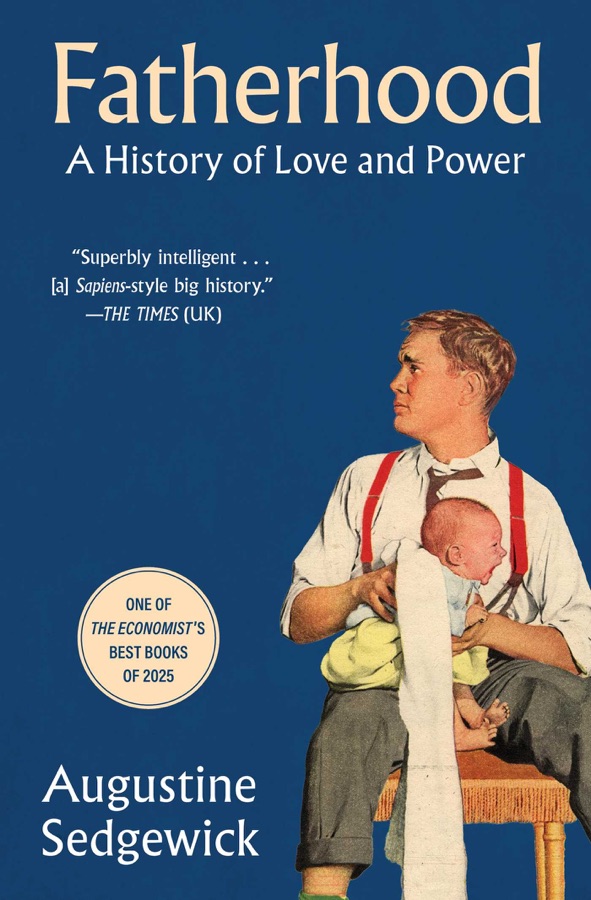
Fatherhood: A History of Love and Power
Augustine Sedgewick
Find on Amazon →

Accounting For Dummies, 5th Edition
John A. Tracy and Tage C. Tracy
Find on Amazon →
Lessons from the Titans
Scott Davis, Carter Copeland, and Rob Wertheimer
Find on Amazon →
Get new book notes as they're written
Join the list for new essays on deals, capital, books, and business.