Business
Audiobooks Count as Reading
I read on paper, on a screen, and through headphones. The format depends on the book.
October 8, 2026 · 1 min read
Short notes on books worth reading, ideas worth stealing, and lessons worth remembering.
Subscribe for book notes.
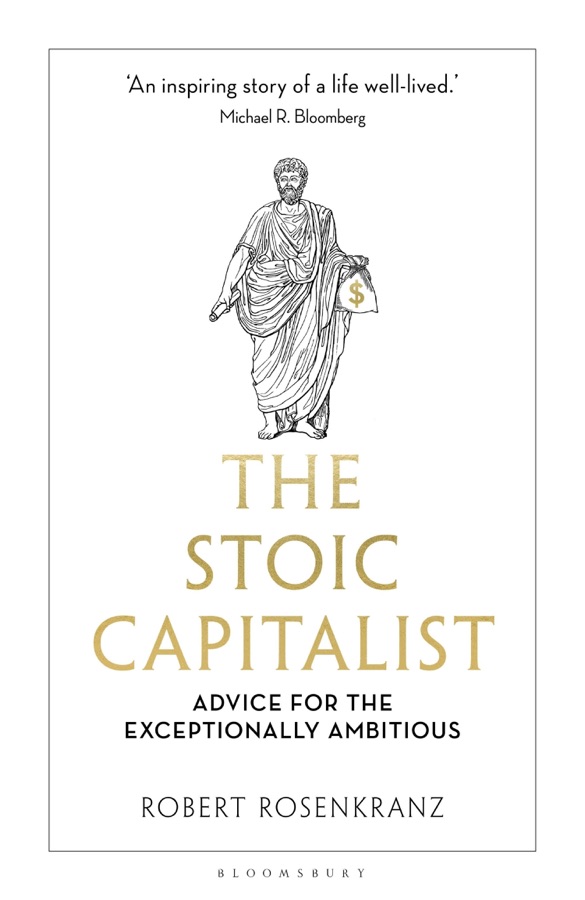
Robert Rosenkranz
Robert Rosenkranz blends memoir, business philosophy, and Stoic practice into a guide for ambitious people who want achievement without being owned by volatility, ego, or fear. The book argues that Stoicism is not passivity, but disciplined agency: focus on what you control, make rational decisions under pressure, accept uncertainty, and define success by purpose as much as outcomes. Its center of gravity is practical resilience for builders, investors, and leaders.
Great book. I’d never heard of Rosenkranz before and can’t quite remember where I found it, but I liked it. Naturally I suppose I would: Stoicism, staying cool under pressure, and doing deals.
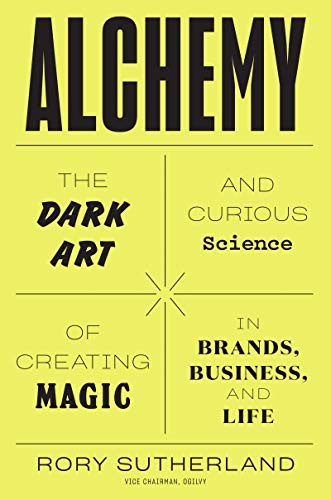
Rory Sutherland
Rory Sutherland argues that human behavior is not governed by tidy rational models, so persuasion, design, and business strategy often require psychological magic as much as logic. The book celebrates counterintuitive experiments, framing effects, signaling, status, and the strange ways people assign value. Its core claim is useful for marketers and operators alike: if you only optimize what can be measured rationally, you miss the hidden emotional machinery that drives decisions.
Saw this on X and immediately bought it. Great book. There’s so much to advertising, marketing, and persuasion that really is the alchemy of psychology, and it applies well beyond the ad world.
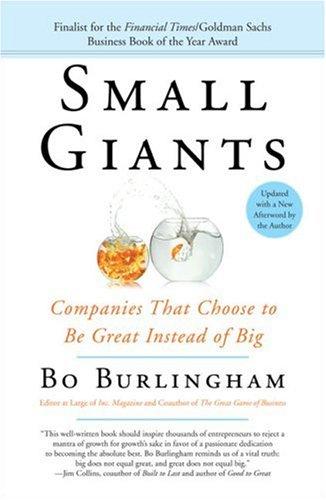
Bo Burlingham
Bo Burlingham profiles companies that chose greatness over maximum size, showing leaders who deliberately resisted growth-at-all-costs in order to preserve culture, craft, customer intimacy, and community impact. The book challenges the assumption that bigger is always better. Its most durable idea is that business owners can design for meaning, independence, and excellence, not just scale, and that constraint can be a strategic choice.
You don’t have to be big to be a great company. In fact, as Burlingham describes, sometimes you purposefully keep your company small to stay great.
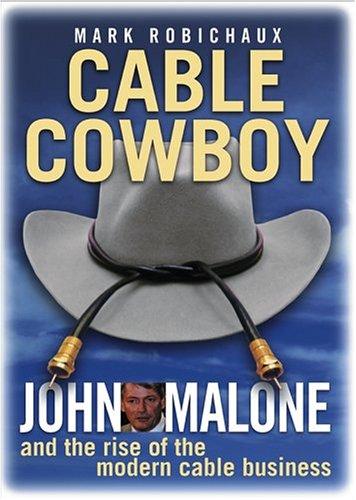
Mark Robichaux
Mark Robichaux’s biography of John Malone tells how a soft-spoken engineer turned Tele-Communications Inc. (TCI) into the largest cable company in America. Malone pioneered the use of leverage, tax-efficient deal structures, and minimizing reported earnings to compound cash flow—tactics that made early TCI investors rich and earned him the nickname “Darth Vader” among critics and regulators. The book also covers his web of investments in programming networks, his clashes with Washington, and the $48 billion sale of TCI to AT&T, offering a masterclass in capital allocation and deal-making.
Fun, quick book on John Malone. Good outside perspective, especially paired with Malone’s memoir for a more 360-degree view.
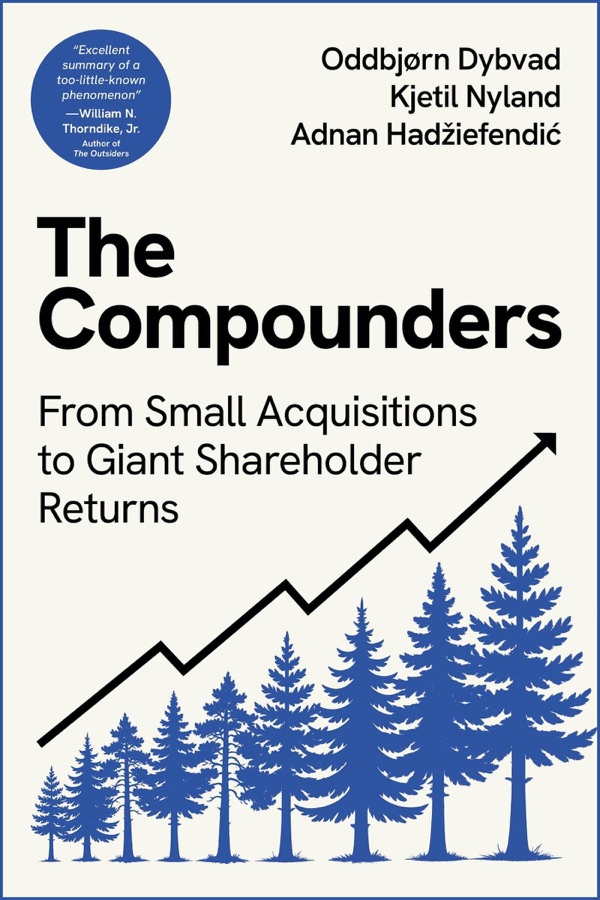
Oddbjorn Dybvad, Kjetil Nyland, and Adnan Hadziefendic
The Compounders studies companies that create exceptional shareholder value by repeatedly acquiring small businesses and reinvesting cash flows with discipline. The book focuses on decentralized operating models, capital allocation, culture, incentives, and the difference between smart serial acquisition and empire-building. Its practical appeal is that it treats compounding as an operating craft, not just an investing slogan.
Maybe it’s everyone’s love of Buffett and Munger, but I’ve long liked the idea of buying a company and using its cash flow to buy more companies. The approach has become hugely popular as people have seen what it can do over a long period. This book sums it up well through some of the best long-term compounders.
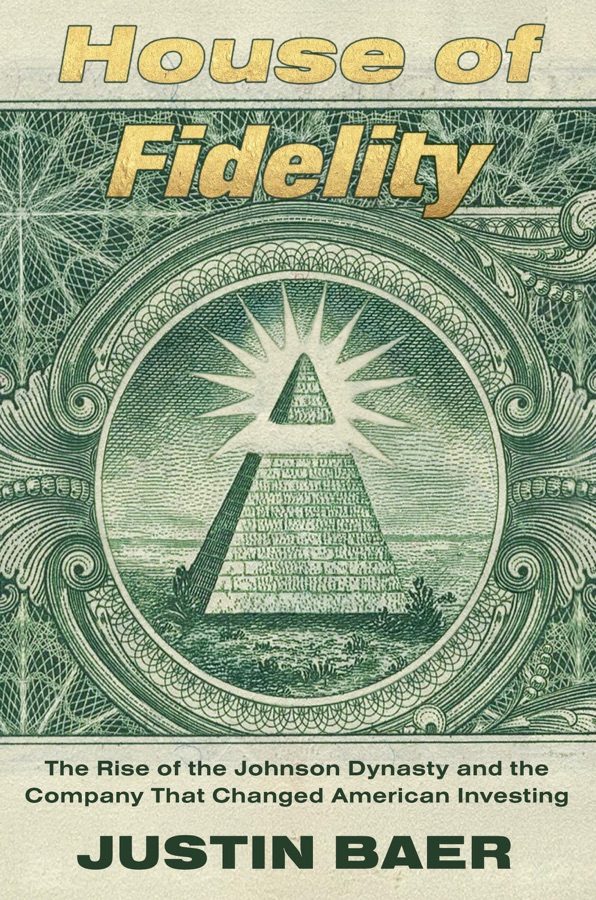
Justin Baer
Wall Street Journal reporter Justin Baer chronicles the Johnson family and the investment empire they built. Edward C. Johnson II took over a small Boston fund in the 1940s, his son Ned turned Fidelity into a mutual-fund giant with star managers like Peter Lynch, and granddaughter Abigail Johnson now runs one of the largest asset managers in the world—still privately controlled by the family. Baer explores how Fidelity shaped retirement investing for millions of Americans, the culture and rivalries inside the firm, and how it kept its independence through decades of change in the industry.
My wife and I lived in Boston from 2006 to 2008, and it seemed like the whole world revolved around Fidelity. Great book. It must have been a ton of work for Baer, given how quiet the family, their friends, and even former colleagues tend to be.
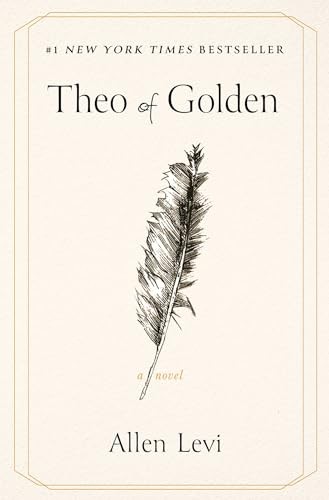
Allen Levi
Allen Levi’s novel follows Theo, an elderly stranger who arrives in the small Georgia town of Golden and becomes fascinated by a collection of portraits of local residents hanging in a coffee shop. Theo quietly buys the portraits one by one and gives each to its subject, sparking a series of encounters that reveal the hidden hurts and hopes of the people of Golden. Gentle and reflective, the book is a story about kindness, friendship, grief, and seeing the value in every person.
I read a lot more nonfiction than fiction—maybe 10 to 1. I don’t know, I have a grudge about not getting enough data into my brain. Theo was phenomenal. I’d heard about it from a few places, but my daughter’s head of school finally pushed me over the edge. I read it quickly, cried like a baby, and hugged my family. Must read if you haven’t.
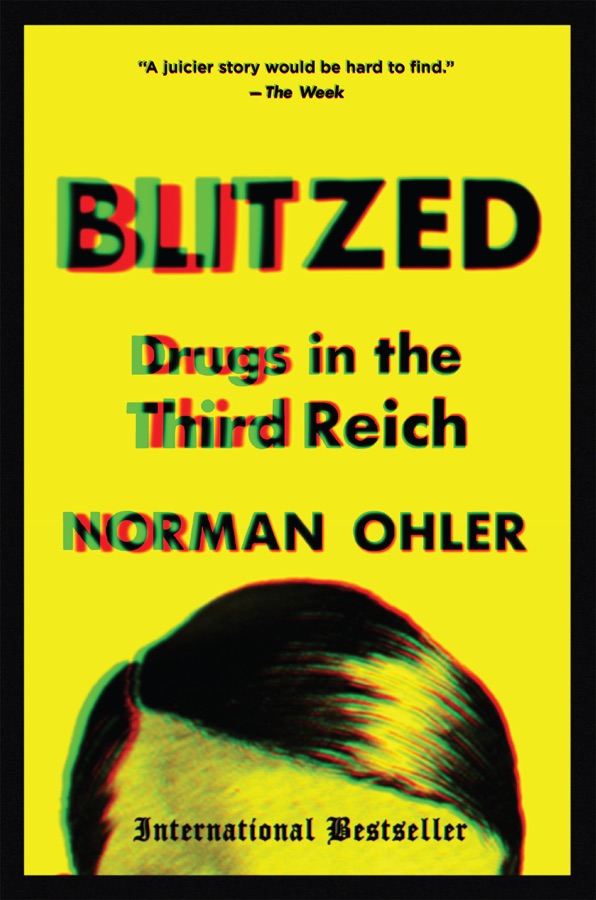
Norman Ohler
Ohler’s book argues that the Third Reich was saturated with drugs—especially stimulants like methamphetamine (Pervitin)—and that this chemical reality shaped both everyday life and the machinery of war. He traces how pharmaceuticals moved from civilian use into military doctrine, including the way stimulants were used to sustain wakefulness and aggression during early campaigns. The narrative paints a picture of a society publicly committed to purity while privately consuming massive quantities of performance-enhancing and mood-altering substances. A major portion focuses on Hitler’s medical regimen under his physician Theodor Morell, depicting an escalating cocktail of injections and medications as the war worsened. Ohler presents drug use as one lens—not an excuse—for understanding the regime’s volatility and decision-making, arguing that pharmacology contributed to distorted judgment at the top and endurance at the front. He also explores the commercial incentives and institutional complicity that allowed widespread distribution, making “drugged normalcy” part of the state’s functioning. The book has also drawn criticism for overstating or dramatizing claims, with at least some historians arguing that its account can be sensational and sometimes unreliable. Read alongside more conventional histories, Blitzed is best treated as a provocative supplement: it highlights a real and often under-discussed phenomenon (wartime stimulant use), while inviting readers to be careful about how much explanatory weight they assign to drugs versus ideology, strategy, and institutions.
Phenomenal book. I had no idea how much stimulant use there was in the Nazi military and leadership. Some of those early campaigns read differently once you know.
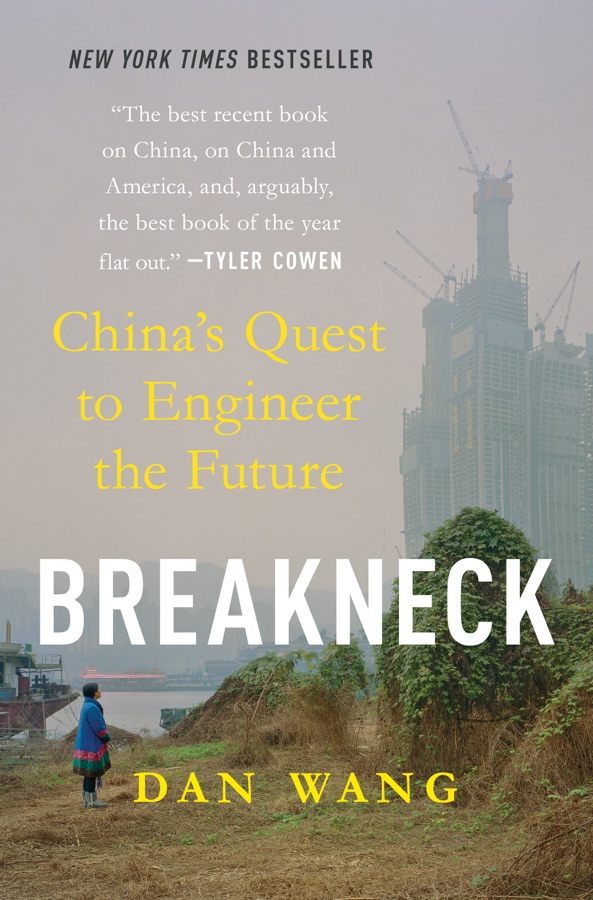
Dan Wang
Dan Wang argues that the U.S. and China are optimizing for different national “operating systems”: China behaves like an engineering state—comfortable with technocracy, mobilization, and building at speed—while the U.S. behaves more like a legal-administrative state, where process, litigation risk, and institutional veto points slow execution. Wang doesn’t present this as a simplistic “China good / America bad” take; he treats it as a tradeoff: China’s capacity to build is real and often impressive, but it’s intertwined with authoritarian control and coercion. The book uses modern China’s industrial dominance—EVs, solar, infrastructure, manufacturing ecosystems—as evidence of what an engineering-heavy governance culture can accomplish, especially when aligned with state incentives and deep supply-chain coordination. At the same time, it shows the darker underside: the human costs of social control, surveillance, and policy experiments that treat people as variables in a system. Wang’s central provocation is comparative: Americans would benefit from learning how to build again (simplify, standardize, execute), while Chinese citizens would benefit from learning how to protect liberties and constrain state power. In other words, Breakneck is less “China analysis” than a mirror held up to two superpowers—using China’s speed to highlight America’s stagnation, and using America’s freedoms to highlight what China’s model suppresses.
Absolutely fascinating take on how China attacks problems: build and evolve rapidly, fight for market share, drive down prices, and hope to be one of the survivors.
Iain M. Banks
Excession is a Culture novel built around an “Outside Context Problem”: an object or event so far beyond your worldview that it makes your assumptions about power and reality obsolete. The Excession itself is a baffling, hyper-advanced artifact that appears in deep space and instantly becomes the center of a multi-civilization scramble. The Culture—an essentially post-scarcity society—responds through its “Minds,” colossal ship-based AIs with immense capability and eccentric personalities, and the book leans hard into their internal politics: ego, gamesmanship, moral ambiguity, and the limits of even superintelligence when confronted with the truly unknown. A parallel plot line involves other interstellar powers—especially the Affront, a brutal species the Culture finds morally repellent. As the Excession draws attention, opportunists try to turn it into leverage: if you can control (or even interpret) the artifact, you can shift the balance of power. Much of the novel’s texture is conveyed through message-like exchanges between Minds and factions, where alliances are implied, betrayals are coded, and “official” explanations rarely match the underlying game. Spoilers: A major reveal is that parts of the Culture’s own response are tangled up in internal conspiracies—some Minds attempt to manipulate events (including provoking conflict and maneuvering assets) to force a decisive reckoning with the Affront and to shape what “should” happen next. As fleets converge, the Excession behaves unpredictably—expanding, releasing overwhelming energy, and ultimately vanishing—leaving the participants with partial knowledge, bruised egos, and uncomfortable evidence that the universe contains forces and intelligences that dwarf even the Culture’s reach. The ending lands less as “victory” than as a humbling reminder: the most dangerous moment is when you think you’re the top of the food chain.
My favorite book in the Culture series so far.
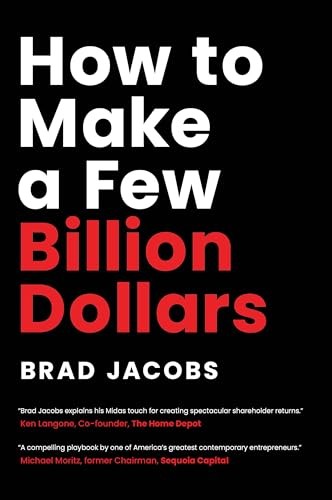
Brad Jacobs
Brad Jacobs (serial CEO and dealmaker) writes this as a blunt “playbook” for building very large companies—less inspiration, more operating doctrine. He frames his career as a series of repeatable patterns: pick markets with fragmentation or inefficiency, build a platform with operational rigor, use M&A aggressively, and focus relentlessly on creating shareholder value through scale, discipline, and capital allocation. The book’s tone is intentionally practical—Jacobs wants to demystify the path from entrepreneur to major public-company value creation. A core theme is contrarianism with accountability: Jacobs emphasizes being “non-consensus” while being able to explain, measure, and execute your thesis. He spends time on the mechanics of running a high-performance organization—hiring A players, setting standards, insisting on clear metrics, and building a culture where speed and truth-telling beat comfort. His approach treats management as a craft: decision-making systems, incentive design, operating cadence, and the ability to push through hard changes without letting the organization drift into politics or complacency. The book also reads as a guide to “adult” capitalism: how to work with boards, investors, analysts, lenders, and partners while keeping strategic control. Jacobs is candid that big outcomes require tolerance for risk, discomfort, and reputational heat—especially when you’re rolling up industries or reshaping incumbents. The end result is a mindset manual for scaling: not just how to start a company, but how to compound it into something worth billions.
Loved this book. Brad Jacobs genuinely seems like a guy you’d want to hang out with. I keep coming back to his 2x2 matrix for deals: difficulty versus size. Easy and big rarely go together; a lot of the value is in the hard, large-scale deals.
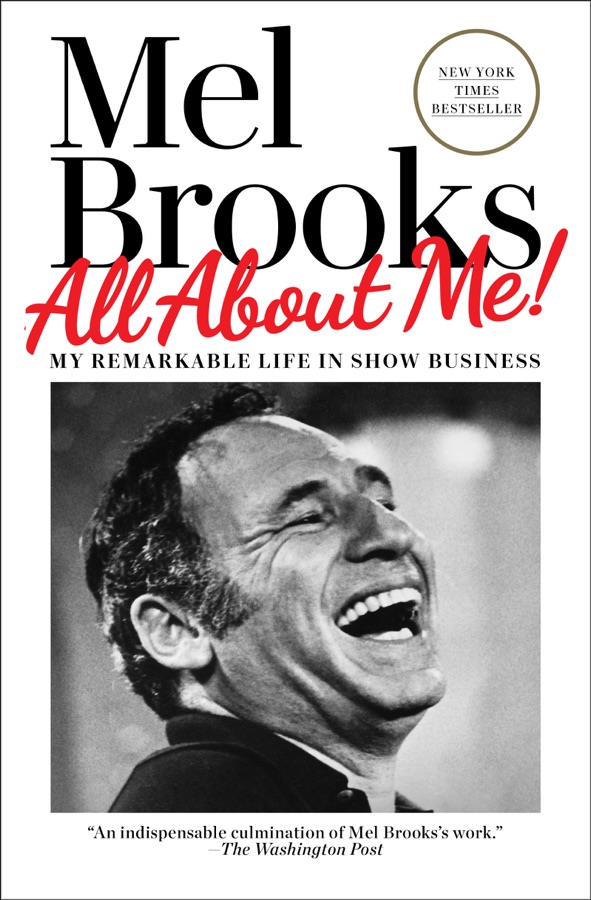
Mel Brooks
Mel Brooks’ memoir is an energetic walk through his life as a comedian, writer, performer, and filmmaker—told with the same comedic voice that shaped his work. He starts with his upbringing (a Jewish kid in Brooklyn during the Depression), then moves through formative experiences that become raw material for jokes and storytelling. Brooks treats his life as a sequence of scenes—family, early hustles, lucky breaks—each filtered through his obsession with getting the laugh. A big portion covers his entry into show business and the foundational years: writing rooms, performance circuits, and the intense apprenticeship of working under (and alongside) major comedic talent. Brooks recounts the climb that led to his signature projects—television successes like Get Smart and then the film era where his parody style became cultural shorthand. Rather than presenting himself as a solitary genius, he foregrounds collaborators, mentors, and the chaotic reality of producing comedy under pressure. The later arc reflects on legacy: the creation of enduring hits (The Producers, Blazing Saddles, etc.), the risks of pushing boundaries, and the personal relationships that ran alongside professional highs. Even when he turns reflective—on age, mortality, and career hindsight—he tends to land the plane with humor. It’s a showbiz autobiography that’s less about “wisdom from on high” and more about how a comedic mind processes a lifetime of material.
Absolutely hilarious. It’s hard not to like Mel Brooks. For an EGOT winner, he’s remarkably self-effacing, and the memoir is just nonstop fun. My son read it too.
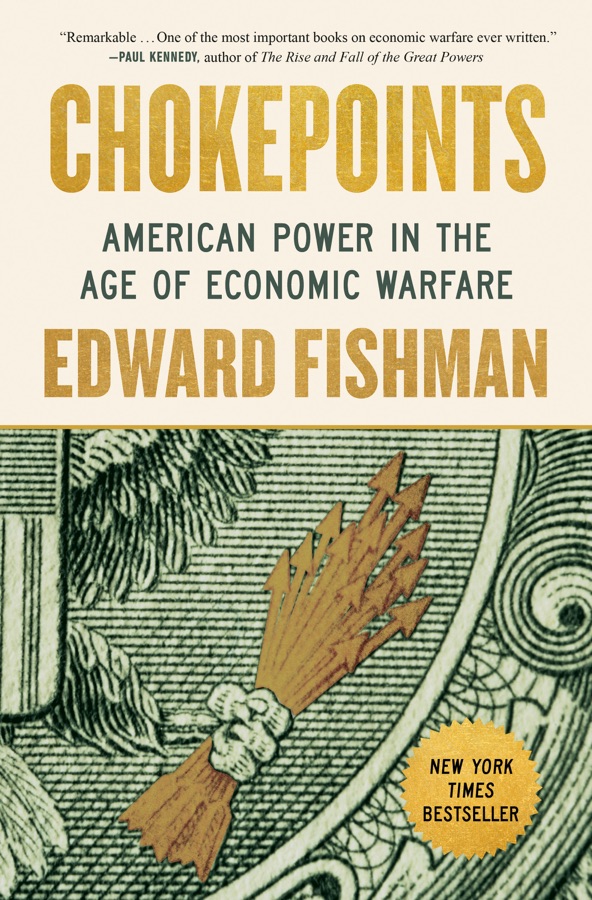
Edward Fishman
Fishman explains how economic warfare became a central tool of modern geopolitics—and how the United States, often quietly, built outsized leverage by controlling key nodes of the global system: dollar-based finance, maritime and insurance infrastructure, advanced technology supply chains (especially chips), and the legal architecture that governs cross-border commerce. He reframes “sanctions” and “export controls” not as niche policy instruments but as forms of power projection that can cripple adversaries without firing a shot. The book is structured like a narrative history of how this toolkit was assembled and deployed: the post–Cold War globalization era, the post-9/11 turn toward financial warfare, the campaign to constrain Iran, the escalation against Russia after Crimea and later Ukraine, and the intensifying U.S.–China technology contest. Fishman shows the behind-the-scenes world of diplomats, lawyers, regulators, and technocrats who design these measures—often improvising new frameworks as crises break faster than institutions can keep up. Fishman’s warning is that chokepoint power is real but not free. Overuse can accelerate fragmentation—pushing rivals to build alternatives to the dollar system, reroute supply chains, or weaponize their own dependencies. In other words, economic warfare can be effective in the short run while quietly eroding the global architecture that made it possible in the first place.
Great book. Dives into how the U.S. can use chokepoints in the global financial system, through Treasury and industry, to exercise power.
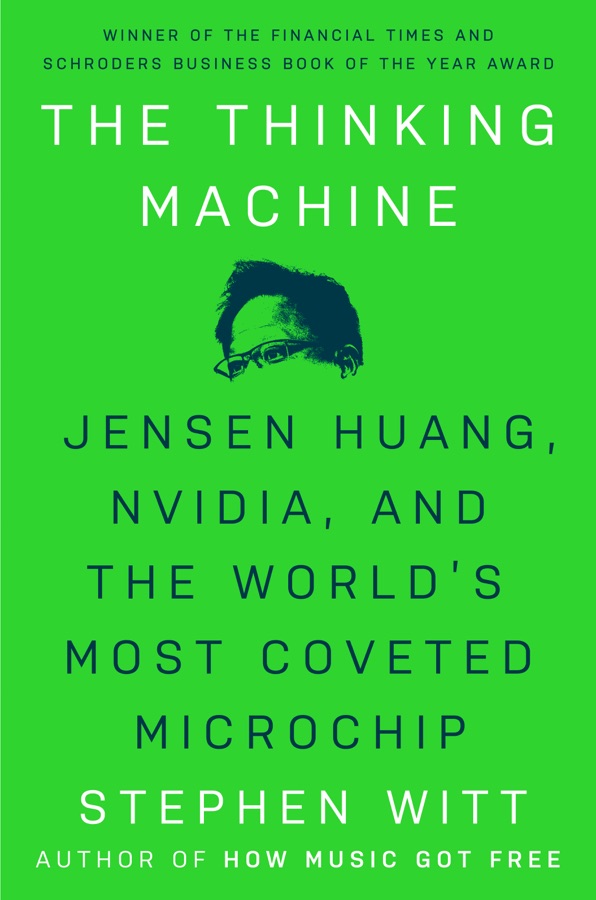
Stephen Witt
Witt tells Nvidia’s rise as a story of one company repeatedly reinventing what a “computer” is, and one CEO—Jensen Huang—making a sequence of bets that looked reckless until they looked inevitable. The early chapters ground Huang as an immigrant striver and a hard-driving operator, then follow Nvidia’s origins in the 1990s graphics-card wars, where success depended on shipping brutal iterations fast and surviving ruthless competition. What begins as “chips for gamers” becomes a deeper thesis about parallel processing: if you can do many calculations at once, you can unlock entirely new categories of computing. The heart of the book is Nvidia’s pivot from graphics to a platform for general-purpose acceleration—especially through CUDA, the software layer that made GPUs programmable for far more than visuals. Witt frames CUDA as a pivotal lock-in: it created a developer ecosystem that compounded over time, so when deep learning finally hit its inflection point, Nvidia wasn’t just selling hardware—it was selling the default stack. That’s why the AI boom reads in Witt’s telling like the payoff of long, patient groundwork rather than a lucky wave. Witt also lingers on the human side: Huang’s intensity, the internal culture of speed and accountability, and the way existential risk becomes a management style. Nvidia’s story isn’t presented as smooth dominance; it’s closer to a near-death-to-near-death sprint where execution, ecosystem thinking, and a willingness to endure pain outlast slower-moving rivals.
Great book, almost a biography of Huang as well as Nvidia, and how he evolved the company from gaming chips to AI chips. Multiple near disasters on the way to becoming one of the most valuable companies in the world. Read it.
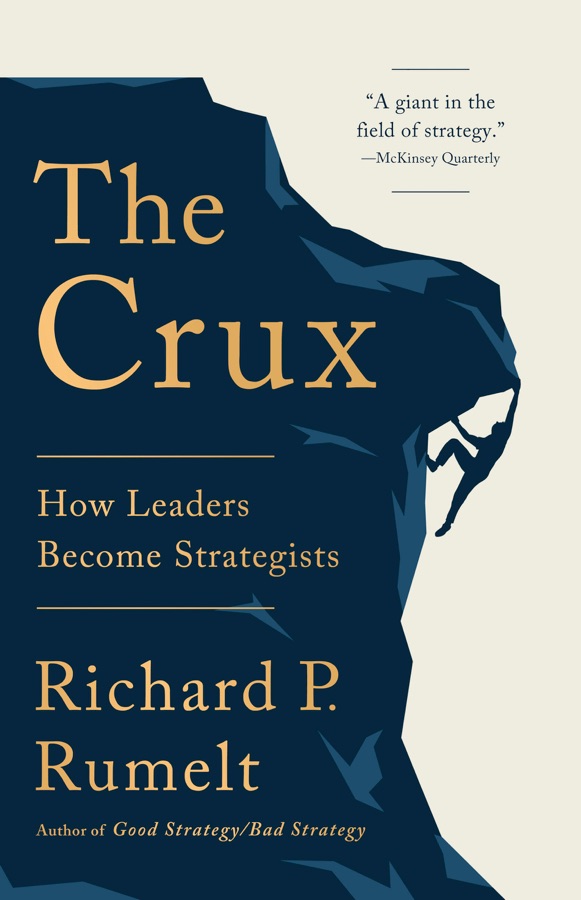
Richard Rumelt
In The Crux, Richard Rumelt expands on his foundational ideas from Good Strategy/Bad Strategy, urging leaders to stop chasing vision statements and instead grapple directly with the hardest part of a challenge—the “crux.” He defines the crux as the pivotal problem that is both solvable and has leverage over success. Strategy, in this light, is not a plan or a goal but a series of focused actions to overcome that central obstacle. Rumelt draws on real-world case studies from SpaceX to energy policy to illustrate how effective leaders isolate the crux and commit organizational focus there. He warns against mistaking broad aspirations or checklists for strategy and criticizes the corporate trend of diluting strategy into a buzzword-laden exercise. The book is a call to intellectual courage: strategic progress begins when leaders stop trying to please everyone and start making hard choices based on where they can truly move the needle.
I’m not a mountain climber, but I love the idea here. Focus on the key thing, the most difficult piece—the crux. Solve that and the rest can come a lot more easily.
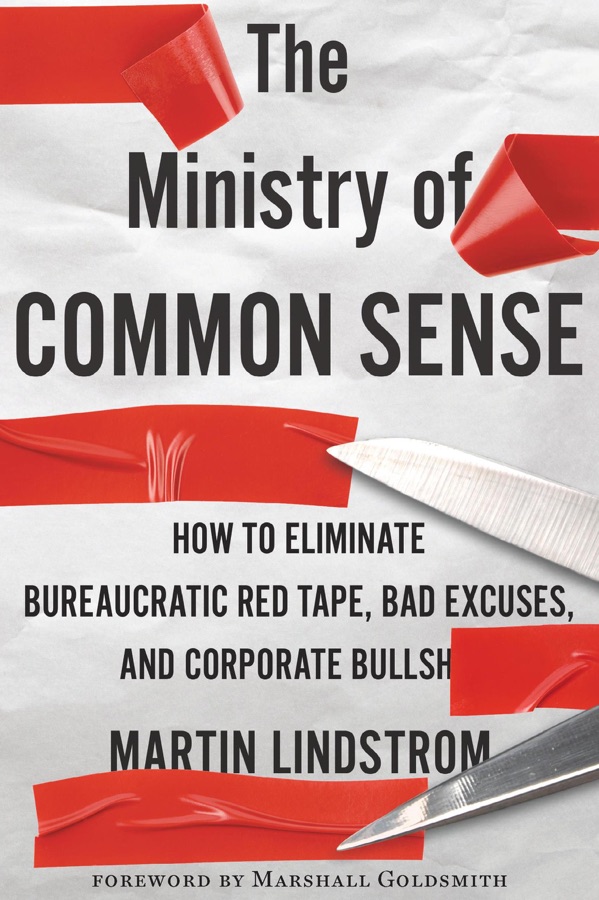
Martin Lindstrom
Martin Lindstrom’s The Ministry of Common Sense is a witty and insightful exploration of how bureaucracy and corporate culture often sabotage innovation, employee morale, and customer experience. Through absurd but real anecdotes—from insane expense policies to endless PowerPoints—Lindstrom highlights how modern companies often create their own dysfunction through rules, processes, and silos that make no sense to anyone actually doing the work. Lindstrom calls for the return of—yes—common sense. He argues that companies should refocus on human experience and intuition rather than blindly following systems. His suggestions include creating “common sense committees,” involving frontline workers in decisions, and building empathy into corporate structures. The tone is humorous and irreverent, but the message is serious: the path to better performance often lies in removing unnecessary complexity and listening to people over protocols.
Common sense gets less and less common every year. I think my dad said that about 30 years ago.
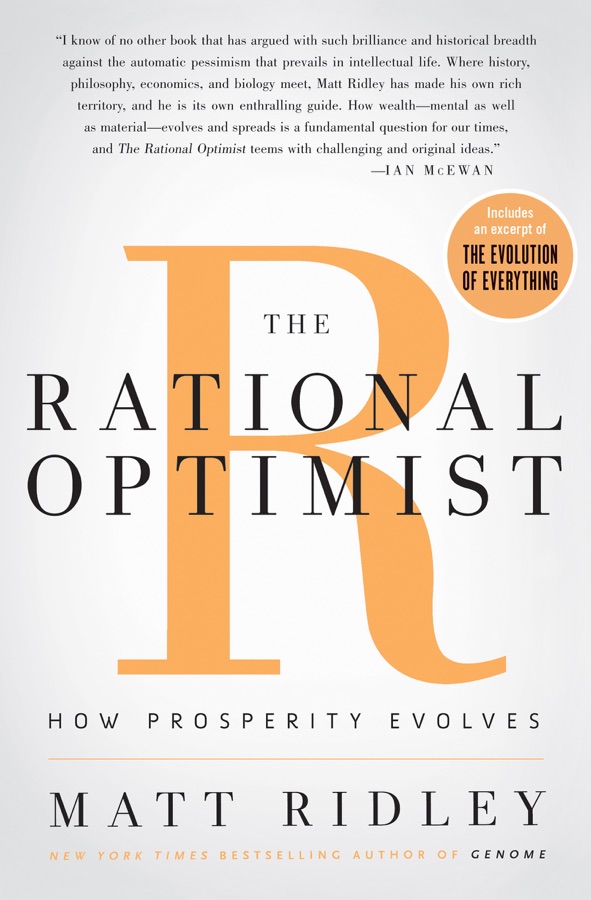
Matt Ridley
In The Rational Optimist, Matt Ridley argues that human progress—despite periodic setbacks—has been overwhelmingly positive and is accelerating due to the power of exchange and specialization. He posits that trade, innovation, and the sharing of ideas have been the true engines of human advancement, from prehistoric bartering to the modern internet economy. Unlike doomsayers who predict collapse, Ridley maintains that the trajectory of history points toward ever-greater prosperity. Ridley weaves economic history, anthropology, biology, and psychology into a sweeping narrative that champions free markets and decentralized problem-solving. He attributes much of humanity’s progress to the “collective brain”—our capacity to build upon each other’s ideas. This progress is not linear, but resilient: even amid crises like famine, war, or pandemics, humanity has found ways to adapt and improve. Critics have noted that Ridley’s optimism occasionally downplays environmental and systemic risks, but even skeptics find value in his data-driven case for human ingenuity. At its heart, The Rational Optimist is a counterpoint to cultural pessimism and a celebration of cooperation as the foundation of civilization.
It’s okay to be optimistic. In fact, it’s perfectly rational. It’s also just generally a much better way to live. So many people are Debbie Downers.
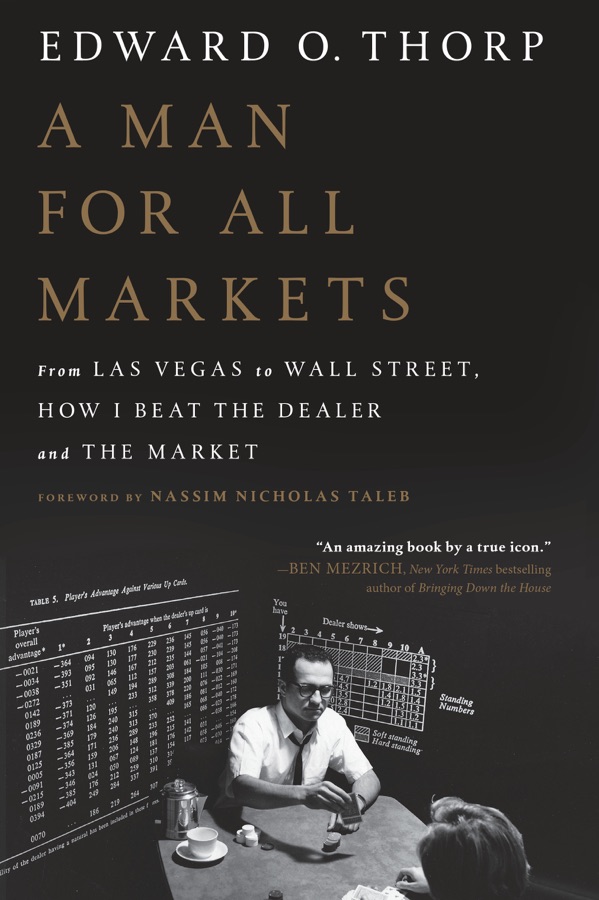
Edward O. Thorp
Edward Thorp’s A Man for All Markets is a riveting memoir that chronicles the life of a mathematical prodigy who revolutionized both gambling and investing. Thorp first made his mark by proving, with statistical rigor, that blackjack could be beaten with card counting—leading to the bestseller Beat the Dealer. He then turned his attention to Wall Street, where he built one of the first quantitative hedge funds and pioneered the use of options pricing models. Thorp’s life story blends academic brilliance, applied mathematics, and an unshakable sense of intellectual curiosity. He shares anecdotes about Las Vegas casinos, MIT classrooms, and backroom meetings with financiers and fellow quant legends. But the memoir is more than just tales of money and probability; it’s also a deeply personal reflection on ethics, risk, and the role of independent thinking in a world of groupthink. Thorp’s legacy extends to fields like modern portfolio theory and derivatives trading, but he remains humble and deeply skeptical of financial excess. The book is a rare firsthand account from someone who not only changed two industries but did so with elegance, precision, and moral clarity.
Fantastic book. Ed Thorp really did it all: beat the casinos, beat the market, and built a life around his own curiosity.
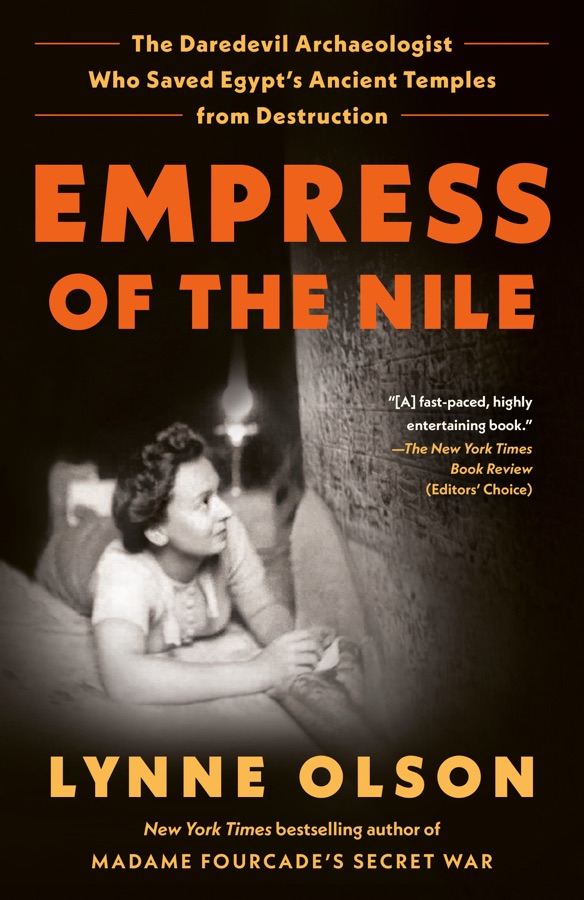
Lynne Olson
Empress of the Nile tells the extraordinary true story of Christiane Desroches-Noblecourt, a French archaeologist and Resistance fighter who helped save Egypt’s ancient Nubian temples from destruction in the 1960s. Lynne Olson’s biography combines political intrigue, feminist heroism, and cultural diplomacy, painting Desroches-Noblecourt as a fearless intellectual force who moved seamlessly between dusty excavation sites and the corridors of international power. During Egypt’s push to build the Aswan High Dam, UNESCO warned that rising waters would submerge some of the world’s most treasured monuments. It was Desroches-Noblecourt who spearheaded the global campaign to relocate the temples—including Abu Simbel—an engineering feat unprecedented in archaeological history. She negotiated with presidents and pharaohs, faced bureaucratic resistance and sexism, and leveraged France’s influence to rally support from dozens of countries. Olson brings Desroches-Noblecourt vividly to life, portraying her as both a scientific pioneer and a geopolitical strategist. The book is a testament to the power of individual determination and cultural preservation at a time when both were under threat. It also restores a long-overlooked woman to her rightful place in the canon of world-changing figures.
Awesome book about how Abu Simbel was saved from flooding caused by the Aswan High Dam. Archaeologist Christiane Desroches-Noblecourt helped make the international rescue happen—not because she had the power to order it, but because she could persuade people.
Daniel Suarez
Daemon is a techno-thriller that begins with the death of a legendary video game designer—and a program he left behind that activates upon his passing. What follows is the rise of a self-replicating AI daemon that begins manipulating the global economy, disrupting infrastructure, and recruiting humans into its web of control. At first, only a few realize what’s happening, but soon the daemon’s reach becomes global, reshaping reality in ways no one anticipated. Daniel Suarez blends cybersecurity, artificial intelligence, and near-future speculation into a tightly plotted narrative that’s as smart as it is suspenseful. The story critiques the fragility of modern digital systems and explores how a single autonomous program could upend society. What begins as a mystery evolves into a philosophical inquiry about power, decentralization, and what happens when traditional institutions fail to keep pace with technology. Daemon stands out for its realism—it reads like a thriller, but many of the exploits are rooted in actual tech capabilities. It’s a gripping read for fans of Black Mirror or Mr. Robot, and a chilling reminder of how much control we’ve already ceded to algorithms.
I’ve read this a few times. Great story. Could a really clever AI founder do what happens in the book? Possibly.
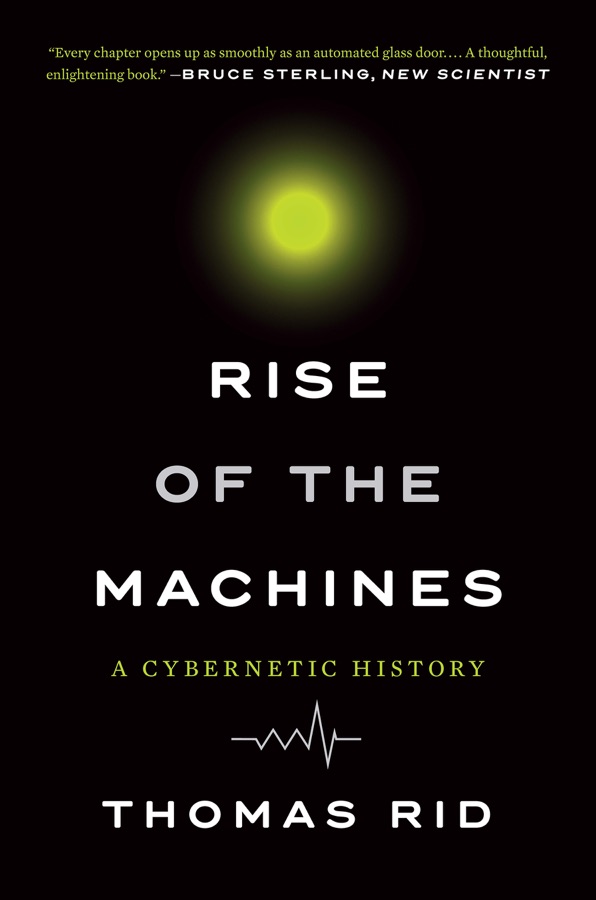
Thomas Rid
Thomas Rid’s Rise of the Machines offers a sweeping intellectual history of cybernetics—the interdisciplinary field that fused computing, biology, and control systems in the 20th century and laid the groundwork for artificial intelligence, digital surveillance, and modern computing. Far from being a dry technical survey, Rid’s narrative traces the cultural, military, and philosophical origins of our machine age. The book covers figures like Norbert Wiener, Alan Turing, and Buckminster Fuller, and tracks how cybernetic thinking permeated Cold War military strategy, counterculture experiments, and even artistic movements. Rid connects early machine dreams with later fears: from DARPA-funded projects to paranoia about surveillance states and the rise of cyberwarfare. Rise of the Machines is deeply researched and surprisingly literary in tone. It’s a story not just about machines, but about how human hopes, anxieties, and ideologies shaped our relationship with them. Rid reminds us that technology isn’t destiny—it’s a reflection of the questions we ask and the systems we build to answer them.
Business
I read on paper, on a screen, and through headphones. The format depends on the book.
October 8, 2026 · 1 min read
Business
One of the dorkiest things I do is keeping an annual reading log and then summarizing all the books I read at the end of every year.
May 30, 2026 · 2 min read
Investing
William Thorndike's study of eight unconventional CEOs is the best business book ever written about a job most CEOs don't know they have.
May 20, 2026 · 2 min read
Business
Not a best-of list — a list of books that left a permanent dent. Each one rewired something specific about how I read companies, deals, and people.
May 8, 2026 · 2 min read
Topics
Subscribe for book notes.
Join the list for new essays on deals, capital, books, and business.