The Deal Dip
October 21, 2026 · Integration · 3 min read
You can call it a J-curve, deal friction, or an unexpected expense. I just call it the Deal Dip.
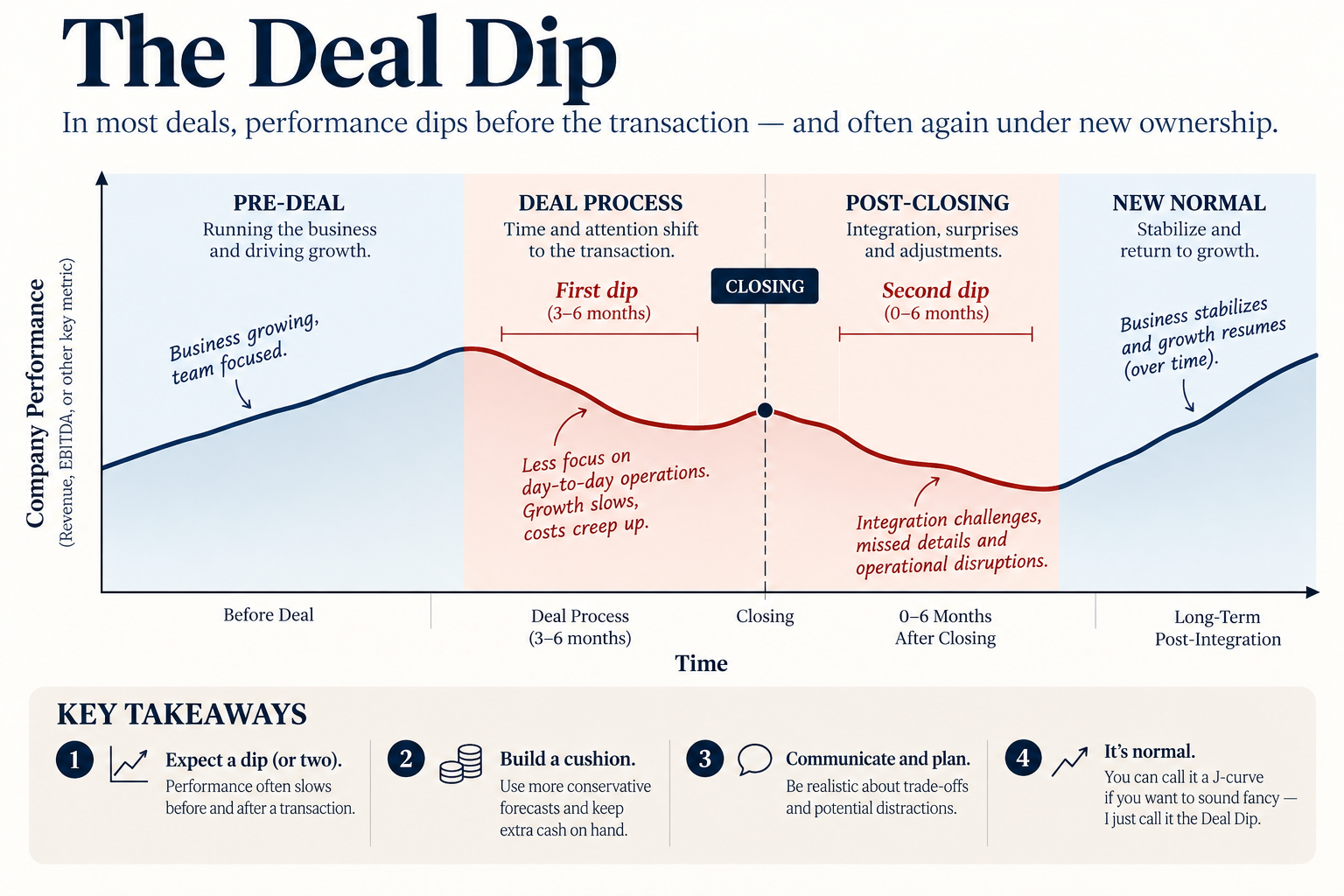
In almost every deal I've worked on, particularly when the owner is also the primary manager of the company, there's a dip in performance just before the transaction and often a second one just after.
Imagine you're the owner and CEO of a business. You're spending 60+ hours a week running the company, growing sales, managing employees, dealing with customers and generally keeping the wheels turning.
Then PE comes along with an offer to buy your business.
You can't do both. You simply cannot work full-time running a business and full-time buying or selling another one. So you make a trade-off. Take the big swing on the deal or keep grinding? If you take the swing, the grind naturally slows. You start thinking about what you're going to do after your "liquidity event," or how you're going to integrate your competitor's business.
But now you're not making that extra sales call. You're not checking on the warehouse or factory. You're not following up with that customer.
You're not Fred Flintstone. You can't be two places at once.
That's the first dip.
Sales growth slows, costs creep up, and eventually you tell your team. Now they're distracted too.
What's their future look like? Is their job at risk? Are they going to make a lot of money?
If your company was growing 1% month over month and you spend three months working on a deal with no growth, or worse, a little churn, that might not look particularly alarming in your quarterly numbers.
But the buyer notices.
And suddenly that little hiccup becomes a discussion about price, working capital or some other adjustment. Now it's cost you money.
The second dip comes after closing.
There are unknowns in every transaction. The buyer always misses that one question during diligence. The seller forgets to mention that one customer who's unhappy or that big contract with the overdue payment.
The buyer is also spending time getting their arms and brains around the new business.
Maybe they don't know that someone needs to call a particular customer every Tuesday to remind them to place an order or make a payment.
No transaction, due diligence process or integration is perfect. You can call them J-curves if you want to sound fancy, but I think you should absolutely account for them in your forward cash flow estimates.
Revenue growth may slow. Costs will probably rise. Margins can get pinched. Cash flow gets tighter, particularly as everyone spends more time on the transaction and less time running the business.
My advice?
Acknowledge the possibility before you start. Build a cushion of cash and set a forward target that's a little less optimistic than the straight line you'd like it to be.
Then maybe you won't be so stressed when the inevitable surprises show up.
I've seen this from both sides of the table.
Enjoyed this? Get the next one.
Join the list for new essays on deals, capital, books, and business.
Related reading
Making M&A Work
A Synergy Needs an Owner
A model can identify a synergy. Only a person with the right authority can deliver it.
September 24, 2026 · 2 min read
Making M&A Work
The Fifteen Months We Left on the Table
We treated closing day as the starting gun. That cost us more than a year of integration we could have had for free.
August 26, 2026 · 4 min read
Making M&A Work
Why Is the Seller Selling?
Price matters, but understanding why a seller wants a deal can matter just as much.
October 26, 2026 · 2 min read